
Daniel Goleman - Foreign Audio
Please contact anaban@gmail.com for information
View Rights Portal

The Gilam Agency – founded by Giovanni Lamanna – is based in Italy and is specialized in Italian Fiction and Non-Fiction, and Children's Books. We represent about 25 authors, some already established (such as Attilio Del Giudice, Francesco Forlani, Peppe Lanzetta, Gianfranco Pecchinenda, Felice Piemontese, Elena Starace, Giulia Bracco, Roger Salloch), some beginners. We also hold the rights to Non-Fiction books (books about Maria Montessori, pedagogy, sport, social science, philosophy...) The Gilam Agency is partner of some Italian publishers (Neo Edizioni, Lavieri, Funambolo, Dalia, Fefé) in selling translation rights on foreign market. We are also going to represent foreign publishers for selling translation rights in Italy. The Gilam Agency takes part in the most important book fairs and exhibitions in Italy and in Europe. In 2020 the Agency has created a new brand (with its own dedicated staff) for Children's and Illustrated Book Rights (the Wrong Cat Rights Agency).
View Rights Portal
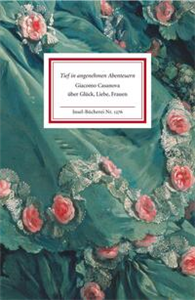
Giacomo Casanova (1725 –1798) lebte sein ausschweifendes Liebesleben zum Genuß der lesenden Nachwelt. In der zwölfbändigen Histoire de ma vie, entstanden 1790, erzählt der berühmte Abenteurer und Frauenheld mit größter Offenheit aus seinem wechselvollen und ungewöhnlichen Leben, das ihn durch das Europa der Rokokozeit führte: Vom begabten Schüler zum Doktor beider Rechte, vom Kardinalsekretär in Rom zum Theatergeiger, Lotterieeinnehmer und Geheimagenten. In seinen Erinnerungen erweist sich Casanova als Kenner der Welt und des menschlichen Herzens, der die Frau nie zum Lustobjekt herabwürdigte, sondern als gleichwertige Partnerin schätzte und zum Dreh- und Angelpunkt mannigfacher Reflexionen macht. Casanova liebt die Frauen um ihrer selbst willen; nur in dem ekstatischen Glück, zu dem er sie »verführt«, kann er selbst höchste Seligkeit finden. Ursula Voß hat aus Casanovas Histoire de ma vie kurze, prägnante Textstellen über Glück, Liebe und Frauen ausgewählt und ihre Auswahl mit einem Nachwort versehen.
 Trusted Partner

Giovanni di Boccaccio, 1313 in Certaldo bei Florenz als unehelicher Sohn eines Kaufmanns und einer adligen Französin geboren, starb dort 1375 auf seinem Landgut. Sein Novellenzyklus Das Dekameron machte den Dichter weltberühmt und beeinflusste maßgeblich die italienische Kunstprosa.
Trusted Partner
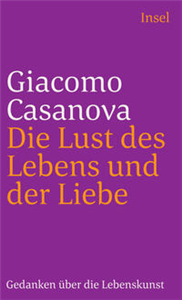
Giacomo Casanova (1725 bis 1798) verstand sich als Schriftsteller und Philosoph. Unter seinen Werken finden sich eine Homer-übersetzung ins Italienische, ein umfangreicher utopischer Roman, eine Geschichte Polens, mathematische Abhandlungen, Gedichte, Satiren, Essays. In die Weltliteratur eingegangen ist er mit seinen Lebenserinnerungen (Histoire de ma vie), die erst 30 Jahre nach seinem Tod gedruckt wurden.Gedanken über die Zeitläufte und das menschliche Verhalten, über die Liebe, die Lust und das Laster, über die Frauen, Gott und die Welt, die sich in seinem ganzen Werk verstreut finden, sind hier zu einem Lesebuch zusammengefaßt und enthalten die praktische Lebensphilosophie eines Mannes, der im Bewußtsein vieler – zu Unrecht – nur noch als der große Verführer und Liebhaber weiterlebt
Trusted Partner
Giovanni di Boccaccio, 1313 in Certaldo bei Florenz als unehelicher Sohn eines Kaufmanns und einer adligen Französin geboren, starb dort 1375 auf seinem Landgut. Sein Novellenzyklus Das Dekameron machte den Dichter weltberühmt und beeinflusste maßgeblich die italienische Kunstprosa.
Trusted Partner


Gabriel García Márquez has been described as the greatest writer in Spanish since Cervantes, and El coronel no tiene quien le escriba is considered to be one of his best works. This reflective and atmospheric novel is set in a small Colombian town where the frustrated and stubborn Colonel, a veteran of the 'War of a Thousand Days', is still, after thirty years, waiting for the letter authorising payment of his war pension. The old soldier and his wife mourn the brutal killing of their only son, and the story of their struggle against poverty and sickness culminates in the Colonel's defiant refusal to part with his cherished fighting cock, however serious the consequences. The moving narrative pays tribute to the resilience of human nature and man's will to survive in the face of heavy odds. The novel also throws light on the turbulent religious and political troubles in Latin America. Now revised to include an updated chronology and bibliography, Giovanni Pontiero's acclaimed critical edition provides English-speaking students with an introduction to, and notes on the text, and a selected vocabulary. ;
Trusted Partner


Essen – als ob nicht: als ob es nicht darauf ankäme; als ob es egal wäre, was, wann und wie; nebenbei essen, zwischendurch, weil’s unbedingt sein muß, ohne Sinn und Verstand. Essen, als ob es das Gewöhnlichste und Niedrigste wäre, wofür das Billigste vom Discounter, aus der Kantine, vom Imbißstand gut genug ist; essen, als ob von der wichtigsten Regenerationsquelle für Leib und Seele nicht alles andere abhinge. – Die Autoren des Bandes untersuchen die diskursiven und materiellen Hintergründe der deutschen wie internationalen Eßkultur. Sie bieten Ansätze zu einem anderen, neuen Verständnis eines gerade wegen seiner Alltäglichkeit immer noch unterschätzten Phänomens und streiten für einen in Deutschland längst überfälligen gastrosophical turn. Mit Beiträgen von Jürgen Dollase, Harald Lemke, Daniele Dell’Agli, Martin Reuter, Claus-Dieter Rath u.a.
Trusted Partner
Trusted Partner
Trusted Partner
Trusted Partner
Trusted Partner

Contemporary French cinema is an essential introduction to popular French film of the last 35 years. It charts recent developments in all genres of French cinema with analyses of over 120 movies, from Les Valseuses to Caché. Reflecting the diversity of French film production since the New Wave, this clear and perceptive study includes chapters on the heritage film, the thriller and the war movie, alongside the 'cinéma du look', representations of sexuality, comedies, the work of women film makers and le jeune cinéma. Each chapter introduces the public reception and critical debates surrounding a given genre, interwoven with detailed accounts of relevant films. Confirmed as a major contribution to both Film Studies and French Studies, this book is a fascinating volume for students and fans of French film alike.
Trusted Partner

Contemporary French cinema is an essential introduction to popular French film of the last 35 years. It charts recent developments in all genres of French cinema with analyses of over 120 movies, from Les Valseuses to Caché. Reflecting the diversity of French film production since the New Wave, this clear and perceptive study includes chapters on the heritage film, the thriller and the war movie, alongside the 'cinéma du look', representations of sexuality, comedies, the work of women film makers and le jeune cinéma. Each chapter introduces the public reception and critical debates surrounding a given genre, interwoven with detailed accounts of relevant films. Confirmed as a major contribution to both Film Studies and French Studies, this book is a fascinating volume for students and fans of French film alike.
Trusted Partner
 Trusted Partner
Trusted Partner
Trusted Partner

The French empire at war draws on original research in France and Britain to investigate the history of the divided French empire - the Vichy and the Free French empires - during the Second World War. What emerges is a fascinating story. While it is clear that both the Vichy and Free French colonial authorities were only rarely masters of their own destiny during the war, preservation of limited imperial control served them both in different ways. The Vichy government exploited the empire in an effort to withstand German-Italian pressure for concessions in metropolitan France and it was key to its claim to be more than the mouthpiece of a defeated nation. For Free France too, the empire acquired a political and symbolic importance which far outweighed its material significance to the Gaullist war effort. As the war progressed, the Vichy empire lost ground to that of the Free French, something which has often been attributed to the attraction of the Gaullist mystique and the spirit of resistance in the colonies. In this radical new interpretation, Thomas argues that it was neither of these. The course of the war itself, and the initiatives of the major combatant powers, played the greatest part in the rise of the Gaullist empire and the demise of Vichy colonial control.
Trusted Partner
Trusted Partner
Trusted Partner

By considering the distinctiveness of the inter-war years as a discrete period of colonial change, this book addresses several larger issues, such as tracing the origins of decolonization in the rise of colonial nationalism, and a re-assessment of the impact of inter-war colonial rebellions in Africa, Syria and Indochina. The book also connects French theories of colonial governance to the lived experience of colonial rule in a period scarred by war and economic dislocation.
Trusted Partner



