
Dar Almaaref for Publishing
The oldest national organization for publishing since 1890 in Middle East. We had the prize of "The best publisher 2019-2020",The owner of October Magazine.
View Rights Portal
The oldest national organization for publishing since 1890 in Middle East. We had the prize of "The best publisher 2019-2020",The owner of October Magazine.
View Rights Portal
Dar Lusail Publishing and Distribution house was established in 2017 in Qatar, to response the aspirations of Qatari, Arab and foreign writers to have a professional publishing institution.In 2019, Dar Lusail established a new branch in Lebanon, also it implemented an ecommerce website www.darlusail.com & its mobile application, it’s including more than 40000 eBooks & 25000 books in all categories and all languages.Dar Lusail is distributing worldwide. It has innovative marketing mechanisms that meet the aspirations of readers, through an active presence in regional and international exhibitions & bookshops."Dar Lusail" has gained a prominent position among the intellectuals and the public in a short period, due to our constant desire to follow the approach of excellence, keep pace with development, and use the latest technologies in the publishing and distribution process. The house also relies on the standard of cultural sophistication and intellectual diversity in choosing titles for publications and the application of the highest standards of quality and mastery in the process of preparing the book for publication, as it has a renewed spirit of publications. Dar Lusail always strives to introduce the readers to the cultures of other peoples by translating many valuable books from and to Arabic.
View Rights Portal
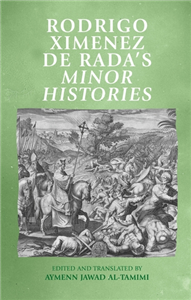
This work provides the first complete English translation of works by Toledan archbishop Rodrigo Ximénez de Rada (1170-1247 CE), whose 'Minor Histories' are sequels to his larger 'Gothic History' and thus round off his grand history of Spain project that he began at the request of King Ferdinand III. The 'Minor Histories' include Rodrigo's 'History of the Arabs' that can be considered the first surviving Western monograph focused on Arab and Islamic history and thus occupies a unique position in the medieval Latin corpus of writings. In addition to the translation, this book provides a thorough and accessible introduction to the life and works of Rodrigo, making sense of the context in which he wrote and his historical method. The translations are thoroughly annotated including cross-references to other Latin and Arabic sources for comparison.


Mahmoud Al-Zein is the head of the Al-Zein clan, one ofthe most influential large families in GermanyStark, controversial, unsanitised: the brutal truth about violence,power and honour Arab clans rule Germany’s inner cities and are often in the headlines. One of the most influential of these large families is the Al-Zeins. Their family head, Mahmoud Al-Zein, is known as the notorious Godfather of Berlin. Now, he is the first to break his silence and to give a no-holds-barred account of the inner working of his family organisation: his journey to the top, conflicts with law, time in prison, feuds with rivals, the law of the family and the brutal fight for supremacy on the streets. An incomparable insight into Arab lansand a report on German day-to-day reality.
 Trusted Partner

 Trusted Partner

 Trusted Partner
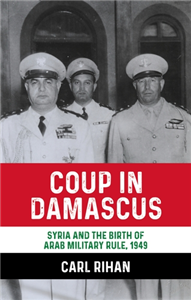
Coup in Damascus is a history of Syria's first military regime. It plots the the fall of Syria's democracy and the rise of its military rulers, particularly Husni al-Zaim, whose brief rule in 1949 represented a profoundly transformative moment for the Syrian nation. It is a history of the thoughts, intentions and motives of political actors underpinning the events that have marked Syria's history after the first Arab-Israeli war, and focuses mainly on the interaction between local, regional and international actors. Unlike most histories of the modern Middle East that tackle broad intervals and that focus on the sequences of events, this history seeks to reconstruct the thought processes behind the events, and anchor them within the epoch's existing political and socioeconomic conditions. It draws on several methodological influences, particularly R.G. Collingwood's 'history as re-enactment of the past'.
Trusted Partner
Trusted Partner

 Trusted Partner

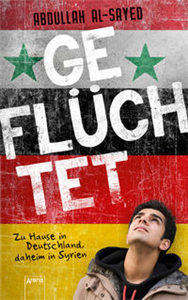
Abdullah kommt aus Syrien. Er ist 16, als er aus seinem Heimatort Ar-Raqqa flieht. Sein älterer Bruder wurde verschleppt, sein Vater bei einem Bombenangriff getötet. Weil die Bedrohung immer größer wurde, stattete seine Familie ihn mit Geld aus. Abdullah schlug sich nach Deutschland durch. In einem Jugendheim findet er Sicherheit und ein neues Zuhause. Doch das Ankommen ist nicht leicht: Hautnah erlebt Abdullah, dass Flüchtlinge wie er als "Islamratten" beschimpft werden. Ständig spürt er misstrauische Blicke. Doch er bekommt auch immer wieder freundliche Hilfe, die ihm Hoffnung gibt. Hoffnung auf seine Zukunft in Deutschland, in einer Welt ohne Krieg.
Trusted Partner
Trusted Partner
Trusted Partner

How do governing elites in the global South attempt to remake hegemony in a conjuncture of durable crisis? This is the question at the core of Southern interregnum, a comparative conjunctural analysis of hegemonic projects in Brazil, India, China, and South Africa. Working with a Gramscian notion of crisis, centred on the interregnum as an enduring period of instability and uncertainty, in which hegemonic authority erodes and competing projects for crisis resolution emerge, the book proposes a novel critical reading of the convulsions that are currently reshaping the political economy of the global South and the world-system. Mapping the variegated trajectories of elite projects to reconcile accumulation and legitimation - and probing the limits of these projects - the book breaks new ground in the study of the contemporary global South.
Trusted Partner
Trusted Partner
 Trusted Partner

 Trusted Partner
Trusted Partner
Trusted Partner
Trusted Partner
Trusted Partner
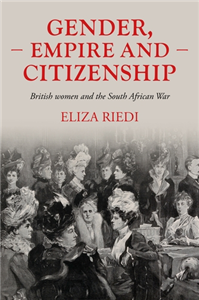
When the South African War broke out in 1899 British middle-class women, already well-integrated into party politics and public life, were quick to respond. Women across a wide political spectrum, from jingo imperialists to 'pro-Boers', actively engaged in public debates over the war through meetings, speeches, petitions, electioneering, and the press. From the start pacifist women made important contributions to the anti-war movement, later providing vital backing for Emily Hobhouse's campaign to reform the concentration camps. Women imperialists supported the war effort through military philanthropy and imperial propaganda. Under Millicent Garrett Fawcett the government-appointed Ladies' Committee transformed the camps, while hundreds of British women were recruited as camps teachers and nurses. Fundamentally shaped by ideologies of gender and race, women's responses to this imperial war continued to influence women's public action and discourses of citizenship into the First World War.
Trusted Partner
Trusted Partner

 Trusted Partner
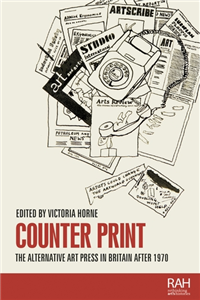
The history of contemporary art is also a history of its newsletters, manifestos, magazines, pamphlets, and journals. Those periodical publications do not simply communicate or record ideas but have worked in exciting ways to shape art's practices, histories and communities. As a new generation of artists, activists and scholars seek to uncover the histories of alternative publishing and artistic networks, this book gathers original archival discoveries while offering methodologies for studying and thinking with those artefacts. As the first essay collection to focus on the periodical art press and the ways we study it, Counter print offers readers an alternative route into the past fifty years of contemporary art, one that is defiantly collaborative, border crossing and disruptive.



