
Dark Abyss Edizioni
Emanuela A. Imineo: Publisher; Consuelo Baviera: Graphic Director; Lisa Bilotti: Social Media Manager; Arianna Petracin: Assistant Management; Francesco Spada: Foreign Scouting
View Rights Portal
Emanuela A. Imineo: Publisher; Consuelo Baviera: Graphic Director; Lisa Bilotti: Social Media Manager; Arianna Petracin: Assistant Management; Francesco Spada: Foreign Scouting
View Rights Portal
Dar al Saqi is an award-winning independent publishing house based in Beirut. Founded in 1990, their books cover various subjects including children's and young adults’ for ages between 3 and 18.
View Rights Portal

Aus dem amerikanischen Englisch von Diana Bürgel und Julian Müller

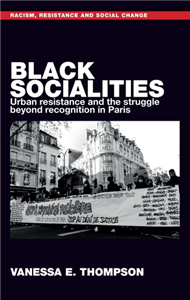
From author: This is a cutting-edge exploration of black urban politics in Parisian racialized working class and working poor districts, the formation of abolition geography, and the possibilities of new forms of political blackness. In Black Socialities. Urban resistance and the struggle beyond recognition in Paris, Vanessa E. Thompson argues that black urban politics in the French banlieues are multi-racial and spatially grounded towards abolition. Based on a close engagement with urban black activist practices against racial imagery in the city, policing and state racism, and housing insecurity, she shows how radical anti-racism goes beyond struggles for recognition and unfolds alongside new formations of political blackness that is based on urban conviviality. This form of black politics has much to teach us in this current conjuncture of liberal anti-racism and state recognition politics.
 Trusted Partner
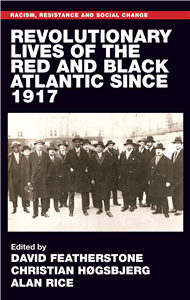
Revolutionary lives of the Red and Black Atlantic brings to light the life histories of a wide range of radical figures whose political activity in relation to the black liberation struggle was profoundly shaped by the global impact and legacy of the Russian Revolution of October 1917. The volume introduces new perspectives on the intellectual trajectories of well-known figures and critical activists including C. L. R. James, Paul Robeson, Walter Rodney and Grace P. Campbell. This biographical approach brings a vivid and distinctive lens to bear on how racialised social and political worlds were negotiated and experienced by these revolutionary figures, and on historic black radical engagements with left political movements, in the wake of the Russian Revolution.
Trusted Partner

The Russian Revolution of 1917 was not just a world-historical event in its own right, but also struck powerful blows against racism and imperialism, and so inspired many black radicals internationally. This edited collection explores the implications of the creation of the Soviet Union and the Communist International for black and colonial liberation struggles across the African diaspora. It examines the critical intellectual influence of Marxism and Bolshevism on the current of revolutionary 'black internationalism' and analyses how 'Red October' was viewed within the contested articulations of different struggles against racism and colonialism. Challenging European-centred understandings of the Russian Revolution and the global left, The Red and the Black offers new insights on the relations between Communism, various lefts and anti-colonialisms across the Black Atlantic - including Garveyism and various other strands of Pan-Africanism. The volume makes a major and original intellectual contribution by making the relations between the Russian Revolution and the Black Atlantic central to debates on questions relating to racism, resistance and social change.
Trusted Partner


In den drei in diesem Band versammelten Beiträgen ist die Rede von den Möglichkeiten und Grenzen »ästhetischer Repräsentation«, künstlerischer Erfassung und Durchdringung der Wirklichkeit. Von jeweils präzis bestimmten Positionen aus - einer kunstgeschichtlichen (Gombrich), einer psychologischen (Hochberg), einer philosophischen (Black) - wird dieses Thema erörtert.
Trusted Partner
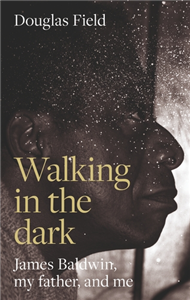
A moving exploration of the life and work of the celebrated American writer, blending biography and memoir with literary criticism. Since James Baldwin's death in 1987, his writing - including The Fire Next Time, one of the manifestoes of the Civil Rights Movement, and Giovanni's Room, a pioneering work of gay fiction - has only grown in relevance. Douglas Field was introduced to Baldwin's essays and novels by his father, who witnessed the writer's debate with William F. Buckley at Cambridge University in 1965. In Walking in the dark, he embarks on a journey to unravel his life-long fascination and to understand why Baldwin continues to enthral us decades after his death. Tracing Baldwin's footsteps in France, the US and Switzerland, and digging into archives, Field paints an intimate portrait of the writer's life and influence. At the same time, he offers a poignant account of coming to terms with his father's Alzheimer's disease. Interweaving Baldwin's writings on family, illness, memory and place, Walking in the dark is an eloquent testament to the enduring power of great literature to illuminate our paths.
Trusted Partner

Warum ist die Politik heute ein Laufsteg eitler Demagogen und die Universität ein ideologischer Kampfplatz? Und was ist dabei aus der Wahrheit geworden? In ihrem neuen Buch entdeckt Wendy Brown den modernen Nihilismus als Ursache dieser Probleme: Er entzieht allen Werten einschließlich der Wahrheit die Grundlage; er hyperpolitisiert das Wissen und reduziert die politische Sphäre auf die Zurschaustellung von Narzissmus. Der Nihilismus macht das Tiefgründige trivial, die Zukunft egal und die Korruption banal. Auf der Suche nach Lösungen wendet sich Brown Max Webers berühmten Vorlesungen über Wissenschaft und Politik als Beruf zu, die dieser am Ende des Ersten Weltkriegs hielt. Darin beklagt nämlich schon Weber selbst die Auswirkungen des Nihilismus auf das wissenschaftliche und politische Leben in der Moderne und fordert eine Wiederherstellung der Wahrheit in der Wissenschaft und der Integrität in der Politik. Im Anschluss an Weber plädiert Brown dafür, das Wissen aus der Hyperpolitisierung zu befreien, und denkt über neue Wege verantwortlichen politischen Handelns nach. Vor allem aber fordert sie die Linke auf, ihrer Verpflichtung zu kritischem Denken gerecht zu werden, und entwirft eine radikaldemokratische Vision, die eine charismatische Führung nicht scheut.
Trusted Partner
Trusted Partner
Trusted Partner
Trusted Partner
Trusted Partner
Trusted Partner
Trusted Partner
Trusted Partner
Trusted Partner
Trusted Partner
Trusted Partner
Trusted Partner
Trusted Partner



