
Éditions David
Livres Canada Books
View Rights Portal

David and Charles is an independent publisher of non-fiction books, predominantly in art, craft and creative categories. Our titles feature industry-leading authors and award-winning editorial and design, commissioned for commercial success in all markets. Category focus on practical how-to books in art, crochet, knitting, general crafts, patchwork & quilting, sewing and wellbeing. Cornerstone titles which are highly illustrated, project, technique and trend orientated.
View Rights Portal

David and Bathsheba presents a modernised edition of George Peele's explosive biblical drama about the tangled lives, deadly liaisons, and twisted histories of Ancient Israel's royal family. Martin's critical edition is the first modern single-volume edition of the play since 1912 and opens up this unduly neglected gem of English Renaissance drama to student and scholar alike. The introduction examines such topics as the play's treatment of its biblical and poetic sources, its engagement with Elizabethan politics, and its forceful representations of religious fanaticism, genocide, and sexual violence. Its commentary notes clarify the text's meaning and staging, guide the reader through the play's dramatisation of the turbulent Davidic period of Ancient Israel's history, and place the play in its broader cultural and artistic milieu. Martin's edition aims to encourage new contemporary critical study of Peele's powerful and disturbing drama.
 Trusted Partner
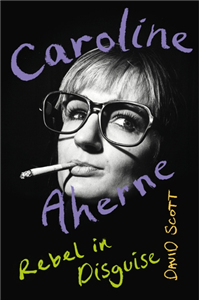
A thoughtful exploration of the work of this unique comedian and writer. Caroline Aherne was one of the most influential and beloved of British comedians. In this book David Scott explores Aherne's comedic artistry and creative legacy, focusing on her iconic characters and ground-breaking TV shows. Scott dives into Aherne's most beloved creations, from the sharp-tongued Mrs Merton to the quietly revolutionary The Royle Family. Drawing on the tales of collaborators and telling behind-the-scenes stories, he provides an intimate glimpse into the creative processes that brought these iconic works to life. At the same time, he examines the social and cultural influences that shaped Aherne's work, from the rich traditions of Northern working-class humour to the experiences of Irish migrants. Aherne's work is celebrated for its sharp wit, warmth and ability to find comedy in adversity. This book offers an exploration and celebration of one of comedy's most inventive minds, revealing how she reshaped the British comedy landscape.
Trusted Partner

The Toronto New Wave (TNW) comprises a group of avant-garde filmmakers working in Canada from the 1980s and into the new millennium whose innovative film works share significant affinities with anarchist themes and aesthetics. Several of the TNW filmmakers openly identify as anarchists and/or acknowledge a debt to anarchism in their production of highly apocalyptic narratives as part of their cinematic political projects. However, recognition of anarchism's progressive apocalyptic theoretical relevance has yet to be substantially taken up by scholarship in cinema analysis. This analysis introduces an anarchist-inflected analytical methodology to understand the apocalyptic-revelatory political work these films attempt to accomplish in the perceptual space between the filmic texts and both their auteurs and potential viewers, and to re-locate the TNW within cinema history as an ongoing phenomenon with new significance in an apocalyptic era of digital distribution.
Trusted Partner
starting point. David Herd sets out to provide readers with a new critical language through which they can appreciate the beauty and complexity of Ashbery's writing. Presenting the poet in all his forms -avant-garde, nostalgic, sublime and camp - the book argues that the perpetual inventiveness of Ashbery's work has always been underpinned by the poets desire to write the poem fit to cope with its occasion. Tracing Ashbery's development in the light of this idea, and from its origins in the dazzling artistic environment of 1950's New York, the book evaluates his poetry against the aesthetic, literary and historical backgrounds that have informed it. The story of a brilliant career, and a history of the period in which that career has taken shape, John Ashbery and American Poetry provides a compelling account of Ashbery's importance to Twentieth Century Literature. ;
Trusted Partner
 Trusted Partner
Trusted Partner
Trusted Partner

Simulating the marvellous presents important new research on Surrealism and the culture from which it arose. Offering fresh interpretations of Surrealist art and literature based around the theme of simulation, the book shows, in the late nineteenth and early twentieth centuries, that the notion of simulation arose in a number of discrete contexts, in relation to hysteria and war neuroses; more broadly it shadows the emergence of our concept of 'the unconscious'. Acknowledging simulation's relevance to Surrealism, this book argues, radically alters our understanding of the Surrealists' project and the terms in which one gauges its success or failure. It leads one to question the naïve assumption that automatic writing or drawing represent an authentic outpouring of the unconscious and gives renewed significance to a figure such as Salvador Dalí who embraced simulation and made it the basis of his art and aesthetic. Resonances are also explored with postmodern theory and art practice, around the themes of simulation and the simulacrum.It also points to one of the ways in which Surrealism chimes with a core preoccupation of contemporary art and theory. Written accessibly, and ranging across many of the core ideas of Surrealism, David Lomas balances coverage of both Surrealist art and literature, looking at such figures as Dalì, Eluard, Masson, Desnos, Brouillet, Picasso, Tanning and Janet, as well as Glenn Brown, Douglas Gordon and Sarah Lucas. The book will interest not only art historians and theorists, but also students and those with a general interest in Surrealism. ;
Trusted Partner
This edition contains in distilled form the insight and learning found in the fuller Revels critical editions, but with less of the learning apparatus that is appropriate to a critical edition. Compact and up to date introduction and commentary. The price and format are designed to be competitive with any paperback teaching edition of this play. ;
Trusted Partner


David Rokeah und sein Werk stehen für eine ganze Generation israelischer Dichter und Dichterinnen. Er wurde 1916 in eine Vielsprachenwelt im damaligen Lemberg, dem heutigen Lwiw hineingeboren. Er beherrschte Jiddisch, Hebräisch, Polnisch und Deutsch.1934 wanderte er ins damalige Palästina aus und entwickelte sich zu einem der bedeutendsten Dichter des jungen Staates. Seine Gedichte wurzeln in der jüdischen Tradition der Kabbala, des Chassidismus und nehmen zugleich die Erfahrung des 20. Jahrhunderts mit auf: die Verfolgung und Vernichtung des europäischen Judentums, den mühsamen Aufbau eines neuen Staates, die Vielsprachigkeit. Die größte Wirkung entfalteten David Rokeahs Gedichte in Deutschland. Wie ist das zu erklären? Michael Krüger, der Übersetzer, Autor, Verleger und nahe Freund des Dichters, zeigt, wie Rokeah seine Gedichte im Wesentlichen selbst ins Deutsche übersetzte – zusammen mit der lyrischen Avantgarde jener Zeit: Hans Magnus Enzensberger, Paul Celan, Erich Fried und anderen. Im Rückblick zeigt Michael Krüger eine einzigartige historische Konstellation auf: Zur modernen hebräischen Lyrik gehört wesentlich die Zweisprachigkeit – ein Brückenschlag vom Deutschen ins Hebräische. David Rokeah starb bei einer seiner zahlreichen Reisen nach Deutschland 1985 in Duisburg.
Trusted Partner

Enthusiast! is a polemical history of American literature told from the point of view of six of its major enthusiasts. Complaining that his age was 'retrospective', Emerson injected enthusiasm into American literature as a way of making it new. 'What,' he asked, 'is a man good for without enthusiasm? and what is enthusiasm but the daring of ruin for its object?' This book takes enthusiasm to be a defining feature of American literature, showing how successive major writers - Melville, Thoreau, Pound, Moore, Frank O'Hara and James Schuyler - have modernized and re-modeled Emerson's founding sense of enthusiasm. The book presents the writer as enthusiast, showing how enthusiasm is fundamental to the composition and the circulation of literature. Enthusiasm, it is argued, is the way literary value is passed on. Starting with a brief history of enthusiasm from Plato to Kant and Emerson, the book features chapters on each of Melville, Thoreau, Pound, Moore, O'Hara, and Schuyler. Each chapter presents an aspect of the writer as enthusiast, the book as a whole charting the changing sense of literary enthusiasm from Romanticism to the present day. Lucidly written and combatively argued, the book will appeal to readers of American Literature or Modern Poetry, and to all those interested in the circulation of literary work. ;
Trusted Partner


David Van Reybroucks monumentale Studie Kongo wurde von der Kritik als »Jahrhundertbuch« (Spiegel Online) gefeiert. Zu diesem mitreißenden »Gesellschaftsroman« (Der Tagesspiegel) verhält sich sein neuer Essay wie eine hinreißende Geschichtsnovelle. Im Mittelpunkt steht Neutral-Moresnet, eine Mikronation zwischen den Niederlanden bzw. Belgien und Preußen bzw. dem Deutschen Reich, die von 1816 bis 1919 Bestand hatte. Schon die wechselnden Namen der Nachbarstaaten erinnern an die kriegerische Vergangenheit des Kontinents. Van Reybrouck erzählt die Geschichte des knapp vier Quadratkilometer umfassenden Territoriums und entfaltet daraus ein europäisches Panorama, in dem es um die Bewohner geht und um große Industrie (Neutral-Moresnet lebte vor allem vom Abbau eines Zinkerzes), um Krieg, aber auch um Völkerverständigung. So gab es Anfang des 20. Jahrhunderts Pläne, die Mikronation zu einem Esperanto-Staat zu machen. Als Name war »Amikejo« im Gespräch – »Ort der Freundschaft«.
Trusted Partner
Im August 1945 schrieb David Rousset, nach Buchenwald und einem Todesmarsch gerade von den alliierten Truppen befreit, eine der ersten Darstellungen des Systems der deutschen Konzentrationslager in ihrem Aufbau, ihrer inneren und äußeren Hierarchie sowie ihren Funktionsweisen. Und er schrieb darüber, welche Konsequenzen dieses Universum für die Nachgeborenen hat. »Normale Menschen wissen nicht, dass alles möglich ist. Die KZler wissen es. Unter den KZlern wohnte der Tod in jeder Stunde ihres Daseins. Er hat ihnen all seine Gesichter gezeigt. Sie haben erfahren, wie er einen Menschen auf jede erdenkliche Weise entkleiden kann. Sie haben über Jahre in den phantastischen Kulissen einer Welt gelebt, in der alle Würde vernichtet war. Sie sind von den anderen Menschen durch eine Erfahrung getrennt, die nicht weitergegeben werden kann.«
Trusted Partner
 Trusted Partner
 Trusted Partner
 Trusted Partner
Plötzlich diese Übersicht. Milliarden von Seiten, in Sekundenbruchteilen durchsucht, als Trefferliste sauber angezeigt, mit der größten Selbstverständlichkeit sortiert nach Rang und Namen. Google bestimmt die Routinen des Alltags und ist dennoch nicht die Suchmaschine schlechthin. Auch außerhalb des World Wide Web gibt es zahllose, technisch hochgerüstete Prozeduren des Suchens. Die gegenwärtige Selbstverständlichkeit der einen Suchmaschine läßt leicht übersehen, daß Suchmaschinen einen Interessenkonflikt induzieren zwischen jenen, die sie einsetzen wollen, und jenen, auf die sie angesetzt werden. Ihr prekärer Status im Spannungsfeld zwischen Übersicht und Überwachung wird verdrängt. Anhand von vier Fallstudien zeigt David Gugerli die Entwicklung der Suchmaschine auf, von den frühen Fernseh-Ratespielen, von Robert Lembkes Unterhaltungsshow »Was bin ich?«, über Eduard Zimmermanns Fahndungssendung »Aktenzeichen XY« und Horst Herolds »Kybernetik der Polizei« bis zu der von Ted Codd ausgehenden Entwicklung der relationalen Datenbank. Während Lembke auf die Feststellung von Normalität ausgerichtet war, suchte Zimmermann die Devianz, Herold die Muster und Codd die allgemeingültige Such- und Abfragesprache für in Form gebrachte Wissensbestände, die man seit Mitte der sechziger Jahre Datenbanken nennt. »Die Geschichte der Suchmaschine ist eine eminent politische. Mit Suchmaschinen lassen sich Hoffnungen auf Fundamentaldemokratisierung und informationelle Emanzipation ebenso verbinden wie Horrorvisionen eines Orwellschen Überwachungsstaats, der über ein technokratisches Wissensmonopol verfügt.«
Trusted Partner

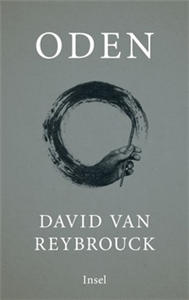
Dass ein international berühmter und preisgekrönter Sachbuchautor und Romancier wie David Van Reybrouck sich der jahrtausendealten Form der Ode zuwendet, mag auf den ersten Blick erstaunen. Van Reybrouck verwandelt sich diese seit jeher für die rühmende Hinwendung zu Menschen und Dingen bestimmte Form auf seine eigene, sehr persönliche Weise an: Seit 2015 schreibt er in dem unabhängigen niederländischen online-Magazin The Correspondent regelmäßig emphatische Würdigungen von Menschen, Dingen, aber auch ganz alltäglichen Vorgängen: der Ex, der nächtlichen Autofahrt, dem Offline-Sein, David Bowie, Kunstwerken, Menschen, denen er auf seinen Reisen begegnet ist oder die ihn geprägt haben. Hier werden sie erstmals in Buchform veröffentlicht. Offen und neugierig auf das Leben in all seinen Erscheinungsformen zeigt David Van Reybrouck hier mehr noch als in seinen anderen Büchern seine sinnliche, verletzliche, dichterische Seite. Er tritt auf als Abenteurer, Liebhaber, Freund, als engagierter Europäer und Streiter für Demokratie, Solidarität und Menschlichkeit. Und als leidenschaftlicher Bewunderer und genauer Beobachter. Nicht nur in der Van-Reybrouck-Gemeinde sind diese Oden Kult. »Oden schreiben – ich kann es nur empfehlen: Es macht einen aufmerksamer, begeisterungsfähiger, neugieriger, dankbarer.«
Trusted Partner
 Trusted Partner

David Wojnarowicz gibt den Misfits Amerikas eine Stimme Es sind die späten 70er, Wojnarowicz lebt auf der Straße, zieht kreuz und quer durch ein riesiges, verkommenes Amerika. Die Illusionen ist er los, aber die Menschen, die er trifft, liebt er, unbeirrbar – die Stricher, Pfarrer, Junkies, Soldaten, Trucker, Träumer, Ausreißer, die sich irgendwie durchschlagen, gestrandet in Bars und Stundenhotels, auf Hinterhöfen, an den Rändern der Gesellschaft, auf den gottverlassenen Nebenschauplätzen des Lebens.Ihnen allen gibt Wojnarowicz Stimme und Würde, indem er ihre Begegnungen in einen grellen Bilderstrom aus fiktiven Monologen verwandelt – es sind unfassbare Geschichten, flirrend fremdartig und verstörend vertraut, über ein Land, das jeden Moment einzustürzen droht. Mit tiefer Ehrlichkeit und halluzinatorischer Intensität erzählt David Wojnarowicz – der überlebensgroße, legendäre Künstler, Bilderstürmer und Aktivist – von Menschen, die nirgends dazugehören, von Aufbruch und Verzweiflung und von harscher Schönheit, wo niemand sie vermuten würde.


