ZNN Network Literary and Illustrator Agency
- International Copyright, Licensing, and Literary Agency - International Illustrator Agency and Management Services - Creative Content Development Services
View Rights Portal
- International Copyright, Licensing, and Literary Agency - International Illustrator Agency and Management Services - Creative Content Development Services
View Rights Portal
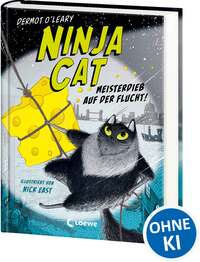
Gemütliche Nickerchen, unzählige Streicheleinheiten und Futter, so weit das Auge reicht – Toto lebt wie eine ganz gewöhnliche Katze. Doch was niemand weiß: Im Verborgenen ist sie Ninja Cat! Kat(z)astrophe! In ganz London ist kein Krümelchen Käse mehr zu finden. Und das vor der internationalen Friedenskonferenz, die ohne Käseplatte garantiert zum Desaster wird. Toto und ihre Freunde machen sich sofort auf die Suche nach dem Käse-Dieb. Dieser stellt sich als Erzherzog Ferdikater heraus – ein legendärer Ninja-Krieger! Reichen Totos Ninja-Kräfte, um diesen mächtigen Gegner aufzuhalten?
 Trusted Partner

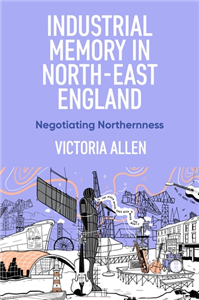
Industrial memory in North East England examines how the region's industrial myth and memory have been articulated in the renegotiation of northernness. The book offers a critical contextualisation of the concept of northernness and the English North, and an introduction to the concept of the PopCultural Portfolio, a mixed-methods approach to conjunctural analysis in cultural and memory studies. The book provides six richly illustrated case studies to demonstrate the practical application of cultural studies' expansive and inclusive understanding of texts, bringing together materials from North East football, folk, indie and exhibition culture to establish how the North East's industrial past continues to be remembered and functionalised as industrial memory. In turn, the conjunctural analysis demonstrates how industrial memory is articulated and mythologised as north(east)ernes in contemporary popular culture.
Trusted Partner
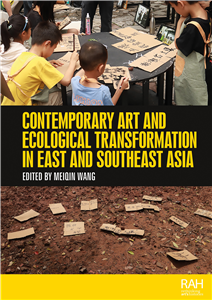
This anthology, presenting new research from fourteen scholars, delves into the interplay between contemporary art and ecological concerns in East and Southeast Asia. Focused on the concept of artistic remediation, the book unravels the diverse capacities of art to combat systemic anthropogenic destruction to the environment and ecology. At its core, the book articulates the ongoing ecological transformation in art and art history that embraces a paradigm shift in human-nature relationships, emphasizing interconnectedness of all life forms of the Earth. Bridging art studies, activism, and environmental studies, the book examines how artistic practices in the region have engaged with ecocritical reflection, biodiversity advocacy, sustainable practices, and environmental justice, among others. Providing a platform for critical and timely analysis of artistic interventions in the face of existential crises, the book acknowledges diverse voices of scholars who have situated their scholarship in the cultural and artistic specificities of various societies, locales, and communities in the region.
Trusted Partner
 Trusted Partner
Trusted Partner
Trusted Partner
This volume explores the international relations of today's Middle East, a region that has become increasingly multi-polar. The tumult following the Arab Uprisings has expanded the arenas competed over by regional powers, global actors and non-state players. The United States, once seemingly intent on a hegemonic 'Pax Americana' has stepped back, leaving powers such as Russia, China, India and the EU, with opportunities to increase their reach and expand their influence. Meanwhile, regional rivalries and alliances have continued to shape conflict and cooperation in the Middle East. As global politics moves towards a new, multipolar era, this volume sheds important light on how this transition will impact on the region. Comprised of two macro sections that offer theoretical reflections and empirical case studies, this volume is essential reading for scholars of the politics and international relations of the Middle East.
Trusted Partner
Trusted Partner
 Trusted Partner
This book offers a nuanced snapshot of the complex geopolitical dynamics in the Persian Gulf, underlining the interaction between Iran, Saudi Arabia, and the US. Examining their interwoven relations since the 1970s, Luíza Cerioli's framework reveals how changes in US-Saudi ties have ripple effects on Iran-US and Iran-Saudi relations and vice versa. Using a historical lens, she explores how enduring US-Saudi connections hinge on order expectations, delves into the cognitive factors shaping US-Iran enmity and traces the source of oscillation in the Saudi-Iran ties. Employing Neoclassical Realism, the book investigates status-seeking, national identities and leadership preferences, offering a deeper understanding of the region's multipolar system. By combining International Relations and Middle East Studies, Cerioli's work contributes to both fields, unravelling the intricate interplay between international structures, regional nuances and agency in shaping Persian Gulf geopolitics.
Trusted Partner
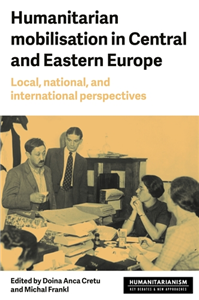
By focusing on aid Central and Eastern Europe, the volume adds to the existent scholarly explorations of modern humanitarianism, its actors and practices. In the twentieth century, aid workers assisted victims of war and earthquakes, delivered food, supported health care, provided childcare, or sheltered refugees. The contributors not only reconstruct these diverse histories and their protagonists, but also bring international, national, and local actors together: from grassroots activists to private associations to state-driven "socialist humanitarians" to large Western aid organizations. In doing so, they challenge the often unidirectional, from West-to-East, and asymmetrical perspective on donor-recipient relationships in humanitarian processes.
Trusted Partner
Trusted Partner

This book is an in-depth examination of the relations between Ireland and the former East Germany between the end of the Second World War and the fall of the Berlin Wall. It explores political, diplomatic, economic, media and cultural issues. The long and tortuous process of establishing diplomatic relations is unique in the annals of diplomatic history. Central in this study are the activities of the Stasi. They show how and where East German intelligence obtained information on Ireland and Northern Ireland and also what kind of information was gathered. A particularly interesting aspect of the book is the monitoring of the activities of the Irish Republican Army and the Irish National Liberation Army and their campaigns against the British army in West Germany. The Stasi had infiltrated West German security services and knew about Irish suspects and their contacts with West German terrorist groups. East German Intelligence and Ireland, 1949-90 makes an original contribution to diplomatic, intelligence, terrorist and Cold War studies. ;
Trusted Partner

This book is an in-depth examination of the relations between Ireland and the former East Germany between the end of the Second World War and the fall of the Berlin Wall. It explores political, diplomatic, economic, media and cultural issues. The long and tortuous process of establishing diplomatic relations is unique in the annals of diplomatic history. Central in this study are the activities of the Stasi. They show how and where East German intelligence obtained information on Ireland and Northern Ireland and also what kind of information was gathered. A particularly interesting aspect of the book is the monitoring of the activities of the Irish Republican Army and the Irish National Liberation Army and their campaigns against the British army in West Germany. The Stasi had infiltrated West German security services and knew about Irish suspects and their contacts with West German terrorist groups. East German Intelligence and Ireland, 1949-90 makes an original contribution to diplomatic, intelligence, terrorist and Cold War studies.
Trusted Partner
Trusted Partner

An innovative & different princess story! • The three princesses love to quarrel • Original and incredibly witty • Written by Ursula Poznanski and stunning illustrations by Sabine Büchner • Translation Grant! Bianca, Violetta and Rosalind are three adorable princesses. But they share a tiny quirk: they love to argue! One day a visitor asks for entrance into the castle. Prince Waldomir doesn’t enjoy hunting dragons anymore and rather prefers to get married know. Of course each princess is convinced to be the best choice and the prince’s one and only. So a rat race is launched before they have even met the puny prince for the first time…
Trusted Partner

Ruby Fairygale and the Island of Magic Ruby Fairygale's first adventure - lovingly and excitingly told, with many atmospheric illustrations• Feel-good fantasy for Story Time, Early Readers and Fans of "Ruby Fairygale"!• Written by Marlene Jablonski (“Liliane Susewind” Chapter book series), based on a synopsis by Kira Gembri• Strong female protagonist and lovingly developed characters, with a high sympathy factor8-year-old Ruby Fairygale lives on a small island near the west coast of Ireland. After school, she always helps her grandmother, who works as a veterinarian. But the two of them have a big secret: they know that there are not only animals on the island, but also magical mythical creatures that need their help.Summer vacation at last! Now Ruby can spend the whole day helping her grandma. The two of them not only take care of animals, but also fairies, goblins and other mythical creatures! It's not easy to keep this secret - especially from Briana, the most unfriendly girl in Ruby's class. When Bri's father's fishing nets are destroyed, Briana suspects a pack of seals and is determined to drive them away. But Ruby suspects that something else is behind this. Something completely magical ... And indeed: a little mermaid had become entangled in the fishing net! Can Ruby still stop Bri without revealing her secret?
Trusted Partner

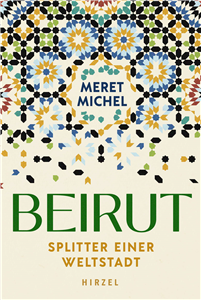
The tragic history of a cosmopolitan city: Beirut and the fate of LebanonOn August 4, 2020, the port of Beirut is shaken by a massive explosion that was to have an impact on the entire city: Hundreds of thousands of houses are destroyed, more than 200 people killed and thousands injured. This was not to be the first and last catastrophe for a country shaken by multiple crises. In this book, ten people tell their stories from their city - a city that has been the hub of the Middle East region for many decades. They live in the once glamorous district of Hamra or in the south of the city, which is controlled by Hezbollah. They are devout Muslims or atheists, come from the upper classes or have been struggling to survive for a long time.
Trusted Partner

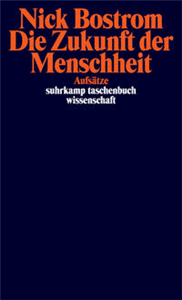
Leben wir schon heute in der Matrix? Es stehen dramatische Zeiten bevor: In den nächsten Jahrzehnten könnten Technologien wie die Künstliche Intelligenz und die Gentechnik das Ende der Menschheit herbeiführen oder aber ein goldenes Zeitalter einläuten, das wir uns noch kaum ausmalen können. Oder leben wir etwa heute schon in der Matrix, wie der schwedische Philosoph und Bestsellerautor Nick Bostrom (Superintelligenz) in seinem berühmten Simulationsargument behauptet? In den sechs hier versammelten Aufsätzen, von denen einige bereits Klassikerstatus besitzen, wagt Bostrom einen ebenso nüchternen wie detaillierten Blick in unsere Zukunft. Manches liest sich (noch) wie Science-Fiction, könnte aber aktueller und ernster kaum sein.
Trusted Partner

Between 1983 and 1987, mercenaries adopting the pseudonym GAL (Grupos Antiterroristas de Liberación, Antiterrorist Liberation Group) paid by the Spanish treasury and relying upon national intelligence support were at war with the Basque militant group ETA (Euskadi (e)Ta Askatasuna, Basque Country and Freedom). Over four years, their campaign of extrajudicial assassinations spanned the French-Spanish border. Nearly thirty people were killed in a campaign comprised of torture, kidnapping, bombing and the assassination of suspected ETA activists and Basque refugees. This establishment of unofficial counterterrorist squads by a Spanish Government was a blatant detour from legality. It was also a rare case in Europe where no less than fourteen high-ranking Spanish police officers and senior government officials, including the Minister of Interior himself, were eventually arrested and condemned for counter-terrorism wrongdoings and illiberal practices. Thirty years later, this campaign of intimidation, coercion and targeted killings continues to grip Spain. The GAL affair was not only a serious example of a major departure from accepted liberal democratic constitutional principles of law and order, but also a brutal campaign that postponed by decades the possibility of a political solution for the Basque conflict. Counter-terror by proxy uncovers why and how a democratic government in a liberal society turned to a 'dirty war' and went down the route of illegal and extrajudicial killing actions. It offers a fuller examination of the long-term implications of the use of unorthodox counter-terrorist strategies in a liberal democracy.