
Dominique et compagnie
Livres Canada Books
View Rights Portal

Wolters Kluwer Health is a leading global publisher of medical, nursing and allied health information resources in book, journal, newsletter, looseleaf and electronic media formats.
View Rights Portal Trusted Partner
Trusted Partner
Trusted Partner

 Trusted Partner
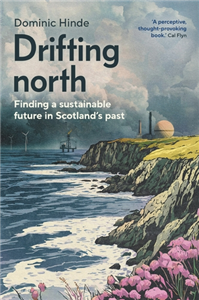
Scotland's past and future collide in this engaging journey through climate change, fossil capitalism and the struggle for a sustainable world. Scotland's history and future are entangled with climate change and the story of the modern world. This small country on the fringes of northern Europe pioneered fossil capitalism and played a key role in its spread across the planet. It is a living museum of the crisis of the west, of deindustrialisation, stagnation and the struggle to build a better future from the ashes. Journalist and sociologist Dominic Hinde travels from the treeless Highlands to the lowland cities, struggling to balance memories with aspiration. Through this journey he finds that his own sensory turmoil, shaped by recovery from a near fatal accident, mirrors the disarray of the fossil fuel transition - an uncertain passage between what was and what must be. Part memoir, part environmental history, part travelogue, this is a compelling narrative of connections - to place, energy and the possibility of renewal. Through the lens of one country, it asks a vital question: can the lessons of the past help us build a more sustainable future?
Trusted Partner
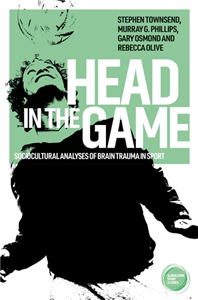
Head in the game brings together international scholars from multiple humanities, social science, and scientific disciplines to critically examine one of the most vexing issues in global sport: concussion. It argues that science and medicine alone cannot solve the concussion crisis: sociocultural factors must also be considered. This edited collection draws attention to the ways that social, cultural, historical, political, literary, philosophical, and legal factors have shaped the concussion crisis in sport. Head in the game is essential reading for those who want to understand how the concussion crisis came to be, and provides guidance for developing ethical and evidence-based solutions in the future.
Trusted Partner

 Trusted Partner

When is the use of force for humanitarian purposes legitimate? The book examines this question through one of the most controversial examples of humanitarian intervention in the post Cold War period: the 1999 NATO intervention in Kosovo. Justifying Violence applies a critical theoretical approach to an interrogation of the communicative practices which underpin claims to legitimacy for the use of force by actors in international politics. Drawing on the theory of communicative ethics, the book develops an innovative conceptual framework which contributes a critical communicative dimension to the question of legitimacy that extends beyond the moral and legal approaches so often applied to the intervention in Kosovo. The empirical application of communicative ethics offers a provocative and nuanced account which contests conventional interpretations of the legitimacy of NATO's intervention. ;
Trusted Partner
The moral problem of authority is the challenge of reconciling legitimate authority (the right to rule) with the demands of freedom and rationality. In this book, I argue that authority can have legitimacy, but when it does it generates a moral dilemma, where the obligation to obey comes at some cost to freedom and reason. Hence, not only do I depart from the views of those who insist that authority can never have legitimacy, but also those who maintain that insofar as authority is legitimate it simply satisfies the demands of freedom or rationality. My focus here will be on both what it is that justifies authority (in particular focusing on membership, and the goods of membership) as well what type of reason an authoritative directive is, how it can come into conflict with others reasons, and how those conflicts are resolved.
Trusted Partner
Air policing was used in many colonial possessions, but its most effective incidence occurred in the crescent of territory from north-eastern Africa, through South-West Arabia, to North West Frontier of India. This book talks about air policing and its role in offering a cheaper means of 'pacification' in the inter-war years. It illuminates the potentialities and limitations of the new aerial technology, and makes important contributions to the history of colonial resistance and its suppression. Air policing was employed in the campaign against Mohammed bin Abdulla Hassan and his Dervish following in Somaliland in early 1920. The book discusses the relationships between air control and the survival of Royal Air Force in Iraq and between air power and indirect imperialism in the Hashemite kingdoms. It discusses Hugh Trenchard's plans to substitute air for naval or coastal forces, and assesses the extent to which barriers of climate and geography continued to limit the exercise of air power. Indigenous responses include being terrified at the mere sight of aircraft to the successful adaptation to air power, which was hardly foreseen by either the opponents or the supporters of air policing. The book examines the ethical debates which were a continuous undercurrent to the stream of argument about repressive air power methods from a political and operational perspective. It compares air policing as practised by other European powers by highlighting the Rif war in Morocco, the Druze revolt in Syria, and Italy's war of reconquest in Libya.
Trusted Partner
Trusted Partner
Trusted Partner

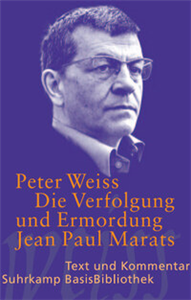
Text und Kommentar in einem Band. In der Suhrkamp BasisBibliothek erscheinen literarische Hauptwerke aller Epochen und Gattungen als Arbeitstexte für Schule und Studium. Der vollständige Text wird ergänzt durch anschaulich geschriebene Kommentare.
Trusted Partner

Pablo Neruda's Veinte poemas de amor y una canción desesperada (1924) is the most widely read and best loved book of poetry ever written in Spanish. Its verses can be recited by heart by millions of Latin Americans from every background and walk of life, and it has become almost a bible for young lovers. Yet despite, or perhaps because of this immense popular success, it has received scant attention from scholars, often being studied out of context and in relatively superficial fashion. This new critical edition - the first to include critical notes in English - argues that the book constitutes a critical juncture in the young Neruda's development as a poet, and that the poems are as much painstakingly wrought experiments in style, language and form as they are outpourings of youthful passion. A detailed introduction in English demonstrates that the Viente poemas represent the culmination of complex and sometimes fraught poetic apprenticeship, significant traces of which can be found in the poems themselves. This is followed by a series of commentaries which offer close readings of all twenty-one poems, an extensive bibliography, a selected vocabulary, and a list of key rhetorical and metrical terms. ;
Trusted Partner
Trusted Partner
 Trusted Partner

The long-awaited prequel to Chronicles of the revolution covers the first twenty years (1377-97) of Richard II's reign. This richly-documented period offers exceptional opportunities and challenges to students, and the editor has selected material from a wide range of sources: well-known English chronicles, foreign chronicles and legal, administrative and financial records. These are arranged chronologically to form a coherent narrative of the reign. Clear and lively commentary and notes enable readers to make the fullest use of each document. The introduction describes the complex domestic and international situation which confronted the young king and offers guidance on the strengths and weaknesses of the reign's leading chronicles. The dramatic and diverse politics of the reign of Richard II make this the ideal special subject and an accessible, affordable, student-friendly documentary history of Richard II's reign has long been needed. This book is designed to fill that gap.
Trusted Partner

»Nicht aus Lust am Provozieren sind Sade, Fourier und Loyola in ein und demselben Buch zusammengestellt worden, sondern weil alle drei Klassifikatoren, Sprachbegründer waren: der verfemte Schriftsteller begründete eine Sprache des erotischen Vergnügens, der utopische Philosoph eine Sprache des sozialen Glücks und der heilige Jesuit eine Sprache der Anrufung Gottes. Zeichen erfinden und nicht, wie wir es alle tun, nur konsumieren heißt paradoxerweise in den Bereich jenes Nachhinein des Sinns einzutreten, der das signifiant darstellt, kurz, eine Schreibweise praktizieren. Daher beschäftigt sich dieses Buch auch nicht mit dem Inhalt der Schriften dieser drei Autoren (…), sondern es behandelt Sade, Fourier und Loyola als Formulierer, Erfinder von Schreibweisen, Textoperateure.« Roland Barthes
Trusted Partner
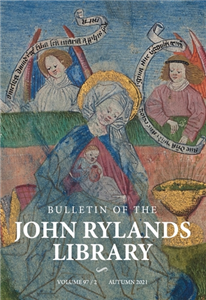
The John Rylands Library houses one of the finest collections of rare books, manuscripts and archives in the world. The collections span five millennia and cover a wide range of subjects, including art and archaeology; economic, social, political, religious and military history; literature, drama and music; science and medicine; theology and philosophy; travel and exploration. For over a century, the Bulletin of the John Rylands Library has published research that complements the Library's special collections. The editors invite the submission of articles in these fields and welcome discussion of in-progress projects.
Trusted Partner



