
Agence Deborah Druba
AGENCE DEBORAH DRUBA is an international rights agency based in Paris.
View Rights Portal
AGENCE DEBORAH DRUBA is an international rights agency based in Paris.
View Rights Portal
Burnet Media is an independent publisher based in Cape Town, South Africa. We specialise in forging close author-publisher partnerships for trade and customised projects.
View Rights Portal

Recent scholarship in political thought has closely examined the relationship between European political ideas and colonialism, particularly the ways in which canonical thinkers supported or opposed colonial practices. But little attention has been given to the engagement of colonized political and intellectual actors with European ideas. The essays in this volume demonstrate that a full reckoning of colonialism's effects requires attention to the ways in which colonized intellectuals reacted to, adopted, and transformed these ideas, and to the political projects that their reactions helped to shape. Across nine chapters, a mix of political theorists and intellectual historians grapple with specific thinkers and contexts to show in detail the unpredictable, complex and sometimes paradoxical impact of European ideas in an array of colonial settings.
 Trusted Partner


Über die Folgen der Globalisierung für die Kultur wird in den letzten Jahren heftig gestritten. Prophezeien die einen eine Homogenisierung der Weltkultur, verheißen die anderen kulturelle Desintegration bzw. Fragmentierung allerorten. Doch ein Blick auf die Kulturgeschichte der letzen Jahrhunderte lehrt, dass diese beunruhigenden Diagnosen nur zum Teil zutreffen. Viel wahrscheinlicher ist indes, so der Kulturhistoriker Peter Burke, dass eine neue kulturelle Ordnung entsteht, sich neue Formen kultureller Rekonfiguration herauskristallisieren werden, wobei Bausteine des Alten in ein neues Muster eingefügt werden. Burke untersucht daher in diesem Buch den kulturellen Austausch in vergleichender und historischer Perspektive. Er erkundet die Vielfalt der Konzepte, mit denen dieser Austausch beschrieben und analysiert wurde, und befasst sich mit seinen Kontexten und Konsequenzen. Sein Hauptaugenmerk gilt dabei drei möglichen Szenarien einer Reaktion auf kulturellen »Import« bzw. kulturelle »Invasionen«: Akzeptanz, Abwehr und Segregation.
Trusted Partner
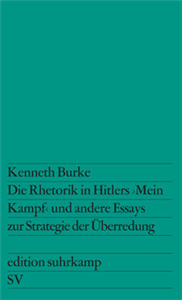
Der Titelessay entstand in den späten dreißiger Jahren; er demontierte, der Geschichtsschreibung vorgreifend, die Legende, daß dem Zeitgenossen der Nationalsozialismus sich als Naturkatastrophe dargestellt habe, deren Ursachen und Ablauf sich nicht hätten erkennen lassen. Burkes Studie beweist das Gegenteil. Zu einer Zeit, da die halbe Welt nicht viel mehr als Unbehagen an Hitlers Politik empfand, beschrieb der amerikanische Kritiker das quasimagische Wahnsystem der »braunen Bewegung« und ihre sozialen Mechanismen. – Unser Band enthält ferner Aufsätze Burkes zur Strategie der Überredung, des »Entlarvens« und der poetischen Benennung.
Trusted Partner

»Es leidet keinen Zweifel, daß er der überlegenste Kritiker und Theoretiker der Literatur ist, den Amerika heute besitzt« – mit diesem Urteil begrüßt W. H. Auden 1941 Kenneth Burkes »Philosophy of Literary Form«, einen der folgenreichsten neueren Versuche, Funktion und Bedeutung der Dichtung zu bestimmen. Burkes Einfluß auf die zeitgenössische angelsächsische Kritik und Literaturwissenschaft ist intensiv, wenngleich lärmlos. Zwar hat er in seiner Ästhetik soziologische, psychoanalytische und linguistische Erkenntnisse aufgenommen, aber ohne sich einer Schule oder Perspektive mit Haut und Haaren zu verschreiben. Seine Literaturtheorie begreift dichterische Werke als ›symbolische‹ Handlungen.
Trusted Partner
Trusted Partner
Trusted Partner
 Trusted Partner

Dreißig Jahre lang hat sie sich vor ihrer Vergangenheit versteckt. Acht ungeklärte Todesfälle. Ein gespenstischer Horrorfilm. Und kein Ausweg mehr. Gerade in L.A. gelandet, wo sie das Set einer neuen Streaming-Horror-Serie besucht, sieht die Journalistin Laura Warren, wie ein Mann von einer Brücke springt und direkt hinter ihrem Auto aufschlägt. Es hat wieder angefangen, denkt sie. Denn die Serie, über die sie berichten soll, ist ein Remake von The Guesthouse, einem berüchtigten Gruselklassiker aus den 90ern, in dem sie die Hauptrolle spielte: ein kleines Mädchen mit der schrecklichen Gabe, den Leuten vorhersagen zu können, wie der Needle Man sie töten wird. Und als damals wirklich acht Mitglieder der Besetzung und der Crew während und nach dem Dreh auf unheimliche Weise starben, wurde der Film zu einem Kultklassiker ‒ und ruinierte ihr Leben. Laura änderte ihre Identität und zog nach England. Doch manche Drehbücher wollen einfach nicht begraben bleiben: Kaum hat sie mit dem Remake zu tun, geht alles wieder von vorne los. Aber jetzt, wo einer nach dem andern zu Tode kommt, will Laura den Fluch ein für alle Mal beenden ‒ wenn der Needle Man sie nicht vorher holt ...
Trusted Partner

Thomas May's The Tragedy of Antigone (1631), edited by Matteo Pangallo, is the first English treatment of the story made famous by Sophocles. This edition contains a facsimile of the copy held at the Beinecke Library of Yale University, making the play commercially available for the first time since its original publication. The extensive introduction discusses, among other things, the ownership history of existing copies and their marginal annotations, and of the play's topical political implications in the light of May's wavering between royalist and republican sympathies. Writing during the contentious early years of Charles I's reign, May used Sophocles' Antigone to explore the problems of just rule and justified rebellion. He also went beyond the scope of the original, adding content from a wide range of other classical and contemporary plays, poems and other sources, including Shakespeare's Romeo and Juliet and Macbeth. This volume will be essential reading for advanced students, researchers and teachers of early English drama and seventeenth-century political history.
Trusted Partner
Trusted Partner

First published in 1790 Edmund Burke's Reflections on the Revolution in France initiated a debate not only about the nature of the unprecedented historical events taking place across the channel, but about the very identity of the British state and its people. It has subsequently been appropriated by a variety of conservative and liberal thinkers and has played a major role in our understanding of the relationship between rhetoric, aesthetics and politics. In this volume, leading Burke scholars offer new and challenging essays which allow us to reconsider the historical context in which Reflections on the Revolution in France was written. The essays consider its reception, its engagements in the discourses of nationalism and toleration, its legacy to English and Irish writers of the Romantic period and its impact within our contemporary cultural and critical theory. The volume demonstrates a range of interdisciplinary critical methods and cultural perspectives from which to read Burke's most famous work. This volume will be the ideal companion to Burke's Reflections for all students of literature, history, politics and Irish studies. ;
Trusted Partner

The Humorous Magistrate is a seventeenth-century satiric comedy extant in two highly distinctive manuscripts. This, the earliest and clearly working draft of the play is bound with three other plays (including The Emperor's Favourite, published by the Malone Society in 2010) in a volume in the library of the Newdigate family of Arbury Hall, Nuneaton, Warwickshire. The second version, showing yet another stage of revision not found in the Arbury manuscript and orientated towards performance, was purchased by the University of Calgary from the English antiquarian Edgar Osborne in 1972. The relationship between the manuscripts was discovered in 2005. The anonymous play has been attributed to John Newdigate III (1600-1642). Like The Emperor's Favourite, it takes aim at the court; its particular object of satire is governmental strategies under the Personal Rule of Charles I. The play appears in print for the first time in these separate editions. The volumes are illustrated with several plates, some provided for comparative purposes.
Trusted Partner

 Trusted Partner
Trusted Partner
Trusted Partner
Trusted Partner
Trusted Partner
Trusted Partner
Trusted Partner

With well over 6,300 articles, including over 500 new entries, this fourth edition of The Encyclopedia of British Film is a fully updated invaluable reference guide to the British film industry. It is the most authoritative volume yet, stretching from the inception of the industry to the present day, with detailed listings of the producers, directors, actors and studios behind a century or so of great British cinema. Brian McFarlane's meticulously researched guide is the definitive companion for anyone interested in the world of film. Previous editions have sold many thousands of copies and this fourth edition will be an essential work of reference for enthusiasts interested in the history of British cinema, and for universities and libraries.
Trusted Partner
Trusted Partner
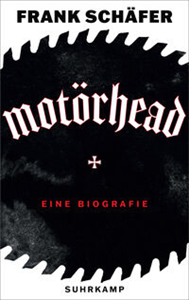
Als Lemmy Kilmister am 28. Dezember 2015 starb und sein Teamkollege Mikkey Dee einen Tag später das Ende der Band erklärte, brach für die Fans eine Welt zusammen. Vierzig Jahre heizte Lemmy, der berühmteste und wichtigste Repräsentant des Heavy Metal, dessen Karriere damit begann, dass er bei Jimi Hendrix die Marshalls aus dem Transporter schleppte, mit seinem martialischen Rock’n’Roll der Musikszene ein. Ein Geheimtipp zunächst für die Hartgesottenen, wurde der Meister der Variation schließlich zum Liebling aller. Noch posthum nimmt sein Ruhm immer weiter zu. Nun werden die Archive geplündert, und jedes Konzert wird für die unersättlichen Motörhead-Addicts auf Vinyl gepresst, auch bei feministischen Musikerinnen hat er eine beachtliche Reputation erlangt. Frank Schäfer, Motörhead Fan der ersten Stunde erzählt die Geschichte.



