
Your Search Results


-
Promoted Content

 June 1993
Die Ideologie des Ästhetischen
by Paul Man, Karl Heinz Bohrer, Christoph Menke, Jürgen Blasius, Christoph Menke
Als Paul de Man 1983 starb, war er der wohl bekannteste und einflußreichste Vertreter einer Richtung der Literaturkritik und ihrer Theore, die allgemein als »dekonstruktiv« bezeichnet wird. Kennzeichnend für diese Richtung ist eine erneute Konzentration auf die innere Verfaßtheit der literarischen Texte. Eine erste Auswahl dieser methodisch vorbildlich wie brillant geschriebenen Texte ist 1988 unter dem Titel »Allegorien des Lesens« in der edition suhrkamp erschienen. Die vorliegende Auswahl konzentriert sich auf die methodologischen und theoretischen Prämissen dieses Vorhabens, wie sie die Abhandlungen über die Zeitlichkeit der Literatur, über Shelley und über die Autobiographie deutlich machen. Sich auf die immanente Verfaßtheit und Bewegung von Texten einzulassen ist nach de Man kein selbstzweckhaftes, folgenloses Unternehmen. De Man beansprucht vielmehr für seine »Rückkehr zur Philologie« eine allgemeine Bedeutung; die Literaturkritik ist zugleich philosophische und politische Kritik. Damit ist der zweite Schwerpunkt dieser Auswahl bezeichnet. De Man erläutert diese These zum einen in kritischer Auseinandersetzung mit der Philosophie Jacques Derridas. Zum anderen zeigt er an zentralen Texten der ästhetischen Tradition, an Kant und Hegel, daß ihr falsches – »ideologisches« – Verständnis literarischer Texte unter der Kategorie des »Ästhetischen« ebenso weitreichende philosophische wie politische Konsequenzen hat.
-
Promoted Content

 The ArtsAugust 2007
Monstrous adaptations
Generic and thematic mutations in horror film
by Edited by Richard Hand and Jay McRoy
The fifteen groundbreaking essays contained in this book address the concept of adaptation in relation to horror cinema. Adaptation is not only a key cultural practice and strategy for filmmakers, but it is also a theme of major importance within horror cinema as a hole. The history of the genre is full of adaptations that have drawn from fiction or folklore, or that have assumed the shape of remakes of pre-existing films. The horror genre itself also abounds with its own myriad transformations and transmutations. The essays within this volume engage with an impressive range of horror texts, from the earliest silent horror films by Thomas Edison and Jean Epstein through to important contemporary phenomena, such as the western appropriation of Japanese horror motifs. Classic works by Alfred Hitchcock, David Cronenberg and Abel Ferrara receive cutting-edge re-examination, as do unjustly neglected works by Mario Bava, Guillermo del Toro and Stan Brakhage.
-
 Trusted Partner
 Society & culture: generalMay 2017
Human remains and mass violence
Methodological approaches
by Edited by Jean-Marc Dreyfus, Élisabeth Anstett
This book outlines for the first time in a single volume the theoretical and methodological tools for a study of human remains resulting from episodes of mass violence and genocide. Despite the highly innovative and contemporary research into both mass violence and the body, the most significant consequence of conflict - the corpse - remains absent from the scope of existing research. Why have human remains hitherto remained absent from our investigation, and how do historians, anthropologists and legal scholars, including specialists in criminology and political science, confront these difficult issues? By drawing on international case studies including genocides in Rwanda, the Khmer Rouge, Argentina, Russia and the context of post-World War II Europe, this ground-breaking edited collection opens new avenues of research. Multidisciplinary in scope, this volume will appeal to readers interested in an understanding of mass violence's aftermath, including researchers in history, anthropology, sociology, law, politics and modern warfare. The research program leading to this publication has received funding from the European Research Council under the European Union's Seventh Framework Programme (FP/2007-2013) / ERC Grant Agreement n° 283-617.
-
Trusted Partner
 Genocide & ethnic cleansingMay 2017
Destruction and human remains
Disposal and concealment in genocide and mass violence
by Series edited by Jean-Marc Dreyfus, Élisabeth Anstett. Edited by Élisabeth Anstett, Jean-Marc Dreyfus
Destruction and human remains investigates a crucial question frequently neglected in academic debate in the fields of mass violence and genocide studies: what is done to the bodies of the victims after they are killed? In the context of mass violence, death does not constitute the end of the executors' work. Their victims' remains are often treated and manipulated in very specific ways, amounting in some cases to true social engineering, often with remarkable ingenuity. To address these seldom-documented phenomena, this volume includes chapters based on extensive primary and archival research to explore why, how and by whom these acts have been committed through recent history. Interdisciplinary in scope, Destruction and human remains will appeal to readers interested in the history and implications of genocide and mass violence, including researchers in anthropology, sociology, history, politics and modern warfare.
-
Trusted Partner

 April 2023
Kiki Man Ray
Kunst, Liebe und Rivalität im Paris der 20er Jahre
by Mark Braude
Man nannte ihn »Man Ray« und sie die »Königin von Montparnasse«: Emmanuel Radnitzky und Alice Ernestine Prin.Kiki de Montparnasse begeisterte als Sängerin in Nachtclubs, plauderte mit Jean Cocteau und Marcel Duchamp in den angesagten Cafés von Paris und saß Malern wie Modigliani, Calder und Soutine Modell. Ihre Autobiografie – mit einem Vorwort von Ernest Hemingway – kam in Frankreich ganz groß raus und in Amerika auf den Index. Und das alles noch vor ihrem dreißigsten Lebensjahr.Als Kiki und Man Ray sich kennenlernen, ist sie 20 und eine feste Größe in der Montparnasse-Bohème, er 31, ein namenloser Fotograf aus Amerika, gerade erst in Paris angekommen. Er fotografiert sie, sie werden ein Paar, es folgt eine acht Jahre währende stürmische Liebesbeziehung. Mit ikonischen Aufnahmen wie »Violon d’Ingres« und »African mask« – ihr Rücken, ihr makelloses Gesicht – begründet Man Ray seine Karriere, sie öffnet ihm die Türen zu Galeristen und Künstlern. Er ermuntert sie, selbst zu malen: Alltagsszenen, Erinnerungen an ihre Kindheit im Burgund. Aber als sie auch damit Erfolg hat, ist er eifersüchtig und macht sie klein. Wa war es, das diese junge Frau wie keine andere zur Verkörperung einer ganzen Ära machte? In seinem akribisch recherchierten, glänzend geschriebenen Buch versucht Mark Braude, dem Mythos Kiki auf die Spur zu kommen, das Rätsel ihrer Anziehungskraft zu entschlüsseln. Erstmals wird Kikis prägender Einfluss nicht nur auf Man Ray, sondern auf die gesamte Künstlerszene vom Montparnasse deutlich.
-
Trusted Partner
 April 2023
Kiki Man Ray
Kunst, Liebe und Rivalität im Paris der 20er Jahre
by Mark Braude, Barbara Steckhan, Thomas Wollermann
Man nannte ihn »Man Ray« und sie die »Königin von Montparnasse«: Emmanuel Radnitzky und Alice Ernestine Prin.Kiki de Montparnasse begeisterte als Sängerin in Nachtclubs, plauderte mit Jean Cocteau und Marcel Duchamp in den angesagten Cafés von Paris und saß Malern wie Modigliani, Calder und Soutine Modell. Ihre Autobiografie – mit einem Vorwort von Ernest Hemingway – kam in Frankreich ganz groß raus und in Amerika auf den Index. Und das alles noch vor ihrem dreißigsten Lebensjahr.Als Kiki und Man Ray sich kennenlernen, ist sie 20 und eine feste Größe in der Montparnasse-Bohème, er 31, ein namenloser Fotograf aus Amerika, gerade erst in Paris angekommen. Er fotografiert sie, sie werden ein Paar, es folgt eine acht Jahre währende stürmische Liebesbeziehung. Mit ikonischen Aufnahmen wie »Violon d’Ingres« und »African mask« – ihr Rücken, ihr makelloses Gesicht – begründet Man Ray seine Karriere, sie öffnet ihm die Türen zu Galeristen und Künstlern. Er ermuntert sie, selbst zu malen: Alltagsszenen, Erinnerungen an ihre Kindheit im Burgund. Aber als sie auch damit Erfolg hat, ist er eifersüchtig und macht sie klein. Wa war es, das diese junge Frau wie keine andere zur Verkörperung einer ganzen Ära machte? In seinem akribisch recherchierten, glänzend geschriebenen Buch versucht Mark Braude, dem Mythos Kiki auf die Spur zu kommen, das Rätsel ihrer Anziehungskraft zu entschlüsseln. Erstmals wird Kikis prägender Einfluss nicht nur auf Man Ray, sondern auf die gesamte Künstlerszene vom Montparnasse deutlich.
-
Trusted Partner
 Sociology: death & dyingMay 2017
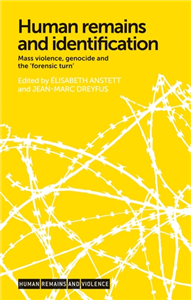
Human remains and identification
Mass violence, genocide, and the ‘forensic turn’
by Series edited by Jean-Marc Dreyfus, Élisabeth Anstett. Edited by Élisabeth Anstett, Jean-Marc Dreyfus
Human remains and identification presents a pioneering investigation into the practices and methodologies used in the search for and exhumation of dead bodies resulting from mass violence. Previously absent from forensic debate, social scientists and historians here confront historical and contemporary exhumations with the application of social context to create an innovative and interdisciplinary dialogue, enlightening the political, social and legal aspects of mass crime and its aftermaths. Through a ground-breaking selection of international case studies, Human remains and identification argues that the emergence of new technologies to facilitate the identification of dead bodies has led to a "forensic turn", normalising exhumations as a method of dealing with human remains en masse. However, are these exhumations always made for legitimate reasons? Multidisciplinary in scope, this book will appeal to readers interested in understanding this crucial phase of mass violence's aftermath, including researchers in history, anthropology, sociology, forensic science, law, politics and modern warfare. The research program leading to this publication has received funding from the European Research Council under the European Union's Seventh Framework Programme (FP/2007-2013) / ERC Grant Agreement n° 283-617.
-
Trusted Partner

 March 2026
Tiger Warrior (Band 1) - Der Angriff des Drachenkönigs
by Maisie Chan, Alan Brown, Franziska Jaekel
Jack ist der neue Tigerkrieger und muss das Jadekönigreich beschützen. Doch er ist nicht allein: An seiner Seite stehen die Tiere der chinesischen Sternzeichen. Jack landet vollkommen unvorbereitet als der neue Tigerkrieger im Jadekönigreich. Eigentlich sollte es dort friedlich sein, doch der Jadekaiser ist verschwunden und der böse Drachenkönig hat die Macht an sich gerissen. Gemeinsam mit Prinzessin Li, in der ebenfalls magische Fähigkeiten schlummern, setzt er alles daran, das Königreich zu retten. Aber wie besiegt man einen Drachenkönig, wenn man nicht einmal weiß, wie man seine Kräfte richtig einsetzt? Der Auftakt einer actionreichen Fantasy-Reihe Eine packende und actionreiche Fantasy-Reihe für Kinder ab 8 Jahren mit chinesischer Mythologie . Für alle Fans von Beast Quest ! Besonders gut geeignet für Wenig- und Leseanfänger*innen : geringer Umfang, große Schrift und coole Illustrationen. Mitreißend und voller Action : Kämpfe gemeinsam mit Jack gegen die Gefahren, die das Jadekönigreich bedrohen! Chinesische Mythologie : Durch die Jademünze seines Großvaters stehen Jack alle Tiere der chinesischen Sternzeichen zur Seite. Jedes hat besondere Fähigkeiten, die ihm beim Schutz des Königreichs helfen. Eine faszinierende Welt : Ein Portal ins Jadereich führt dich gemeinsam mit Jack in eine fantastische Welt voller Magie und fantastischer Wesen! Leseförderung durch Antolin : Der Titel ist bei Antolin gelistet und fördert spielerisch die Lesekompetenz.
-
Trusted Partner
 Literature & Literary StudiesSeptember 2008
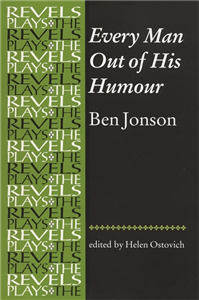
Every Man Out of His Humour
Ben Jonson
by David Bevington, Helen Ostovich, Richard Dutton, Alison Findlay, Helen Ostovich
Despite its popularity when it first appeared in print in 1600, Every Man out of His Humour has never appeared as a single modern critical edition until now. The volume's introduction and annotations convey early modern obsessions with wealth and self-display by providing historical contexts and pointing out the continuity of those obsessions into modern life. The play is of interest because of its influence on the course of city comedy and its wealth of information about social relationships and colloquial language at the end of Elizabeth's reign. Jonson's experiments in generating theatrical meaning continued throughout his career, but Every Man out of His Humour - with its youthful vigour and extraordinary visualizations of the urban capacity for self-deceit - is a text that enriches the understanding of all the plays that come after it. ;
-
Trusted Partner
 Humanities & Social SciencesMarch 2024
How to be multiple
The philosophy of twins
by Helena de Bres, Julia de Bres
In How to be multiple, Helena de Bres - a twin herself - argues that twinhood is a unique lens for examining our place in the world and how we relate to other people. The way we think about twins offers remarkable insights into some of the deepest questions of our existence, from what is a person? to how should we treat one another? Deftly weaving together literary and cultural history, philosophical enquiry and personal experience, de Bres examines such thorny issues as binary thinking, objectification, romantic love and friendship, revealing the limits of our individualistic perspectives. In this illuminating, entertaining book, wittily illustrated by her twin sister, de Bres ultimately suggests that to consider twinhood is to imagine the possibility of a more interconnected, capacious human future.
-
Trusted Partner
 Humanities & Social SciencesMarch 2015
From reason to practice in bioethics
by Edited by John Coggon, Søren Holm, Sarah Chan and Thomasine Kushner
-
Trusted Partner
 Humanities & Social SciencesNovember 2023
Critical theory and human rights
From compassion to coercion
by David McGrogan
This book describes how human rights have given rise to a vision of benevolent governance that, if fully realised, would be antithetical to individual freedom. It describes human rights' evolution into a grand but nebulous project, rooted in compassion, with the overarching aim of improving universal welfare by defining the conditions of human well-being and imposing obligations on the state and other actors to realise them. This gives rise to a form of managerialism, preoccupied with measuring and improving the 'human rights performance' of the state, businesses and so on. The ultimate result is the 'governmentalisation' of a pastoral form of global human rights governance, in which power is exercised for the general good, moulded by a complex regulatory sphere which shapes the field of action for the individual at every turn. This, unsurprisingly, does not appeal to rights-holders themselves.
-
Trusted Partner
 FictionJune 2019
This Man and Music
By Anthony Burgess
by Christine Lee Gengaro, Andrew Biswell
This man and music asks two central questions: what can literature contribute to the art of composition, and how can music influence the writer? Anthony Burgess, famed novelist, journalist, and composer, answers these questions and many more. As a person uniquely qualified to look at the interconnectivity of music and literature from both sides, Burgess provides fascinating insights, drawing on his deep knowledge of both disciplines. The book contains eleven interconnected essays that touch on philosophical conundrums of art and adaptation, questions of meaning, and the author's own personal experience. It is a must-read for fans of Burgess who want to understand how music influenced the author's craft of writing. Part autobiography and part literary and musical analysis, This man and music is a unique artefact in the stunning output of a prolific artist.
-
Trusted Partner

 2022
2022aporello: Human Parasites
by Christine Bender-Leitzig, Dr. Reiner Pospischil
Infestation with parasites usually causes revulsion in those affected and many infections are kept secret through shame. In recent times there has also been a rise in non-native parasites, which often remain undetected. This book gives an overview of the most significant human parasites as well as their - prevalence - symptoms - treatment possibilities. The text is accompanied by illustrations that help when giving everyday advice. Practical icons show at a glance when, for example, the authorities must be notified and what special things need to be considered. Highly concentrated knowledge in an instant? That’s aporello!
-
Trusted Partner
 Humanities & Social SciencesJuly 2015
Human remains and identification
by Edited by Élisabeth Anstett and Jean-Marc Dreyfus
-
Trusted Partner
 Genocide & ethnic cleansingJanuary 2015
Destruction and human remains
by Edited by Élisabeth Anstett and Jean-Marc Dreyfus
-
Trusted Partner
 Modern history to 20th century: c 1700 to c 1900May 2017
Inventing the cave man
From Darwin to the Flintstones
by Andrew Horrall. Series edited by Jeffrey Richards
Fred Flintstone lived in a sunny Stone Age American suburb, but his ancestors were respectable, middle-class Victorians. They were very amused to think that prehistory was an archaic version of their own world because it suggested that British ideals were eternal. In the 1850s, our prehistoric ancestors were portrayed in satirical cartoons, songs, sketches and plays as ape-like, reflecting the threat posed by evolutionary ideas. By the end of the century, recognisably human cave men inhabited a Stone Age version of late-imperial Britain, sending-up its ideals and institutions. Cave men appeared constantly in parades, civic pageants and costume parties. In the early 1900s American cartoonists and early Hollywood stars like Charlie Chaplin and Buster Keaton adopted and reimagined this very British character, cementing it in global popular culture. Cave men are an appealing way to explore and understand Victorian and Edwardian Britain.
-
Trusted Partner
-
Trusted Partner
 March 2026
Tiger Warrior (Band 2) - Die Rache der Fuchsdämonen
by Maisie Chan, Alan Brown, Franziska Jaekel
Jack ist der neue Tigerkrieger und muss das Jadekönigreich beschützen. Doch er ist nicht allein: An seiner Seite stehen die Tiere der chinesischen Sternzeichen. Jack kehrt zur Hochzeit des Kaisers ins Jadereich zurück. Die zukünftige Kaiserin verhält sich jedoch verdächtig. Führt sie etwas im Schilde? Als Jack dem Verdacht gemeinsam mit Prinzessin Li auf die Spur geht, stoßen sie auf eine listige Armee von Fuchsdämonen. Diese bedrohen nicht nur das Königreich, sondern wollen auch eine uralte dunkle Macht heraufbeschwören, die das Ende für das Jadereich bedeuten könnte ... Band 2 der actionreichen Fantasy-Reihe Eine packende und actionreiche Fantasy-Reihe für Kinder ab 8 Jahren mit chinesischer Mythologie. Für alle Fans von Beast Quest! Mitreißend und voller Action: Kämpfe gemeinsam mit Jack gegen die Gefahren, die das Jadekönigreich bedrohen! Chinesische Mythologie: Durch die Jademünze seines Großvaters stehen Jack alle Tiere der chinesischen Sternzeichen zur Seite. Jedes hat besondere Fähigkeiten, die ihm beim Schutz des Königreichs helfen. Eine faszinierende Welt: Ein Portal ins Jadereich führt dich gemeinsam mit Jack in eine fantastische Welt voller Magie und fantastischer Wesen! Leseförderung durch Antolin: Der Titel ist bei Antolin gelistet und fördert spielerisch die Lesekompetenz.
-
Trusted Partner
 Literature & Literary StudiesMarch 2013
The Intellectual and Cultural World of the Early Modern Inns of Court
by Edited by Jayne Archer, Elizabeth Goldring and Sarah Knight
This is a collection of essays on an important but overlooked aspect of early modern English life: the artistic and intellectual patronage of the Inns of Court and their influence on religion, politics, education, rhetoric, and culture from the late fifteenth through the early eighteenth centuries. This period witnessed the height of the Inns' status as educational institutions: emerging from fairly informal associations in the fourteenth century, the Inns of Court in the fifteenth and sixteenth centuries had developed sophisticated curricula for their students, leading to their description in the early seventeenth century as England's 'third university'. Some of the most influential politicians, writers, and divines - as well as lawyers - of Tudor and Stuart England passed through the Inns: men such as Edward Hall, Richard Hooker, John Webster, John Selden, Edward Coke, William Lambarde, Francis Bacon, and John Donne. This is the first interdisciplinary publication on the early modern Inns of Court, bringing together scholarship in history, art history, literature, and drama. The book is lavishly illustrated and provides a unique collection of visual sources for the architecture, art, and gardens of the early modern Inns ;


