Your Search Results

      • Egmont Bulgaria

        Egmont Publishing Bulgaria is a leading publishing house for books and magazines in Bulgaria. Among the international partners of the company are renowned publishers such as Disney, Mattel and Hasbro. Egmont Publishing Bulgaria is the Bulgarian publisher of famous and high-profile authors such as J. K. Rowling, Stephanie Meyer, John Green, Rick Riordan, Sara J. Maas, Leigh Bardugo and Elif Shafak. Egmont Publishing Bulgaria is part of the leading Scandinavian media group Egmont which was founded in 1878 and owned by the Egmont Foundation, a charitable trust dedicated to supporting children and young people. The company’s mission is to create and tell stories through books, magazines, film, TV, music, games and mobile.

        View Rights Portal
      • Trusted Partner
        December 2012

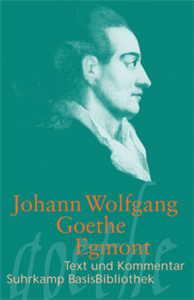
        Egmont

        Ein Trauerspiel in fünf Aufzügen

        by Johann Wolfgang Goethe, Helmut Nobis

        Text und Kommentar in einem Band. In der Suhrkamp BasisBibliothek erscheinen literarische Hauptwerke aller Epochen und Gattungen als Arbeitstexte für Schule und Studium. Der vollständige Text wird ergänzt durch anschaulich geschriebene Kommentare.

      • Trusted Partner
      • Trusted Partner
      • Trusted Partner
        Humanities & Social Sciences
        January 2013

        Christian Dualist Heresies in the Byzantine World, c. 650-c. 1450

        by Janet Hamilton, Bernard Hamilton

        Christian dualism originated in the reign of Constans II (641-68). It was a popular religion, which shared with orthodoxy an acceptance of scriptual authority and apostolic tradition and held a sacramental doctrine of salvation, but understood all these in a radically different way to the Orthodox Church. One of the differences was the strong part demonology played in the belief system. This text traces, through original sources, the origins of dualist Christianity throughout the Byzantine Empire, focusing on the Paulician movement in Armenia and Bogomilism in Bulgaria. It presents not only the theological texts, but puts the movements into their social and political context.

      • Trusted Partner
        April 2012

        Easements und Servitudes.

        Eine rechtsvergleichende Untersuchung zu Grunddienstbarkeiten im englischen und schottischen Recht.

        by Neubauer, Egmont

      • Trusted Partner
        September 2020

        Gespenster

        Ein Familiendrama in drei Akten

        by Henrik Ibsen, Angelika Gundlach, Helmut Nobis

        Diese Ausgabe der »Suhrkamp BasisBibliothek – Arbeitstexte für Schule und Studium« bietet nicht nur Henrik Ibsens Schauspiel Gespenster in der Übersetzung von Angelika Gundlach, sondern auch einen Kommentar, der alle für das Verständnis des Stücks erforderlichen Informationen enthält: die Entstehungsgeschichte, die Wirkungsgeschichte, einen Überblick über die verschiedenen Deutungsaspekte und die thematischen Schwerpunkte, Literaturhinweise sowie ausführliche Wort- und Sacherläuterungen. Helmut Nobis, geb. 1947, lebt und arbeitet in Krefeld. Veröffentlichungen zu Christoph Martin Wieland, Heinrich Heine, Gabriel García Márquez, zum bürgerlichen Trauerspiel, zur Literaturtheorie und -methodologie sowie zur Literaturgeschichtsschreibung. Für die Suhrkamp BasisBibliothek kommentierte er: Joseph von Eichendorff, Das Marmorbild (SBB 135); Theodor Fontane, Frau Jenny Treibel (SBB 109) und Irrungen, Wirrungen (SBB 81); Johann Wolfgang Goethe, Egmont (SBB 127); Heinrich von Kleist, Amphitryon (SBB 117) und Das Erdbeben in Chili. Die Marquise von O…. Die Verlobung in St. Domingo (SBB 93); Friedrich Schiller, Don Karlos (SBB 88); Stefan Zweig, Schachnovelle (SBB 129) sowie Cees Nooteboom, Die folgende Geschichte (SBB 139).

      • Trusted Partner
        January 1984

        Krebswelt

        Krankheit als Industrieprodukt

        by Koch, Egmont, R

      • Trusted Partner
        Humanities & Social Sciences
        July 2013

        The 1989 Revolutions in Central and Eastern Europe

        From Communism to Pluralism

        by Kevin McDermott, Matthew Stibbe

        This important book reassesses a defining historical, political and ideological moment in contemporary history: the 1989 revolutions in central and eastern Europe. Adopting a multi-disciplinary approach, the authors reconsider such crucial themes as the broader historical significance of the 1989 events, the complex interaction between external and internal factors in the origins and outcomes of the revolutions, the impact of the 'Gorbachev phenomenon', the West and the end of the Cold War, the political and socio-economic determinants of the revolutionary processes in Poland, Hungary, the German Democratic Republic, Czechoslovakia, Romania and Bulgaria, and the competing academic, cultural and ideological perceptions of the year 1989 as communism gave way to post-communist pluralism in the 1990s and beyond. Concluding that the contentious term 'revolution' is indeed apt for the momentous developments in eastern Europe in 1989, this book will be essential reading for undergraduates, postgraduates and specialists alike. ;

      • Trusted Partner
        1995

        Die Datenmafia

        Geheimdienste, Konzerne, Syndikate: Computerspionage und neue Informationskartelle

        by Koch, Egmont R; Sperber, Jochen

      • Trusted Partner
        1986

        Die Gesundheit der Nation

        Eine Bestandsaufnahme, Karten, Analysen, Empfehlungen

        by Koch, Egmont R; Klopfleisch, Reinhard

      • Trusted Partner
      • Trusted Partner
        October 2007

        Geträumtes Glück. Angelica Kauffmann und Goethe

        by Ursula Naumann

        Über die Beziehung von Angelica Kauffmann und Johann Wolfgang Goethe wissen wir bis heute wenig. Was war zwischen dem Dichter und der berühmten Malerin? Detektivisch nähert sich Ursula Naumann der Wahrheit von Kauffmanns Leben und Goethes Zeit in Rom. Denn dessen Darstellung in der Italienischen Reise ist nicht unbedingt zu trauen. Im November 1786 besucht Goethe Angelica Kauffmann zum ersten Mal in ihrem luxuriös eingerichteten Stadthaus in der Via Sistina in Rom. Sie ist 45 Jahre alt, die bekannteste Malerin ihrer Zeit, verheiratet mit einem sehr viel älteren Mann. Goethe, der Hofmann, ist nach Italien gekommen, um seine Wiedergeburt als Künstler zu inszenieren. Gemeinsam besuchen sie Museen und Galerien, betrachten erotische Darstellungen, die von Liebe, Leidenschaft und Verrat erzählen. Das empfindsame Porträt, das sie von ihm malt, mißfällt ihm; er sieht sich lieber, wie Tischbein ihn gemalt hat, posierend in der Campagna. Er liest ihr aus Iphigenie und aus Egmont vor, die sie illustriert. Sie faßt Vertrauen zu ihm und gibt zu erkennen, daß sie gern aus ihrem Arbeitsalltag ausbrechen, ein anderes Leben führen würde. Nachdem er abgereist ist, schreibt sie ihm: Sie, die Verschlossene, gibt ihre Verzweiflung über seine Abreise preis. Und Goethe? Sicher ist, daß er über seine Beziehung zu ihr sehr viel weniger gesagt hat, als er hätte sagen können. Doch es bleibt bei Briefen, zum Wiedersehen kommt es nicht. »Welch ein Sommer hätte sein können, wenn einer gewesen wäre.«

      • Trusted Partner
        1980

        Im Ernstfall hilflos?

        Katastrophenschutz bei Atom- und Chemieunfällen

        by Koch, Egmont R; Vahrenholt, Fritz u.a.

      • Trusted Partner
      • Trusted Partner
      • Trusted Partner
        Humanities & Social Sciences
        June 2025

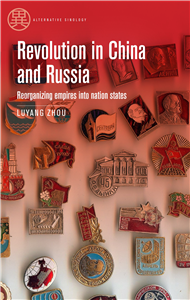
        Revolution in China and Russia

        Reorganizing empires into nation states

        by Luyang Zhou

        Most scholars believe that China's nationality policy, like that of other socialist states, imitated the Soviet nationality model, a system which has been termed an "affirmative action empire." This book offers two contributions to the literature which run counter to this convention. First, it argues that the People's Republic of China (PRC) and the Soviet Union (USSR) were different; while the PRC was aimed to build an ideal-typical nation-state, the USSR was an open union of nation-states that was only temporarily confined to a physical territory. Second, while scholars who have noted this difference attribute it to contextual factors, such as ethnic structure, geopolitical status, and Russia's intervention into the Chinese Revolution, this book contends that context shaped the Sino-Soviet difference, yet it did not determine it. Rather, there was significant leeway between the implications of the contextual factors, and what the policy-designers ultimately established. This book probes who held agency, and how these individuals bridged this gap.

      • Trusted Partner
        Humanities & Social Sciences
        September 2025

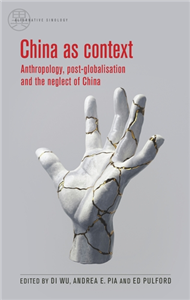
        China as context

        Anthropology, post-globalisation and the neglect of China

        by Di Wu, Andrea E. Pia, Ed Pulford

        Decades-old calls to promote the significance of China for anthropological theory and the social sciences more generally ring more urgently today given China's importance to social, political and economic life globally. Yet Chinese-grounded ideas remain marginal to the discipline, and scholarly discussions retain a sense of China as an 'Other' apart from the 'real' world, and thus unsuitable or generating widely applicable theoretical ideas. Inspired by East Asian postcolonial scholarship, this volume tackles this unsettling situation head-on, arguing that without taking China seriously as a powerful agent, a locus of knowledge production, and a new discursive topos of an emerging post-global imaginary, anthropologists and other social scientists may fail to adequately analyse the global present and make sense of both the material and immaterial forces that animate it, wherever and however they work. Amid the end of Western globalisation and shifting anthropological understandings of relations between ethnography and theory, we show how 'China' must be understood as the ordinary 'context' for anthropological research practices worldwide.

      • Trusted Partner
        2024

        Where is Russia Heading?

        by Jens Siegert

        Vladimir Putin has been ruling Russia for 25 years. There is no end in sight to his dictatorship. He relies on repression at home and is waging a war of destruction against a neighbouring country. The conflict with the West has long become a systemic conflict between an illiberal-autocratic ideology and liberal-democratic principles. Nothing will change as long as Putin remains in power. Nevertheless, as far as can be ascertained under unfree conditions, the majority of the population seems to be supporting Putin. Does this mean that too many people in Russia do not want democracy or peace? Will everything remain the same after Putin? Or is there a chance that Russia will eventually take a different, more democratic path? Whatever the outcome of the war in Ukraine, Russia is not going to disappear. We will still have to deal with our big neighbour in the east. This makes it all the more important to focus on longer-term developments. As a recognised expert on Russian history and society, the author outlines what the post-Putin era might look like. His in-depth analysis makes it clear that Russia is partly Putin, but Putin is not everything about Russia.

      Subscribe to our

      newsletter