
Thornapple Press
Publisher of bestselling and award-winning books including Polysecure, More Than Two and Love’s Not Color Blind.
View Rights Portal
Publisher of bestselling and award-winning books including Polysecure, More Than Two and Love’s Not Color Blind.
View Rights Portal
Home to poetry slammers / stage poets and their stages-texts as well as novels / fictional works. What have all our authors in common? They can perform on stages what make every reading quite entertaining. When a stage-experienced actor and poetry slammer writes a dragon-novel for yound readers / listeners, then it's beatuful to read, listen and his readings are always fascinating. That way, the young dragon Fionrir, princess Quirina and their most unusual pack gained a intensely interacting fanbase. As the other stage-performers do.
View Rights Portal
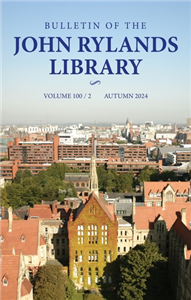
The John Rylands Library houses one of the finest collections of rare books, manuscripts and archives in the world. The collections span five millennia, have a global reach and cover a wide range of subjects, including art and archaeology; economic, social, political, religious and military history; literature, drama and music; science and medicine; theology and philosophy; travel and exploration. For over a century, the Bulletin of the John Rylands Library has published research that complements the Library's special collections.
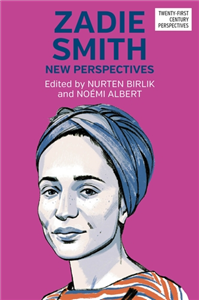
Zadie Smith's fiction reimagines subjectivity, relationality, and the conditions of contemporary life. This book offers a timely reassessment of her work, addressing identity, urban experience, and the category of the human. Moving beyond postcolonial and multiculturalist readings, it brings psychoanalytic, historical, symptomatic, and cultural materialist perspectives to bear across her novels, stories, essays, and plays. The collection explores how Smith's characters, shaped by diverse backgrounds and settings, challenge fixed ideas of Britishness and personhood. It argues that her writing opens up a new ontological space-defined by fluid identities, shifting subjectivities, and evolving forms of relationality. By reconsidering both the human and the spatial in Smith's work, the book makes a valuable contribution to contemporary literary criticism and to current thinking on narrative, identity, and urban life.
 Trusted Partner
Trusted Partner
Trusted Partner
Trusted Partner
Trusted Partner

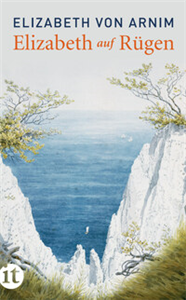
In diesem berühmten Reiseroman veröffentlichte Elizabeth von Arnim ihre hinreißenden Erlebnisse und bezaubernden Naturbeobachtungen auf der Insel Rügen. Mit ihrem unvergleichlichen Erzähltalent entwirft sie ein prächtiges Bild der »Perle der Ostsee« und lädt zu einer kurzweiligen Wanderung über die Insel ein. Stationen der Reise sind: Von Stralsund geht es über Miltzow und Lauterbach nach Göhren und Thiessow, von dort über Sellin nach Binz. Wir erkunden die Wälder um Granitz, das Jagdschloß und den Schwarzen See. Dann geht es weiter über Binz nach Stubbenkammer, Glowe und Wiek. Ein Abstecher nach Hiddensee beschließt die elftägige Wanderung.
Trusted Partner

In diesem berühmten Reiseroman veröffentlichte Elizabeth von Arnim ihre hinreißenden Erlebnisse und bezaubernden Naturbeobachtungen auf der Insel Rügen. Mit ihrem unvergleichlichen Erzähltalent entwirft sie ein prächtiges Bild der »Perle der Ostsee« und lädt zu einer kurzweiligen Wanderung über die Insel ein. Stationen der Reise sind: Von Stralsund geht es über Miltzow und Lauterbach nach Göhren und Thiessow, von dort über Sellin nach Binz. Wir erkunden die Wälder um Granitz, das Jagdschloß und den Schwarzen See. Dann geht es weiter über Binz nach Stubbenkammer, Glowe und Wiek. Ein Abstecher nach Hiddensee beschließt die elftägige Wanderung.
Trusted Partner
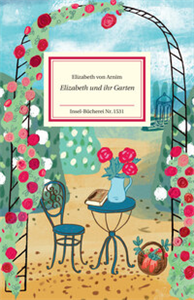
Ein preußischer Ehemann, nur der Grimmige genannt, eine beste Freundin, deren wochenlanger Aufenthalt die Freundesbande strapaziert, und eine naseweise Besucherin aus dem zivilisierten England. Sie alle bevölkern Elizabeths Garten, ihren liebsten Ort, ihre Oase der Ruhe. Meisterhaft erzählt Elizabeth von Arnim davon, wie sie den verwilderten Garten ihres preußischen Landguts in ein Paradies verwandelt und wie sie – trotz unerwünschter Eindringlinge und störender Nebendarsteller – dem wundersamen Zauber, den der Geruch feuchter Erde und die blühende Stille um sie herum verbreiten, immer wieder erliegt.
Trusted Partner
 Trusted Partner
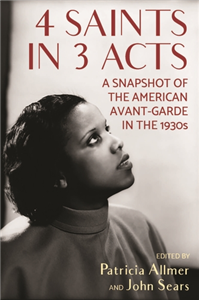
Four Saints in Three Acts by Gertrude Stein and Virgil Thomson was a major avant-garde phenomenon of the 1930s, an experimental opera that nonetheless achieved remarkable popular success. Photography was a key element of that success, but its complex roles in the construction, representation and dissemination of the opera have hitherto received little critical attention. The photographic recording of the all-African American cast in particular affords a unique insight into the complexities of Four Saints in relation to the Harlem Renaissance and the New York avant-gardes of the time. This book, published in collaboration with The Photographers' Gallery, London, presents a wide selection of photographs of the cast, performances, and other material - many images reproduced for the first time - alongside essays by an international range of scholars exploring different aspects of the opera, including dance, fashion, music, and avant-garde writing, as well as photography.
Trusted Partner
Trusted Partner

Carol Reed is one of the truly outstanding directors of British cinema, and one whose work is long overdue for reconsideration. This major study ranges over Reed's entire career, combining observation of general trends and patterns with detailed analysis of twenty films, both acknowledged masterpieces and lesser-known works. Evans avoids a simplistic auteurist approach, placing the films in their autobiographical, socio-political and cultural contexts and relating these to the analysis of Reed's art. The critical approach combines psychoanalysis, gender theory, and the analysis of form. Archival research is also relied on to clarify Reed's relations with his creative team, financial backers and others. Films examined include Bank Holiday, A Girl Must Live, Odd Man Out, The Fallen Idol, The Third Man, Night Train to Munich, The Way Ahead, Outcast of the Islands, Trapeze and Oliver!.
Trusted Partner
The John Rylands Library houses one of the finest collections of rare books, manuscripts and archives in the world. The collections span five millennia, have a global reach and cover a wide range of subjects, including art and archaeology; economic, social, political, religious and military history; literature, drama and music; science and medicine; theology and philosophy; travel and exploration. For over a century, the Bulletin of the John Rylands Library has published research that complements the Library's special collections. An electronic edition of this issue is freely available under a Creative Commons (CC BY-NC-ND) licence.
Trusted Partner

Victorian demons provides the first extensive exploration of largely middle-class masculinities in crisis at the fin de siècle. It analyses how ostensibly controlling models of masculinity became demonised in a variety of literary and medical contexts, revealing the period to be much more ideologically complex than has hitherto been understood, and makes a significant contribution to Gothic scholarship. Andrew Smith demonstrates how a Gothic language of monstrosity, drawn from narratives such as 'The Strange Case of Dr Jekyll and Mr Hyde' and 'Dracula', increasingly influenced a range of medical and cultural contexts, destabilising these apparently dominant masculine scripts. He provides a coherent analysis of a range of examples relating to masculinity drawn from literary, medical, legal and sociological contexts, including Joseph Merrick ('The Elephant Man'), the Whitechapel murders of 1888, Sherlock Holmes's London, the writings and trials of Oscar Wilde, theories of degeneration and medical textbooks on syphilis.
Trusted Partner
Trusted Partner

The John Rylands Library houses one of the finest collections of rare books, manuscripts and archives in the world. The collections span five millennia, have a global reach and cover a wide range of subjects, including art and archaeology; economic, social, political, religious and military history; literature, drama and music; science and medicine; theology and philosophy; travel and exploration. For over a century, the Bulletin of the John Rylands Library has published research that complements the Library's special collections. An electronic edition of this issue is freely available under a Creative Commons (CC BY-NC-ND) licence.
Trusted Partner
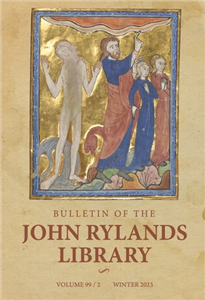
The John Rylands Library houses one of the finest collections of rare books, manuscripts and archives in the world. The collections span five millennia and cover a wide range of subjects, including art and archaeology; economic, social, political, religious and military history; literature, drama and music; science and medicine; theology and philosophy; travel and exploration. For over a century, the Bulletin of the John Rylands Library has published research that complements the Library's special collections. The editors invite the submission of articles in these fields and welcome discussion of in-progress projects.
Trusted Partner

Es ist eine allgemein anerkannte Wahrheit, dass ein Junggeselle, der ein beachtliches Vermögen besitzt, zu seinem Glück nur noch einer Frau bedarf. Die fünf Bennet-Schwestern sollen standesgemäß unter die Haube gebracht werden, das ist das erklärte Ziel ihrer Mutter. Als der attraktive und vermögende Mr. Darcy in das Leben der Bennets tritt, scheint der perfekte Schwiegersohn und Ehemann für Elizabeth gefunden. Wäre er der klugen und stolzen jungen Frau aufgrund seiner blasierten Überheblichkeit nur nicht so unsympathisch – und damit als Ehemann gänzlich ungeeignet … In einer Gesellschaft, in der sich der Heiratsmarkt nach Stand und Vermögen richtet, Gefühle jedoch nie außen vor bleiben, gilt es Eitelkeiten, Vorurteile und den eigenen Stolz zu überwinden, um das wirkliche Glück zu finden!
Trusted Partner
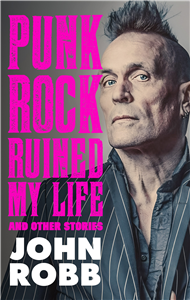
The irresistible story of a one-man cultural phenomenon. Minister for the Counterculture, Mancunian mainstay and alternative national treasure John Robb has lived a life in music. In this book he charts his adventures on the cultural frontline, chronicling the making of a DIY icon. Robb's quest began in his hometown of Blackpool - where punk was a battle against the odds - and went international when he toured the world with his band. The first person to interview Nirvana, he also discovered The Stone Roses for weekly newspaper Sounds and did early interviews with The Jesus and Mary Chain and The Manics, before moving on to legends such as Mark E. Smith, Nick Cave and Patti Smith. Along the way, he became an on-screen commentator and author of bestselling books. Robb's memoir tells of deep friendships with figures from Poly Styrene to Chris Packham. Packed with riotous stories, it provides an alternative account of British musical and cultural history and a triumphant blueprint for a punk rock life.
Trusted Partner
In the late eighteenth-century, elite British women had an unprecedented opportunity to travel. Taking travel home uncovers the souvenir culture these women developed around the texts and objects they brought back with them to realise their ambitions in the arenas of connoisseurship, friendship and science. Key characters include forty-three-year-old Hester Piozzi (Thrale), who honeymooned in Italy; thirty-one-year-old Anna Miller, who accompanied her husband on a Grand Tour; Dorothy Richardson, who undertook various tours of England from the ages of twelve to fifty-two; and the sisters Katherine and Martha Wilmot, who travelled to Russia in their late twenties. The supreme tourist of the book, the political salon hostess Lady Elizabeth Holland, travelled to many countries with her husband, including Paris, where she met Napoleon, and Spain during the Peninsular War. Using a methodology informed by literary and design theory, art history, material culture studies and tourism studies, the book examines a wide range of objects, from painted fans "of the ruins of Rome for a sequin apiece" and the Pope's "bless'd beads", to lava from Vesuvius and pieces of Stonehenge. It argues that the rise of the souvenir is representative of female agency, as women used their souvenirs to form spaces in which they could create and control their own travel narratives.
Trusted Partner
Mit der Ehe hat Emma, die Titelheldin in Jane Austens viertem großen Roman, erklärtermaßen nichts im Sinn. Doch andere zu verkuppeln ist geradezu ihr Steckenpferd, das sie bravourös zu beherrschen glaubt. So greift sie in das Leben der 17jährigen Harriet Smith ein, will sie mit dem allseits begehrten Mr. Elton verheiraten und verkennt darüber deren wirkliche Gefühle – sowie ihre eigenen. Emma ist eine satirische »Komödie der Irrungen«, die ein realistisches Bild des englischen Landadels um 1800 zeichnet.



