
Vanny Gani
The Awakening of the Stars, a novel in the mystical fiction category & Aerial Roots a drama and comedy about the author grandmother.
View Rights Portal
The Awakening of the Stars, a novel in the mystical fiction category & Aerial Roots a drama and comedy about the author grandmother.
View Rights Portal
Publisher of bestselling and award-winning books including Polysecure, More Than Two and Love’s Not Color Blind.
View Rights Portal


This collection tells the story of Thomas Becket's turbulent life, violent death and extraordinary posthumous acclaim in the words of his contemporaries. The only modern collection from the twelfth-century Lives of Thomas Becket in English and features all his major biographers, including many previously untranslated extracts. Providing both a valuable glimpse of the late twelfth-century world, and an insight into the minds of those who witnessed the events. By using contemporary sources, this book is the most accessible way to study this central episode in medieval history. Thomas Becket features prominently in most medieval core courses. This book allows the subject to be taught as never before, and is highly suitable as a set text.
 Trusted Partner

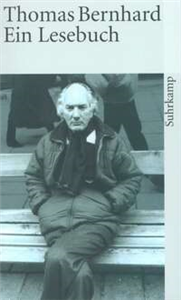
Das vorliegende Lesebuch versteht sich als Vorschlag und Einladung zu einer Erkundung des Bernhardschen Schreibens, dessen begriffs- und geschichtenzerstörende Irritationskraft den Leser in seinen Sog zieht und ihn jene Haltung einnehmen läßt, die Thomas Bernhard als die seinem Werk angemessene beschrieben hat: »Man soll sich vorstellen, man ist im Theater, man macht mit der ersten Seite einen Vorhang auf, der Titel erscheint, totale Finsternis – langsam kommen aus dem Hintergrund, aus der Finsternis heraus, Wörter, die langsam zu Vorgängen äußerer und innerer Natur, gerade wegen ihrer Künstlichkeit besonders deutlich zu einer solchen werden.«
Trusted Partner
Trusted Partner

30 Jahre alt, ohne Resonanz auf seine bis dahin veröffentlichten drei Gedichtbände, vom eigenen überragenden schriftstellerischen Können allerdings überzeugt, schreibt Thomas Bernhard im Oktober 1961 an Siegfried Unseld: "Vor ein paar Tagen habe ich an Ihren Verlag ein Prosamanuskript geschickt. Ich kenne Sie nicht, nur ein paar Leute, die Sie kennen. Aber ich gehe den Alleingang." Obwohl der Suhrkamp Verlag das Manuskript ablehnte, gingen der Alleingänger und der Verleger seit dem Erscheinen von Bernhards erstem Roman "Frost" 1963 gemeinsam den Weg, der den Autor in die Weltliteratur führte. In den etwa 500 Briefen zwischen beiden entwickelt sich ein einzigartiges Zwei-Personen-Schauspiel: Mal ist es eine Tragödie, wenn etwa Bernhard die aus seinen Werken bekannten Schimpftiraden auf den Verleger losläßt, der seinerseits auf die Überzeugungskraft des Arguments setzt. Dann gibt Bernhard ein Kammerspiel mit Unseld als Held – 1973 schreibt er ihm: "mit grösster Aufmerksamkeit, mit allen Möglichkeiten, gehe ich gern mit Ihnen." 1984 agieren beide, bei der Beschlagnahme von "Holzfällen", als Kämpfer für die Literatur in einem von Dritten inszenierten Schurkenstück. Es dominiert das Beziehungsdrama: Der Autor stellt die für sein Werk und seine Person unabdingbaren Forderungen. Der Verleger seinerseits weiß, daß gerade bei Bernhard rücksichtslose Selbstbezogenheit notwendige Voraussetzung der Produktivität ist. Solch einen dramatischen Briefwechsel zwischen Autor und Verleger, in dem bei jeder Zeile alles auf dem Spiel steht, kennt das Publikum bislang nicht.
Trusted Partner
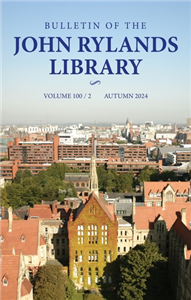
The John Rylands Library houses one of the finest collections of rare books, manuscripts and archives in the world. The collections span five millennia, have a global reach and cover a wide range of subjects, including art and archaeology; economic, social, political, religious and military history; literature, drama and music; science and medicine; theology and philosophy; travel and exploration. For over a century, the Bulletin of the John Rylands Library has published research that complements the Library's special collections.
Trusted Partner
Trusted Partner
 Trusted Partner
 Trusted Partner


Rund 170 historische Fotos und Ansichtskarten, die hier zum größten Teil erstmals veröffentlicht werden, entführen den Leser in das Venedig Thomas Manns. Reinhard Pabst führt auf den Spuren des Dichters durch die Lagunenstadt und zu den Originalschauplätzen der Novelle Der Tod in Venedig. Wie einst Gustav Aschenbach, der Held der Novelle, kann sich der Leser im luxuriösen »Grand Hôtel des Bains« auf dem Lido ergehen, das mondäne Badeleben genießen und sich dem »Vergnügen an den Bildern eines soignierten Strandes« hingeben, an dem sich auch Arthur Schnitzler, Peter Altenberg, Karl Kraus, Georg Trakl und viele andere tummelten.Ein einzigartiges Buch über eine vergangene, faszinierende Epoche.
Trusted Partner
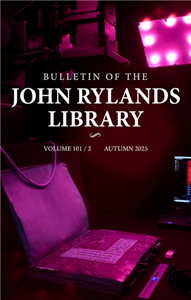
The John Rylands Library houses one of the finest collections of rare books, manuscripts and archives in the world. The collections span five millennia, have a global reach and cover a wide range of subjects, including art and archaeology; economic, social, political, religious and military history; literature, drama and music; science and medicine; theology and philosophy; travel and exploration. For over a century, the Bulletin of the John Rylands Library has published research that complements the Library's special collections. An electronic edition of this issue is freely available under a Creative Commons (CC BY-NC-ND) licence.
Trusted Partner
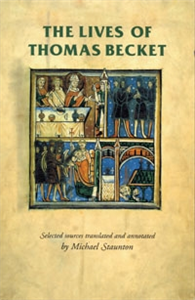
This collection tells the story of Thomas Becket's turbulent life, violent death and extraordinary posthumous acclaim in the words of his contemporaries. The only modern collection from the twelfth-century Lives of Thomas Becket in English and features all his major biographers, including many previously untranslated extracts. Providing both a valuable glimpse of the late twelfth-century world, and an insight into the minds of those who witnessed the events. By using contemporary sources, this book is the most accessible way to study this central episode in medieval history. Thomas Becket features prominently in most medieval core courses. This book allows the subject to be taught as never before, and is highly suitable as a set text. ;
Trusted Partner
The John Rylands Library houses one of the finest collections of rare books, manuscripts and archives in the world. The collections span five millennia, have a global reach and cover a wide range of subjects, including art and archaeology; economic, social, political, religious and military history; literature, drama and music; science and medicine; theology and philosophy; travel and exploration. For over a century, the Bulletin of the John Rylands Library has published research that complements the Library's special collections. An electronic edition of this issue is freely available under a Creative Commons (CC BY-NC-ND) licence.
Trusted Partner
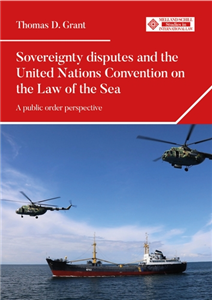
Because maritime questions are often admixed with territorial sovereignty questions, parties sometimes seek to settle them together. Jurisdiction under the United Nations Convention on the Law of the Sea-UNCLOS-according to the received view does not encompass disputes concerning territorial sovereignty. In this book, international law scholar and practitioner Thomas D. Grant argues that the received view overstates the exclusion of sovereignty disputes. In Coastal State Rights, UNCLOS Annex VII arbitrators overstated the scope of the term 'sovereignty dispute' as well, an error of definition compounded when they ignored evidence probative as to whether a sovereignty dispute exists. Examining UNCLOS, its drafting history, and decades of decided cases, Sovereignty Disputes and the United Nations Convention on the Law of the Sea relates an important problem of international dispute settlement to the public order of which UNCLOS forms part.
Trusted Partner
 Trusted Partner
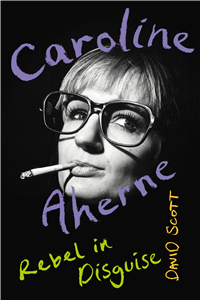
A thoughtful exploration of the work of this unique comedian and writer. Caroline Aherne was one of the most influential and beloved of British comedians. In this book David Scott explores Aherne's comedic artistry and creative legacy, focusing on her iconic characters and ground-breaking TV shows. Scott dives into Aherne's most beloved creations, from the sharp-tongued Mrs Merton to the quietly revolutionary The Royle Family. Drawing on the tales of collaborators and telling behind-the-scenes stories, he provides an intimate glimpse into the creative processes that brought these iconic works to life. At the same time, he examines the social and cultural influences that shaped Aherne's work, from the rich traditions of Northern working-class humour to the experiences of Irish migrants. Aherne's work is celebrated for its sharp wit, warmth and ability to find comedy in adversity. This book offers an exploration and celebration of one of comedy's most inventive minds, revealing how she reshaped the British comedy landscape.
Trusted Partner
The John Rylands Library houses one of the finest collections of rare books, manuscripts and archives in the world. The collections span five millennia, have a global reach and cover a wide range of subjects, including art and archaeology; economic, social, political, religious and military history; literature, drama and music; science and medicine; theology and philosophy; travel and exploration. For over a century, the Bulletin of the John Rylands Library has published research that complements the Library's special collections.
Trusted Partner

Murphs Leben als Normalo-Superheld ist aufregend - und voller Fragen: Bekommt er jetzt ein Heldenkostüm? Einen Gürtel mit coolen Waffen? Oder zumindest einen Butler, der Ratschläge erteilt, wenn ihm das Heldendasein mal über den Kopf wächst? Inzwischen kennen Murph und die Supernullen die Antworten auf all diese Fragen. Sie lauten - in beliebiger Reihenfolge - nein, nein und nein. Als sich tief unter dem Gefängnis für abtrünnige Superhelden etwas Unheilvolles zusammenbraut, müssen die Supernullen ihre mehr oder weniger brauchbaren Kräfte vereinen. Denn die Elster, der größte Schurke, den die Welt je gesehen hat, verlangt nur eines: „Bringt mir Kid Normal!"
Trusted Partner

Victorian demons provides the first extensive exploration of largely middle-class masculinities in crisis at the fin de siècle. It analyses how ostensibly controlling models of masculinity became demonised in a variety of literary and medical contexts, revealing the period to be much more ideologically complex than has hitherto been understood, and makes a significant contribution to Gothic scholarship. Andrew Smith demonstrates how a Gothic language of monstrosity, drawn from narratives such as 'The Strange Case of Dr Jekyll and Mr Hyde' and 'Dracula', increasingly influenced a range of medical and cultural contexts, destabilising these apparently dominant masculine scripts. He provides a coherent analysis of a range of examples relating to masculinity drawn from literary, medical, legal and sociological contexts, including Joseph Merrick ('The Elephant Man'), the Whitechapel murders of 1888, Sherlock Holmes's London, the writings and trials of Oscar Wilde, theories of degeneration and medical textbooks on syphilis.
Trusted Partner

»Wenn Shakespeare der größte Dichter und Mietti der größte Schauspieler, dann ist Unseld der größte Verleger.« »Thomas Bernhard und Frankfurt«, erzählt vom ersten Kontakt des Autors zum Verlag Suhrkamp und dessen Beziehung zum Verleger Siegfried Unseld.


