
Your Search Results
-

-

emons Verlag
The Cologne-based publishing house Emons was founded by Hermann-Josef Emons in 1984. We now have over 80 regional crime series, taking place in every part of Germany and since 2009 Emons crime novels also take place abroad (Austria, Switzerland, Spain, Italy etc.). Our books were published in over 13 countries, like Japan, Slowenia and Finland. Since 2009 we also publish our 111places (111 Orte) series. This illustrated guidebook series presents cities, regions and even whole countries from a wonderfully different and personal perspective.
View Rights Portal
-
Promoted Content

 Literature & Literary StudiesJune 2025
Saga emotions
by Gareth Lloyd Evans, Brynja Þorgeirsdóttir, Carolyne Larrington
Focusing particularly on historically oriented sagas, Saga emotions identifies and examines a range of emotions from across Old Norse-Icelandic saga literature. Each chapter begins with a discrete emotion term, such as reiði (anger), gleði (joy), or the peculiarly Old Norse víghugr (killing-mood), exploring its usages within the broad saga corpus, and focusing on its contextual meanings and narrative purposes. The contributions explore the specifics of the lexical terms used for different emotion states and offer in-depth case studies that consider how various emotions manifest within particular examples of saga literature. The book offers the emotional granularity lacking in current studies of Norse emotion and serves as an essential foundation for future research and study into emotional depiction in Old Norse-Icelandic saga literature.
-
Promoted Content
 Humanities & Social SciencesJune 2021
Emotional monasticism
Affective piety in the eleventh-century monastery of John of Fécamp
by Lauren Mancia
Medievalists have long taught that highly emotional Christian devotion, often called 'affective piety', appeared in Europe after the twelfth century and was primarily practiced by communities of mendicants, lay people and women. Emotional monasticism challenges this view. The first study of affective piety in an eleventh-century monastic context, it traces the early history of affective devotion through the life and works of the earliest known writer of emotional prayers, John of Fécamp, abbot of the Norman monastery of Fécamp from 1028-78. Exposing the early medieval monastic roots of later medieval affective piety, the book casts a new light on the devotional life of monks in Europe before the twelfth century and redefines how medievalists should teach the history of Christianity.
-
 Trusted Partner

 MedicineDecember 2016
Emotion-Focused Therapy
A Practitioner’s Guide
by Lars Auszra/ Imke Herrmann/ Leslie S. Greenberg
This title provides a thorough and practical introduction to Emotions-Focused Therapy (EFT). Emotions, central point in EFT, help the patient identify his/her priorities and can be a good starting point for change. This title provides therapists with an overview over the principles and strategies that enable them to work with patients’ emotions in a therapeutic setting and use them to facilitate the changing of behavior. Readers will also find this title to be a rich resource of different techniques, such as empty-chair dialogues as well as suggestions on how to handle typical problems in therapy. Target Group: psychotherapists, specialists for psychiatry and psychotherapy, specialists for psychosomatic medicine and psychotherapy, clinical psychologists, coaches, students and teachers of psychology
-
Trusted Partner
-
Trusted Partner
 Literature & Literary StudiesOctober 2025
The emotions in liberal writing, c.1790–c.1920
by Jock Macleod, Peter Denney, William Christie
This volume of essays from a selection of distinguished international scholars is the first of its kind to explore in depth the emotional dimensions of liberal writing in Britain over the long nineteenth century. Addressing liberal writing in the public sphere rather than high political or parliamentary liberalism, it comprises a clear, context-setting introduction and eleven substantive chapters. The chapters analyse key texts and figures from the 1790s through to the 1920s and offer several different approaches to the central concern with the emotions and liberalism. These include examining the place of the emotions in the 'good life'; the social and political function of the emotions; emotional rhetoric in liberal writing; and liberal theories of the emotions. Both individually and as a collection, the essays provide an essential foundation for further scholarly work in this emerging field.
-
Trusted Partner
 Literature & Literary StudiesNovember 2021
Practising shame
Female honour in later medieval England
by Mary C. Flannery, Anke Bernau, David Matthews
Practicing shame investigates how the literature of medieval England encouraged women to safeguard their honour by cultivating hypervigilance against the possibility of sexual shame. A combination of inward reflection and outward comportment, this practice of 'shamefastness' was believed to reinforce women's chastity of mind and body, and to communicate that chastity to others by means of conventional gestures. The book uncovers the paradoxes and complications that emerged from these emotional practices, as well as the ways in which they were satirised and reappropriated by male authors. Working at the intersection of literary studies, gender studies and the history of emotions, it transforms our understanding of the ethical construction of femininity in the past and provides a new framework for thinking about honourable womanhood now and in the years to come.
-
Trusted Partner

 November 2007
Der Konsum der Romantik
Liebe und die kulturellen Widersprüche des Kapitalismus
by Eva Illouz, Andreas Wirthensohn, Axel Honneth
Zu den kulturellen Widersprüchen, die den Kapitalismus kennzeichnen sollen, gehört der Gegensatz von romantischem Liebesideal und der kalten Welt der Ökonomie. Das in den USA preisgekrönte und in Deutschland hymnisch besprochene Buch zeigt dagegen auf, inwiefern die beiden Sphären sich längst wechselseitig beeinflussen und miteinander verschmelzen: Galt die romantische Liebe als letztes Refugium in einer kommerzialisierten Welt, so zeigt Eva Illouz, wie sich etwa die Paarbeziehung unter dem Einfluß des totalen Konsums verändert hat. Die kollektive Utopie der Liebe, einst als Transzendierung des Marktes idealisiert, ist im Prozeß ihrer Verwirklichung zum bevorzugten Ort des kapitalistischen Konsums geworden.
-
Trusted Partner
 Literature & Literary StudiesJanuary 2023
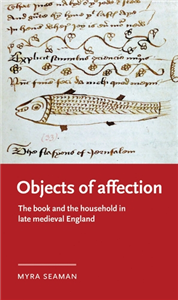
Objects of affection
The book and the household in late medieval England
by Myra Seaman
Objects of affection recovers the emotional attraction of the medieval book through an engagement with a fifteenth-century literary collection known as Oxford, Bodleian Library Manuscript Ashmole 61. Exploring how the inhabitants of the book's pages - human and nonhuman, tangible and intangible - collaborate with its readers then and now, this book addresses the manuscript's material appeal in the ways it binds itself to different cultural, historical and material environments. In doing so it traces the affective literacy training that the manuscript provided its late-medieval English household, whose diverse inhabitants are incorporated into the ecology of the book itself as it fashions spiritually generous and socially mindful household members.
-
Trusted Partner
 1993
1993Emotion und Volition
Eine motivationspsychologische Standortbestimmung
by Sokolowski, Kurt / Herausgegeben von Kuhl, Julius; Herausgegeben von Halisch, Frank
-
Trusted Partner
 Humanities & Social SciencesJune 2019
Emotional monasticism
by Lauren Mancia, T. J. H. McCarthy, Stephen Mossman, Carrie Beneš, Jochen Schenk
-
Trusted Partner
-
Trusted Partner
-
Trusted Partner

 October 2009
Macht, Emotion und Geselligkeit
Studien zur Soziabilität in Deutschland 1500–1900
by Hardtwig, Wolfgang
-
Trusted Partner
Literature & Literary StudiesJanuary 2026
Approaches to emotion in Middle English literature
by Carolyne Larrington
-
Trusted Partner
 Shakespeare studies & criticismMay 2017
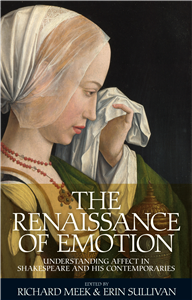
The Renaissance of emotion
Understanding affect in Shakespeare and his contemporaries
by Edited by Richard Meek, Erin Sullivan
This collection of essays offers a major reassessment of the meaning and significance of emotional experience in the work of Shakespeare and his contemporaries. Recent scholarship on early modern emotion has relied on a medical-historical approach, resulting in a picture of emotional experience that stresses the dominance of the material, humoral body. The Renaissance of emotion seeks to redress this balance by examining the ways in which early modern texts explore emotional experience from perspectives other than humoral medicine. The chapters in the book seek to demonstrate how open, creative and agency-ridden the experience and interpretation of emotion could be. Taken individually, the chapters offer much-needed investigations into previously overlooked areas of emotional experience and signification; taken together, they offer a thorough re-evaluation of the cultural priorities and phenomenological principles that shaped the understanding of the emotive self in this period.
-
Trusted Partner
-
Trusted Partner
-
Trusted Partner
-
Trusted Partner
 1992
1992Kognition, Emotion und psychische Beanspruchung
Theoretische und empirische Studien zu informationsverarbeitenden Tätigkeiten
by Wieland-Eckelmann, Rainer
-
Trusted Partner



