
Epigram Books
Singapore's largest independent publisher of fiction and non-fiction for all ages. Check out our latest catalogue here: July – December 2018 (PDF.)
View Rights Portal
Singapore's largest independent publisher of fiction and non-fiction for all ages. Check out our latest catalogue here: July – December 2018 (PDF.)
View Rights Portal
Epistola publishing house is a family-owned company founded in 2009. We seek to provide quality reading with variety of themes to enrich the lives of young readers. Our books have distinctively educational purpose, inspiring discussion with parents, teachers or other children. In order to provide the best possible reading and achieve quality, we collaborate with renowned domestic and foreign authors.
View Rights Portal
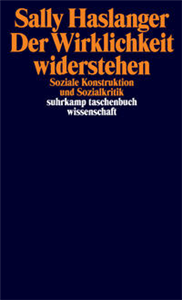
Was heißt es, eine Frau oder ein Mann, schwarz oder weiß zu sein? Hierauf geben feministische und antirassistische Theorien scheinbar widerstreitende Antworten: Während die einen diese Kategorien als sozial konstruiert begreifen, sofern unter sie zu fallen bedeutet, in bestimmten sozialen Beziehungen der Unterordnung zu stehen, denken andere sie als objektiv, sofern unter sie zu fallen für Menschen reale Konsequenzen zeitigt, denen sie sich schwer entziehen können. In dieser Sammlung bahnbrechender Aufsätze entwickelt die Philosophin Sally Haslanger eine sozialkonstruktionistische Theorie sozialer Arten, die diesen beiden Erfordernissen gleichermaßen Rechnung trägt.


The first and only book length study of British screenwriter, director and producer Sally Wainwright. Authors Gorton and Johnson brings together Wainwright's key television series and television films with theoretical work on the concept of emotion and feminist television criticism, exploring Wainwright's contributions to British television through the heroic female characters she creates. The book covers a wide range of theoretical work on melodrama, genre and emotion to explore Wainwright's televisual texts, offering analysis of globally recognised television series such as Happy Valley, Last Tango in Halifax, and Gentleman Jack.
 Trusted Partner
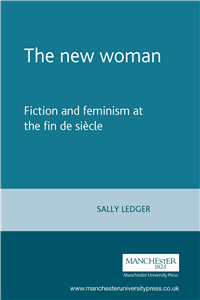
Sexually transgressive, politically astute and determined to claim educational and employment rights equal to those enjoyed by men, the new woman took centre stage in the cultural landscape of late-Victorian Britain. By comparing the fictional representations with the lived experience of the new woman, Ledger's book makes a major contribution to an understanding of the 'woman question' at the fin de siecle. She alights on such disparate figures as Eleanor Marx, Gertrude Dix, Dracula, Oscar Wilde, Olive Schreiner and Radclyffe Hall. Focusing mainly on the last two decades of the nineteenth century, the book's later chapters project forward into the twentieth century, considering the relationship between new woman fiction and early modernism as well as the socio-sexual inheritance of the 'second generation' new woman writers. ;
Trusted Partner
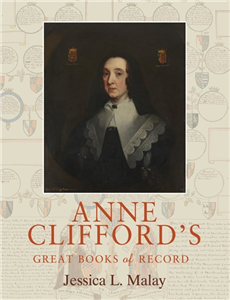
In her Great Books of Record Anne Clifford places herself within the dynamic history of the ancient Clifford family, providing an unbroken view into medieval and early modern life for nearly six centuries. In this annotated edition, we glimpse the lives of simple widows, traders, farmers, and labourers juxtaposed with the adventures of soldiers, lords and ladies, princes and princesses. Throughout, Anne Clifford asserts the centrality of women to the success of noble families, including the monarchy. Her Great Books draws upon medieval traditions and early modern scholarship and builds upon these through biographies of the Clifford lords and ladies, along with an extended biography of her mother Margaret Russell and her own autobiographical 'Life of Mee'. Those interested in the lives of medieval and early modern women, changes in culture, the effect of the political upon individuals, and the inspiring life of Anne Clifford will find this a rich and rewarding book.


This book is a result of the author's search for these facts and truths as a student and farmer and his endeavor as a teacher to present them in a simple manner to others. The object in presenting the book to the general public is the hope that it may be of assistance to farmers, students and teachers, in their search for the fundamental truths and principles of farming.
Trusted Partner

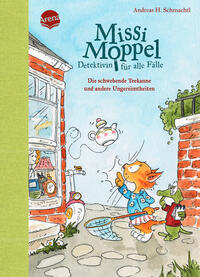
The master detective is after a cunning thief who steals colourful, random objects like Leonardo da Vinci’s paintbrush or antique sugar bowls. During a visit to Grandpa Pots, she uncovers the secret of Ghost Island and solves the puzzle of the floating teapot in Mr Goldrand’s junk shop. Only the nasty blackmailing letters from the mysterious “Magpie” present her with a seemingly insoluble mystery. Someone is testing the powers of the great investigator to their very limit…Will she be able to crack even this case? 15 original detective stories told in masterly fashion by the Spiegel bestselling author Andreas H. Schmachtl.
Trusted Partner
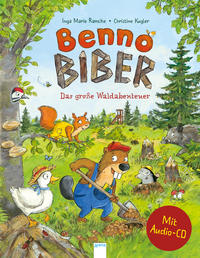
Benny Beaver is involved in every adventure. Among other things, he’s a master builder. He’s always eager to learn something new – in the forest and anywhere else. There’s a lot to learn about our environment and Nature. This eventful tale about Benny Beaver and his friends Daisy Duck, Sally Squirrel and Manny Mole is great fun, as is the CD with its sounds of Nature. What happens in the forest? Who creeps, crawls and flies here? And what trees, bushes and fungi grow here? A lively tale about the environment and Nature for nursery school and first year primary school. A picture-book tale, exciting and entertaining – as is the CD with its sounds from Nature. Welcome to the world of Benny Beaver and his friends! Share their adventures in the forest and elsewhere!
Trusted Partner
Was ermöglicht gesellschaftliche Emanzipation? Was blockiert und hemmt sie? Der Materialismus ist die Suche nach Antworten auf diese Fragen. Aber diese Antworten drohen selbst immer wieder zu einer Ideologie des Zwangs zu werden: Zwang der Natur, Zwang der Geschichte, Zwang der Ökonomie. Im Lichte aktueller gesellschaftlicher und theoretischer Entwicklungen lotet der Band das Spannungsfeld von Materialismus und Emanzipation neu aus: zwischen Freiheit und Notwendigkeit, zwischen Geist und Materie, zwischen Bewahrung und Revolution. Mit Beiträgen von u. a. Hauke Brunkhorst, Robin Celikates, Alice Crary, Alex Demirović, Sally Haslanger, Axel Honneth, Christoph Menke, Eva von Redecker, Martin Saar, Dieter Thomä und Tilo Wesche.
Trusted Partner
The Love of Books examines the affective bond between people and books in the UK. In the context of the unprecedented abundance of media offering information, storytelling and entertainment, it investigates the attachment to print and digital books amongst readers from a range of backgrounds who read for pleasure, wish to be surrounded by print copies of books, and have trouble discarding books. Unlike existing research, which focuses on prestige, social status, and cultural capital, this study centres on meaning, materiality and emotion. Drawing on interviews and archive material, it shows how attachment emerges from the practical fusion of three elements that have so far been examined separately: the material, surface properties of books, the act of reading, and books' symbolic power.
Trusted Partner
Trusted Partner
Trusted Partner
Trusted Partner
Trusted Partner
Trusted Partner

 Trusted Partner

Cara Nicoletti liebt zwei Dinge im Leben: Lesen und Kochen. Warum also nicht beides vereinen? Denn Nicoletti ist nicht nur Konditorin, Köchin und die mit Sicherheit charmanteste Metzgerin in ganz Brooklyn, sondern auch ein ausgesprochener Bücherwurm. Wer könnte also besser die beiden schönsten Dinge im Leben zusammenbringen als diese hungrige Leserin? Angefangen hat alles in der Fleischerei des Großvaters in Boston, Massachusetts, in der Cara bereits als Mädchen stapelweise Bücher verschlang. Später zog es sie nach New York, wo sie zwischen dem Bücherwälzen fürs Literaturstudium und der Arbeit in Brooklyns bekanntester Metzgerei schließlich auf die Idee kam, aus ihrer Doppelleidenschaft eine einzige zu machen – indem sie die kulinarischen Passagen ihrer Lieblingsbücher nacherzählte und die besten Rezepte kurzerhand nachkochte. Von Pippi Langstrumpfs »Buttermilchpfannkuchen« über das »perfekt gekochte Ei« von Jane Austen bis hin zu Jonathan Franzens »Schokoladen-Cupcakes mit Pfefferminz-Buttercreme« – Nicoletti lässt uns nicht nur das Wasser im Munde zusammenlaufen, sondern verführt uns auch zum Nachlesen und Nachkochen. Ein perfektes Geschenk für Lesewütige und ein Buch, das rundum glücklich macht.
Trusted Partner


A pioneering work in the movement to free art from its traditional bonds to material reality, this book is one of the most important documents in the history of modern art. Written by the famous nonobjective painter Wassily Kandinsky (1866–1944), it explains Kandinsky's own theory of painting and crystallizes the ideas that were influencing many other modern artists of the period. Along with his own groundbreaking paintings, this book had a tremendous impact on the development of modern art. Kandinsky's ideas are presented in two parts. The first part, called "About General Aesthetic," issues a call for a spiritual revolution in painting that will let artists express their own inner lives in abstract, non-material terms. Just as musicians do not depend upon the material world for their music, so artists should not have to depend upon the material world for their art. In the second part, "About Painting," Kandinsky discusses the psychology of colors, the language of form and color, and the responsibilities of the artist. An Introduction by the translator, Michael T. H. Sadler, offers additional explanation of Kandinsky's art and theories, while a new Preface by Richard Stratton discusses Kandinsky's career as a whole and the impact of the book. Making the book even more valuable are nine woodcuts by Kandinsky himself that appear at the chapter headings. This English translation of Über das Geistige in der Kunst was a significant contribution to the understanding of nonobjectivism in art. It continues to be a stimulating and necessary reading experience for every artist, art student, and art patron concerned with the direction of 20th-century painting.

Can drawing — sound, honest representation of the world as the eye sees it, not tricks with the pencil or a few "effects" — be learned from a book? One of the most gifted draftsmen, who is also one of the greatest art critics and theorists of all time, answers that question with a decided "Yes." He is John Ruskin, the author of this book, a classic in art education as well as a highly effective text for the student and amateur today. The work is in three parts, cast in the form of letters to a student, successively covering "First Practice," "Sketching from Nature," and "Colour and Composition." Starting with the bare fundamentals (what kind of drawing pen to buy; shading a square evenly), and using the extremely practical method of exercises which the student performs from the very first, Ruskin instructs, advises, guides, counsels, and anticipates problems with sensitivity. The exercises become more difficult, developing greater and greater skills until Ruskin feels his reader is ready for watercolors and finally composition, which he treats in detail as to the laws of principality, repetition, continuity, curvature, radiation, contrast, interchange, consistency, and harmony. All along the way, Ruskin explains, in plain, clear language, the artistic and craftsmanlike reasons behind his practical advice — underlying which, of course, is Ruskin's brilliant philosophy of honest, naturally observed art which has so much affected our aesthetic. Three full-page plates and 48 woodcuts and diagrams (the latter from drawings by the author) show the student what the text describes. An appendix devotes many pages to the art works which may be studied with profit.


Paradise Lost is an epic poem in blank verse by the 17th-century English poet John Milton. The first version, published in 1667, consisted of ten books with over ten thousand lines of verse. A second edition followed in 1674, arranged into twelve books (in the manner of Virgil's Aeneid) with minor revisions throughout and a note on the versification. The poem concerns the biblical story of the Fall of Man: the temptation of Adam and Eve by the fallen angel Satan and their expulsion from the Garden of Eden. Milton's purpose, stated in Book I, is to "justify the ways of God to men".



