Your Search Results

      • Everyone Press Ltd.

        EveryONE Press is a publishing house open for participation in sharing and expressing. We employ various types of media to radiate creativity and energy to keep our society vibrant, because we believe that words can touch our souls, and lively writing can mirror our thoughts. Each one of our publication calls for readers’ feedback in words and actions.   We make “ONE” as our mission: O – Openness: lead readers to open their hearts and immerse themselves in vastness of the world of words N – Nourishment: encourage readers to read beyond words and rekindle meanings behind to nourish unsettled souls E – Excellence: inspire readers to share stories of life, be them of age 8 through 80, all can be excellent writers

        View Rights Portal
      • Books Everywhere

        Books-everywhere provides support for selling rights and co-editions to publishing houses that would like their titles to reach an international market. Books-everywhere also provides consultancy services, including market and customer research, for both publishers and individuals who are investigating international markets. Our approach is personal and focused on an in depth understanding of customer needs and our response is rapid and efficient.

        View Rights Portal
      • Trusted Partner
        Political ideologies
        May 2017

        Neoliberal power and public management reforms

        by Professor Peter Triantafillou. Series edited by Mark Haugaard

        This book examines the links between major contemporary public sector reforms and neoliberal thinking. The key contribution of the book is to enhance our understanding of contemporary neoliberalism as it plays out in the public administration and to provide a critical analysis of generally overlooked aspects of administrative power. The book examines the quest for accountability, credibility and evidence in the public sector. It asks whether this quest may be understood in terms of neoliberal thinking and, if so, how? The book makes the argument that while current administrative reforms are informed by several distinct political rationalities, they evolve above all around a particular form of neoliberalism: constructivist neoliberalism. The book analyses the dangers of the kinds of administrative power seeking to invoke the self-steering capacities of society and administration itself.

      • Trusted Partner
        The Arts
        September 2025

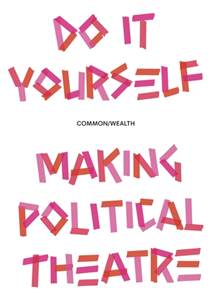
        Do It Yourself

        Making political theatre

        by Common Wealth

        A unique guide to creating political theatre, produced by one of the UK's most exciting companies. Do It Yourself is a vital resource for anyone interested in exploring theatre culture grounded in and produced by working-class, multi-racial communities. Designed for artists, activists and community organisers, the book offers a step-by-step guide to creating political theatre that is relevant, impactful and rooted in the lives of everyday people. Common Wealth have spent fifteen years working at the cutting edge of political theatre. In Do It Yourself, they share their experimental and activist approach to performance-making, based on DIY principles and the belief that ground-breaking theatre can be made with anyone, anywhere, in ways that truly resonate with the communities it serves. Do It Yourself introduces Common Wealth's artistic and political ethos, provides unique insights into their most significant performances and offers practical exercises for creating your own work. But this is not just a manual. It is a celebration of culture as a collective endeavour, one that can challenge the status quo and inspire change.

      • Trusted Partner
        Humanities & Social Sciences
        March 2026

        Negotiating identity conflicts in a fragmenting world order

        by Paul Willem Meerts, Mark Anstey

        At every level of human interaction new levels of identity-based tension are in evidence. Contributors to this book explore facets of fragmentation processes within systems of state and interstate organisation, how they influence the use of negotiation, and how negotiation might be used to effect renewed coherence. Following Anstey's (Ch1) introductory chapter framing the nature and shape of fragmentation dynamics, Zartman (Ch 2) argues that the use of negotiation as a process of conflict resolution is deeply shaped by identity groups whose internal coherence is dependent on sustaining a negative identity of others. International relations are no longer solely the realm of experienced diplomats but are shaped as Meerts (Ch3) points out by politicians seeking to be responsive to voting publics rather than wider concerns. Anstey digs into problems of fragmentation (Ch. 4) and Troitskiy (Ch 5) points out how a reluctant acceptance of the power of 'the other' can lead to a form of strategic stability in relations. Anstey and Meerts (Ch 6) point out in their analysis of the Israeli-Palestinian case as an identity conflict turned very bad. Guggenbuhl (Ch 7 ) reveals how structures and processes have been designed within the EU to prevent, contain and regulate conflicts to limit risks of confrontation and fragmentation. Schuessler (Ch 8) to advocates a shift away from a template or roadmap approach to EU membership to a cohesion based on non-dominance. There is still a strong desire on the part of some states, like Northern Macedonia, to become EU members, as reflected in Manton's (Ch 9). Paula Garzon and Frans Schram explain the success of the Colombia Peace Negotiations (Ch 10), while Odigie and da Rocha (Ch 11) analyse the struggle faced by ECOWAS to influence coup leaders in Mali to return to constitutional government and changes of government by constitutional means. Liang (Ch12) discusses how the internet as the modern vehicle of inter-state, inter-group and interpersonal communication has become weaponised. In Ch 13 Anstey draws some lessons from contributions to the compilation.

      • Trusted Partner
        Literature & Literary Studies
        January 2013

        The English manor c.1200–c.1500

        by Mark Bailey

        Provides a comprehensive introduction and essential guide to one of the most important institutions in medieval England and to its substantial archive. This is the first book to offer a detailed explanation of the form, structure and evolution of the manor and its records. Offers translations of, and commentaries upon, each category of document to illustrate their main features. Examples of each category of record are provided in translation, followed by shorter extracts selected to illustrate interesting, commonly occurring, or complex features. A valuable source of reference for undergraduates wishing to understand the sources which underpin the majority of research on the medieval economy and society.

      • Trusted Partner
        Humanities & Social Sciences
        April 1999

        French society in revolution 1789–1799

        by David Andress, Mark Greengrass

        French society in revolution aims to retrieve the social history of the French Revolution from unjustified neglect. This study examines both the structural and cultural elements behind the breakdown of the eighteenth-century monarchic state and its aris. . . . ;

      • Trusted Partner
        Humanities & Social Sciences
        January 2018

        Noble society

        Five lives from twelfth-century Germany

        by Jonathan R. Lyon

        This book provides scholars and students alike with a set of texts that can deepen their understanding of the culture and society of the twelfth-century German kingdom. The sources translated here bring to life the activities of five noblemen and noblewomen from Rome to the Baltic coast and from the Rhine River to the Alpine valleys of Austria. To read these five sources together is to appreciate how interconnected political, military, economic, religious and spiritual interests could be for some of the leading members of medieval German society-and for the authors who wrote about them. Whether fighting for the emperor in Italy, bringing Christianity to pagans in what is today northern Poland, or founding, reforming and governing monastic communities in the heartland of the German kingdom, the subjects of these texts call attention to some of the many ways that noble life shaped the world of central medieval Europe.

      • Trusted Partner
        The Arts
        September 2020

        Science in performance

        Theatre and the politics of engagement

        by Simon Parry

        This electronic version has been made available under a Creative Commons (BY-NC-ND) open access license. This book is about science in theatre and performance. It explores how theatre and performance engage with emerging scientific themes from artificial intelligence to genetics and climate change. The book covers a wide range of performance forms from Broadway musicals to educational theatre, from Somali drama to grime videos. It features work by pioneering companies including Gob Squad, Headlong Theatre and Theatre of Debate as well as offering fresh analysis of global blockbusters such as Wicked and Urinetown. The book offers detailed description and analysis of theatre and performance practices as well as broader commentary on the politics of theatre as public engagement with science. Science in performance is essential reading for researchers, students and practitioners working between science and the arts within fields such as theatre and performance studies, science communication, interdisciplinary arts and health humanities.

      • Trusted Partner
        Humanities & Social Sciences
        August 2002

        The rise of the Nazis

        by Conan Fischer, Mark Greengrass

        How and why did the Nazis seize power in Germany? Nearly seventy years on, the question remains heated and important discoveries continue to challenge long standing assumptions. Beginmning with an overview of the historical context within which Nazism grew, looking at the foreign relations, politics and society of Weimar and in particular at the role of the elites in the rise of Nazism. The book questions the anatomy of Nazism itself: What lent Nazi ideology its coherence and credibility? What distinguished the Nazi's programme from their competitors' and how did they project it so effectively? How was Hitler able to put together and fund an organisation so quickly and effectively that it could launch a sustained assault on Weimar? Who supported the Nazis and what were their motives? Where, precisely, does Nazism belong in the history of Europe?. Since the publication of the first edition, important new works have appeared and this new scholarship has been incorporated into the text. ;

      • Trusted Partner
        The Arts
        September 2025

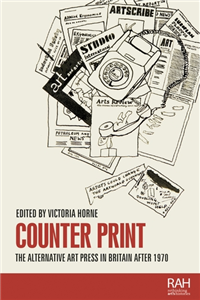
        Counter print

        The alternative art press in Britain after 1970

        by Victoria Horne

        The history of contemporary art is also a history of its newsletters, manifestos, magazines, pamphlets, and journals. Those periodical publications do not simply communicate or record ideas but have worked in exciting ways to shape art's practices, histories and communities. As a new generation of artists, activists and scholars seek to uncover the histories of alternative publishing and artistic networks, this book gathers original archival discoveries while offering methodologies for studying and thinking with those artefacts. As the first essay collection to focus on the periodical art press and the ways we study it, Counter print offers readers an alternative route into the past fifty years of contemporary art, one that is defiantly collaborative, border crossing and disruptive.

      • Trusted Partner
        Humanities & Social Sciences
        January 2025

        England’s military heartland

        Preparing for war on Salisbury Plain

        by Vron Ware, Antonia Lucia Dawes, Mitra Pariyar, Alice Cree

        What is it like to live next door to a British Army base? England's military heartland provides an eye-opening account of the sprawling military presence on Salisbury Plain, drawing on a wide range of voices from both sides of the divide. Targeted for expansion under government plans to reorganise the UK's global defence estate, the Salisbury 'super garrison' offers a unique opportunity to explore the impact of the military footprint in a particular place. But this is no ordinary environment: as well as being the world-famous site of Stonehenge, the grasslands of Salisbury Plain are home to rare plants and wildlife. How does the army take responsibility for conserving this unique landscape as it trains young men and women to use lethal weapons? Are its claims that its presence is a positive for the environment anything more than propaganda? This book investigates these questions against the backdrop of a historic landscape inscribed with the legacy of perpetual war.

      • Trusted Partner
        Humanities & Social Sciences
        July 2009

        Conservative thinkers

        The key contributors to the political thought of the modern Conservative Party

        by Mark Garnett, Kevin Hickson

        This book outlines and evaluates the political thought of the Conservative Party through a detailed examination of its principal thinkers from Harold Macmillan to the present. Traditionally, the Conservative Party has been regarded as a vote-gathering machine rather than a vehicle for ideas. This book redresses the balance through a series of biographical essays examining the thought of those who have contributed most to the development of ideas within the party. The chapters benefit from archival research and interviews with leading Conservatives. The recent revival of Conservative fortunes makes the book particularly timely. The book begins with an introductory chapter explaining the role of ideology in the Conservative Party. It then traces the political thought of the Conservative Party through its principal theorists since the 1930s. These are Harold Macmillan, R. A. Butler, Quintin Hogg, Enoch Powell, Angus Maude, Keith Joseph, the 'traditionalists' (Maurice Cowling, T. E. 'Peter' Utley, Peregrine Worsthorne, Shirley Letwin and Roger Scruton), Ian Gilmour, John Redwood and David Willetts. The book concludes with an overall assessment of the political thought of the Conservative Party and the relevance of past debates for contemporary Conservatism. The book will be of considerable interest to academics and non-academics alike; for those who have a special interest in the Conservative Party but also for any student of contemporary British Politics. ;

      • Trusted Partner
        Business, Economics & Law
        June 2024

        The labour movement in Lebanon

        Power on hold

        by Lea Bou Khater

        The labour movement in Lebanon: Power on hold narrates the history of the Lebanese labour movement from the early twentieth century to today. Bou Khater demonstrates that trade unionism in the country has largely been a failure, for reasons including state interference, tactical co-optation, and the strategic use of sectarianism by an oligarchic elite, together with the structural weakness of a service-based laissez-faire economy. Drawing on a vast body of Arabic-language primary sources and difficult-to-access archives, the book's conclusions are significant not only for trade unionism, but also for new forms of workers' organisations and social movements in Lebanon and beyond. The Lebanese case study presented here holds significant implications for the wider Arab world and for comparative studies of labour. This authoritative history of the labour movement in Lebanon is vital reading for scholars of trade unionism, Lebanese politics, and political economy.

      • Trusted Partner
        Humanities & Social Sciences
        August 1999

        British Politics in an Age of Reform

        by Michael J. Turner, Mark Greengrass

        This work is a detailed examination of principal themes in the political history of late 18th- and early 19th-century Britain. It evaluates much recent research, links the politics of the elite with the politics of the people and seeks to explain significant developments with reference to both their long- and short-term causes. Among the issues addressed are the relative powers of crown, cabinet and parliament between 1760 and 1832; the impact on domestic politics of revolution and war abroad; the growth of radicalism and popular political activity; agitation for reform and the responses of government; the rise of party; the connections between extra-parliamentary pressure and instability; at the centre of power. ;

      • Trusted Partner
        Humanities & Social Sciences
        January 2025

        England’s military heartland

        Preparing for war on Salisbury Plain

        by Vron Ware, Antonia Dawes, Mitra Pariyar, Alice Cree

        A considered investigation of a long-standing army base's impact on the British countryside. What is it like to live next door to a British Army base? Beyond the barracks provides an eye-opening account of the sprawling military presence on Salisbury Plain, drawing on a wide range of voices from both sides of the divide. Targeted for expansion under government plans to reorganise the UK's global defence estate, the Salisbury 'super garrison' offers a unique opportunity to explore the impact of the military footprint in a particular place. But this is no ordinary environment: as well as being the world-famous site of Stonehenge, the grasslands of Salisbury Plain are home to rare plants and wildlife. How does the army take responsibility for conserving this unique landscape as it trains young men and women to use lethal weapons? Are its claims that its presence is a positive for the environment anything more than propaganda? Beyond the barracks investigates these questions against the backdrop of a historic landscape inscribed with the legacy of perpetual war.

      • Trusted Partner
        Health & Personal Development
        July 2021

        Everything harder than everyone else

        by Jenny Valentish

      • Trusted Partner
      • Trusted Partner
        2019

        At Night, Everyone is an Enemy

        True stories

        by Bruno Schrep

        One wrong word, one perceived insult – a small matter may begin a chain of events resulting in tragedy. This was the case with Anothai S., who died in a brawl in Hamburg in September 2014. A quote from the circumstances of this death, reconstructed by Bruno Schrep for the SPIEGEL magazine, has given this book its title. “At Night, Everyone is an Enemy” compiles true stories of people who have been torn from their normal lives and plunged into despair from one moment to the next. In one case, it is a rumour that destroys all plans – the accusation of having abused children. Likewise, the information that your father and mother, who raised you, are not your biological parents, can turn your life upside down. And many an accident destroys not only the life of the victim, but also that of the person who caused the accident. As an accurate observer, Bruno Schrep describes human tragedies with empathy, but also with a keen eye for structural problems.

      • Trusted Partner
        Business, Economics & Law
        October 2004

        Qualities of food

        by Mark Harvey, Andrew McMeekin, Alan Warde

        In this book, the complexity and the significance of the foods we eat are analysed from a variety of perspectives, by sociologists, economists, geographers and anthropologists. Chapters address a number of intriguing questions: how do people make judgments about taste? How do such judgments come to be shared by groups of people?; what social and organisational processes result in foods being certified as of decent or proper quality? How has dissatisfaction with the food system been expressed? What alternatives are thought to be possible? The multi-disciplinary analysis of this book explores many different answers to such questions. The first part of the book focuses on theoretical and conceptual issues, the second part considers processes of formal and informal regulation, while the third part examines social and political responses to industrialised food production and mass consumption. Qualities of food will be of interest to researchers and students in all the social science disciplines that are concerned with food, whether marketing, sociology, cultural studies, anthropology, human nutrition or economics.

      Subscribe to our

      newsletter