Thornapple Press
Publisher of bestselling and award-winning books including Polysecure, More Than Two and Love’s Not Color Blind.
View Rights Portal
Publisher of bestselling and award-winning books including Polysecure, More Than Two and Love’s Not Color Blind.
View Rights Portal
Home to poetry slammers / stage poets and their stages-texts as well as novels / fictional works. What have all our authors in common? They can perform on stages what make every reading quite entertaining. When a stage-experienced actor and poetry slammer writes a dragon-novel for yound readers / listeners, then it's beatuful to read, listen and his readings are always fascinating. That way, the young dragon Fionrir, princess Quirina and their most unusual pack gained a intensely interacting fanbase. As the other stage-performers do.
View Rights Portal

 Trusted Partner
Trusted Partner
Trusted Partner

What am I doing in New York City? fragt der jüngste und vielversprechendste Songwriter New Yorks, ein Aufnahmegerät in der Hand, ein Notizbuch griffbereit in der Hosentasche. Und was ihm einfällt, landet entweder als Song im Recorder und später auf CD oder im Heft und wird zum pulsierenden Text: Eine Zeitlang sammelte Adam Green seine Textproduktion jenseits der Musik in Fanzines, den sogenannten magazines. Jetzt sind diese, zusammen mit dem Langgedicht "Flowers of Capitalism" und anderen zwischen 2001 und 2004 entstandenen Texten, erstmals in Buchform erhältlich.
Trusted Partner

 Trusted Partner

 Trusted Partner
Trusted Partner
Trusted Partner
Trusted Partner
Trusted Partner

 Trusted Partner
Trusted Partner
Trusted Partner
Trusted Partner
Trusted Partner
Trusted Partner
Trusted Partner

William Shakespeare wurde vermutlich am 23. April 1564 in Stratford-upon-Avon geboren. Seine schöpferische Sprachkraft und die meisterhafte psychologische Gestaltung seiner Charaktere begründen seine Bedeutung und seinen Ruhm als Dramatiker und Dichter. Werke wie König Johann, Ein Sommernachtstraum, Der Kaufmann von Venedig, oder seine Tragödien Hamlet, Romeo und Julia, Othello oder König Lear markieren Höhepunkte der Weltliteratur und sind von den großen internationalen Bühnen nicht mehr wegzudenken. William Shakespeare verstarb am 23. April 1616 in Stratford-upon-Avon. Thomas Brasch, Dichter, Dramatiker, Filmschaffender und Übersetzer, eine der markantesten Figuren der neuen deutschen Literatur, wurde 1945 in Westow/Yorkshire (England) als Sohn jüdischer Emigranten geboren. Bis zu dem Jahr, in dem er die DDR verließ (1976), lebte er in Ostberlin. 1977 erschien sein bekanntestes Buch, der Erzählband Vor den Vätern sterben die Söhne. 2001 ist er in Berlin gestorben.
Trusted Partner
Trusted Partner

This book is our principal source for the history of the Kingdom of Sicily in the troubled years between the death of its founder, King Roger, in February 1154 and the spring of 1169. It covers the reign of Roger's son, King William I, known to later centuries as 'the Bad', and the minority of the latter's son, William II 'the Good'. The book illustrates the revival of classical learning during the twelfth-century renaissance. It presents a vivid and compelling picture of royal tyranny, rebellion and factional dispute at court. Sicily had historically been ruled by tyrants, and that the rule of the new Norman kings could be seen, for a variety of reasons, as a revival of that classical tyranny. A more balanced view of Sicilian history of the period 1153-1169 has been provided as an appendix to the translation in the section of the contemporary world chronicle ascribed to Archbishop Romuald II of Salerno, who died in April 1181. In particular the chronicle of Romuald enables us to see how the papal schism of 1159 and the simultaneous dispute between the German Emperor Frederick Barbarossa and the north Italian cities affected the destiny of the kingdom of Sicily. In contrast to the shadowy figure of Hugo Falcandus, the putative author of the principal narrative of mid-twelfth-century Sicilian history, Romuald II, Archbishop of Salerno 1153-1181, is well-documented.
Trusted Partner

»Durch seine Komödien - und sogar einen Teil seiner Tragödien - ist Shakespeare der größte Humorist der Weltliteratur. Dem zum Tiefsinn neigenden Leser sei es auch umgekehrt gesagt: Shakespeare, der größte Dramatiker der Weltliteratur, ist ein Humorist.« Georg Hensels Feststellung trifft besonders auf Shakespeares musikalischstes, um 1600 geschriebenes Stück Was ihr wollt zu, das komisch und bitter zugleich ist, possenhaft und melancholisch: Sich Liebende wollen zueinander kommen und narren sich wieder und wieder, bis am Schluß der Reigen des Vergeblichen aufgelöst wird und der Zauber der Liebe triumphiert.
Trusted Partner
Trusted Partner
Trusted Partner
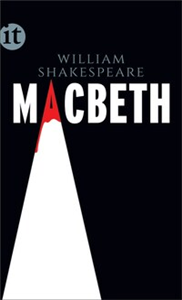
Das Stück spielt um das Jahr 1040 in Schottland und England und ist, weit mehr als eine »Tragödie des Ehrgeizes«, wie dies oft behauptet wird, ein Drama, in dem ein vielfältiges Geflecht von Unbewußtheit und Einbildung, von Verdrängung und zwanghaftem Handeln, von psychischer und physischer Abhängigkeit seinen Helden, den eben noch siegreich heimgekehrten Macbeth, Schritt für Schritt in den Abgrund, in Wahnsinn und Tod treibt.
Trusted Partner