
Thornapple Press
Publisher of bestselling and award-winning books including Polysecure, More Than Two and Love’s Not Color Blind.
View Rights Portal
Publisher of bestselling and award-winning books including Polysecure, More Than Two and Love’s Not Color Blind.
View Rights Portal

This collection tells the story of Thomas Becket's turbulent life, violent death and extraordinary posthumous acclaim in the words of his contemporaries. The only modern collection from the twelfth-century Lives of Thomas Becket in English and features all his major biographers, including many previously untranslated extracts. Providing both a valuable glimpse of the late twelfth-century world, and an insight into the minds of those who witnessed the events. By using contemporary sources, this book is the most accessible way to study this central episode in medieval history. Thomas Becket features prominently in most medieval core courses. This book allows the subject to be taught as never before, and is highly suitable as a set text.
 Trusted Partner

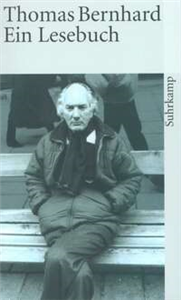
Das vorliegende Lesebuch versteht sich als Vorschlag und Einladung zu einer Erkundung des Bernhardschen Schreibens, dessen begriffs- und geschichtenzerstörende Irritationskraft den Leser in seinen Sog zieht und ihn jene Haltung einnehmen läßt, die Thomas Bernhard als die seinem Werk angemessene beschrieben hat: »Man soll sich vorstellen, man ist im Theater, man macht mit der ersten Seite einen Vorhang auf, der Titel erscheint, totale Finsternis – langsam kommen aus dem Hintergrund, aus der Finsternis heraus, Wörter, die langsam zu Vorgängen äußerer und innerer Natur, gerade wegen ihrer Künstlichkeit besonders deutlich zu einer solchen werden.«
Trusted Partner
Trusted Partner

30 Jahre alt, ohne Resonanz auf seine bis dahin veröffentlichten drei Gedichtbände, vom eigenen überragenden schriftstellerischen Können allerdings überzeugt, schreibt Thomas Bernhard im Oktober 1961 an Siegfried Unseld: "Vor ein paar Tagen habe ich an Ihren Verlag ein Prosamanuskript geschickt. Ich kenne Sie nicht, nur ein paar Leute, die Sie kennen. Aber ich gehe den Alleingang." Obwohl der Suhrkamp Verlag das Manuskript ablehnte, gingen der Alleingänger und der Verleger seit dem Erscheinen von Bernhards erstem Roman "Frost" 1963 gemeinsam den Weg, der den Autor in die Weltliteratur führte. In den etwa 500 Briefen zwischen beiden entwickelt sich ein einzigartiges Zwei-Personen-Schauspiel: Mal ist es eine Tragödie, wenn etwa Bernhard die aus seinen Werken bekannten Schimpftiraden auf den Verleger losläßt, der seinerseits auf die Überzeugungskraft des Arguments setzt. Dann gibt Bernhard ein Kammerspiel mit Unseld als Held – 1973 schreibt er ihm: "mit grösster Aufmerksamkeit, mit allen Möglichkeiten, gehe ich gern mit Ihnen." 1984 agieren beide, bei der Beschlagnahme von "Holzfällen", als Kämpfer für die Literatur in einem von Dritten inszenierten Schurkenstück. Es dominiert das Beziehungsdrama: Der Autor stellt die für sein Werk und seine Person unabdingbaren Forderungen. Der Verleger seinerseits weiß, daß gerade bei Bernhard rücksichtslose Selbstbezogenheit notwendige Voraussetzung der Produktivität ist. Solch einen dramatischen Briefwechsel zwischen Autor und Verleger, in dem bei jeder Zeile alles auf dem Spiel steht, kennt das Publikum bislang nicht.
Trusted Partner
 Trusted Partner
 Trusted Partner
 Trusted Partner


Rund 170 historische Fotos und Ansichtskarten, die hier zum größten Teil erstmals veröffentlicht werden, entführen den Leser in das Venedig Thomas Manns. Reinhard Pabst führt auf den Spuren des Dichters durch die Lagunenstadt und zu den Originalschauplätzen der Novelle Der Tod in Venedig. Wie einst Gustav Aschenbach, der Held der Novelle, kann sich der Leser im luxuriösen »Grand Hôtel des Bains« auf dem Lido ergehen, das mondäne Badeleben genießen und sich dem »Vergnügen an den Bildern eines soignierten Strandes« hingeben, an dem sich auch Arthur Schnitzler, Peter Altenberg, Karl Kraus, Georg Trakl und viele andere tummelten.Ein einzigartiges Buch über eine vergangene, faszinierende Epoche.
Trusted Partner


In the middle of our lives, the cards are reshuffled: marriages are divorced, careers are questioned, friendships are ended, questions of meaning are asked, bodies change - and not just hormonally. At the same time, children leave home and parents become carers. From the age of 45, the majority of our population is at the centre of a second upheaval that affects all facets of our lives and leaves us at a loss in many ways. Not only in our daily lives, but also when it comes to planning for our own old age. This guide is designed to help us find our way. It presents the most important information from all areas relevant to a good life after 45. Leading experts from the fields of medicine, nutrition, philosophy, theology, psychology, care, law and finance give recommendations on what to look out for and what tools are needed to get through these challenging years unscathed. Useful checklists round off the articles. The book shows us the unique opportunity to see these challenges not as a crisis but as a source of strength. Not only can we come through this period of our lives healthy and happy, but we can also shape it so that the next age threshold is no longer frightening. During the second phase of adolescence, we lay the foundations for whether and how we will grow older. Be it in terms of health or living together with family and friends. With contributions from: Prof. Dr. Martin Gessmann (philosophy), Dipl. Psych. Claudia Kühner (psychology), Dr Suso Lederle (medicine), Dr Petra Forster (nutrition), Christian Hald, Anja Heine (law), Prof Dr Philipp Schreiber (finance), Prof Dr Thomas Klie (nursing care insurance), Georg Eberhardt (religion).
Trusted Partner

Child, nation, race and empire is an innovative, inter-disciplinary, cross cultural study that contributes to understandings of both contemporary child welfare practices and the complex dynamics of empire. It analyses the construction and transmission of nineteenth-century British child rescue ideology. Locating the origins of contemporary practice in the publications of the prominent English Child rescuers, Dr Barnardo, Thomas Bowman Stephenson, Benjamin Waugh, Edward de Montjoie Rudolf and their colonial disciples and literature written for children, it shows how the vulnerable body of the child at risk came to be reconstituted as central to the survival of nation, race and empire. Yet, as the shocking testimony before the many official enquiries into the past treatment of children in out-of-home 'care' held in Britain, Ireland, Australia and Canada make clear, there was no guarantee that the rescued child would be protected from further harm.
Trusted Partner


Many patients are confused in the coronavirus crisis and ask what they can do to prevent themselves and their family from contracting the SARS-Cov-2 virus. There are now several studies that prove the influence of micronutrients such as zinc, selenium and various vitamins on the immune system and specifically on the course of viral diseases. In this brochure, successful author Uwe Gröber, pharmacist and head of the Academy for Micronutrient Medicine in Essen, has compiled his recommendations for strengthening the immune system. Here you can learn -why micronutrients may be considered for combatting the coronavirus, -how the micronutrients are dosed and applied, and -what effects micronutrients have on the immune system. This strengthens the immune system in the fight against the coronavirus!
Trusted Partner
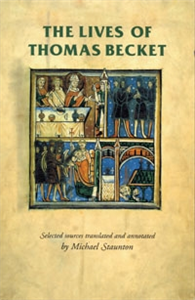
This collection tells the story of Thomas Becket's turbulent life, violent death and extraordinary posthumous acclaim in the words of his contemporaries. The only modern collection from the twelfth-century Lives of Thomas Becket in English and features all his major biographers, including many previously untranslated extracts. Providing both a valuable glimpse of the late twelfth-century world, and an insight into the minds of those who witnessed the events. By using contemporary sources, this book is the most accessible way to study this central episode in medieval history. Thomas Becket features prominently in most medieval core courses. This book allows the subject to be taught as never before, and is highly suitable as a set text. ;
Trusted Partner


Bärlock Holmes ist der beste Detektiv Bäronas! Doch auch seine Nichte Ivy ist eine Superspürnase. Als eine besonders seltene Blüte gestohlen wird, beginnen die beiden zu ermitteln. Eine spannende Detektivgeschichte in frischer Comic-Optik. Die Rätsel sind direkt in die Geschichte eingebunden – und ganz nebenbei lernt man, wie wichtig Bienen für unsere Umwelt sind.
Trusted Partner

»Wenn Shakespeare der größte Dichter und Mietti der größte Schauspieler, dann ist Unseld der größte Verleger.« »Thomas Bernhard und Frankfurt«, erzählt vom ersten Kontakt des Autors zum Verlag Suhrkamp und dessen Beziehung zum Verleger Siegfried Unseld.
Trusted Partner

Cannabis has been used as a drug since antiquity – but only recently has it progressed to become one of the most exciting medical-pharmaceutical topics of our times. In scarcely any other area of pharmacotherapy has the state of knowledge recently developed at comparable speed. Experts from a variety of fields are constantly working to generate new scientific evidence for the therapeutic use of cannabis and/or cannabinoids and to provide patients with quality-assured medicinal cannabis. This book is the first to give representatives of all relevant areas of expertise the chance to speak. Alongside medical-therapeutic aspects, they address such questions as cultivation, quality assurance, patient care practices and patient counselling. The result of this accumulated knowledge and skill is a unique overall picture that, for the first time, combines and consolidates the current legal and scientific framework of medicinal cannabis provision! All facts have been painstakingly researched and checked. The result is a scientifically valid work, which sets the standard. This excellent compendium is indispensable for everyone who comes into contact with cannabis for professional or personal reasons.
Trusted Partner
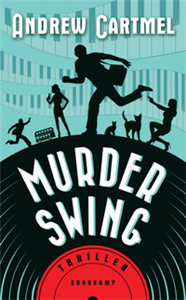
London, heute: Er ist ein Plattensammler, ein Spezialist für äußerst seltene LPs, die er kauft und verkauft. Die Jobbeschreibung auf seiner Visitenkarte lautet: ›Vinyl-Detektiv‹. Und manche Leute nehmen das ganz wörtlich – so wie die geheimnisvolle Nevada Warren, die ihn für eine Unsumme anheuert, um für einen anonymen Auftraggeber eine Platte zu finden, die zu der schmalen Produktion eines winzigen kalifornischen Jazz-Labels gehört, das in den 1950ern nur ein Jahr existierte. Bald häufen sich seltsame Todesfällen, die allesamt mit dieser Platte zu tun haben könnten. Aber was könnte auf ihr zu hören sein, was sie so ungemein wertvoll macht? Und was hat einer der mächtigsten Konzerne der weltweiten Unterhaltungsindustrie damit zu tun? Zu allem Überfluss hat unser Detektiv bald auch noch die »Aryian Twins« Heinz und Heidi an der Hacke, zwei ziemlich extravagante Killer …
Trusted Partner

 Trusted Partner
 Trusted Partner
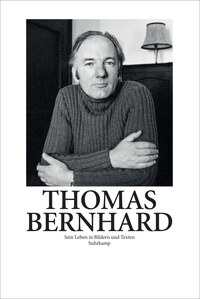
Thomas Bernhard zählt zu den meistkommentierten deutschsprachigen Schriftstellern: Ob in Zeitungen, wissenschaftlichen Periodika, als Dissertation oder als Gesamtdarstellung, als biografische Versuche oder fotografische Teilansichten – unter allen Aspekten wird er Gegenstand mehr oder weniger kompetenter Analysen, und das weltweit. Die Monografie bietet in Bildern und Texten zum ersten Mal gleichermaßen verlässliche wie überraschende Einsichten in das Werk und dessen Entstehungsbedingungen, vermittelt völlig unbekannte Aufschlüsse über sein Leben sowie fundierte Aussagen zur nationalen und internationalen Rezeption. Die Dokumente und Erklärungen sind für jedermann nachvollziehbar, kommen ohne germanistisches Gerede und Stereotypen aus. Dies ist möglich geworden, da den Herausgebern als bisher einzigen der gesamte Nachlass Thomas Bernhards zugänglich ist. Auf diese Weise sind spannende Einblicke in die Genese einzelner Werke möglich, der (nicht unbeträchtliche) Briefverkehr vermittelt Informationen über die Kontakte mit Kollegen, Kritikern und Freunden, wird die Mythisierung des Bernhard‘schen Lebens durch den Autor wie durch sogenannte Zeitgenossen und Biografen durchleuchtet. Die Bildmonografie löst sich von der strikten chronologischen Darstellung. Sie verfolgt vielmehr in zwölf Kapiteln bestimmte Komplexe des Oeuvres durch die drei Jahrzehnte des Bernhard‘schen Schaffens.



