House of Anansi Press
Livres Canada Books
View Rights Portal


 Trusted Partner
Trusted Partner
Trusted Partner
Trusted Partner
Trusted Partner
 Trusted Partner
Trusted Partner
Trusted Partner


Frank Wegner ist Lektor und Programmleiter für Internationale Literatur im Suhrkamp Verlag und übersetzt Belletristik aus dem Englischen, Französischen und Spanischen. Katharina Raabe ist Lektorin für osteuropäische Literaturen im Suhrkamp Verlag. Zuletzt erschienen u.a.: Gefährliche Nachbarschaften – Ukraine, Russland, Europäische Union (Hg.), Testfall Ukraine. Europa und seine Werte , hg. mit Manfred Sapper, beide 2015; Warum lesen. 24 Gründe , hg. mit Frank Wegner, 2020.
Trusted Partner
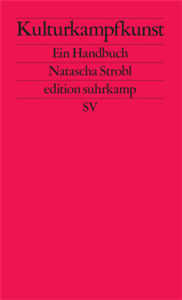
Ein »Zuschauer*innen« in den Nachrichten, und das Internet kocht. Ein Verlag zieht zwei Winnetou-Bücher zurück, und die Angelegenheit weitet sich fast zu einer Staatsaffäre aus. Eine transgender Influencerin bewirbt eine Biermarke, Konservative starten einen Boykott, der Kurs des größten Brauereikonzerns der Welt bricht ein. Eine Kulturkampf-Episode jagt die nächste, und selbst Konflikte um so materielle Dinge wie Gasheizungen werden zunehmend emotionalisiert und identitätspolitisch aufgeladen. Natürlich sind an solchen Auseinandersetzungen immer zwei Seiten beteiligt. Radikalisierte Konservative bespielen sie jedoch besonders intensiv und auf eine besonders gefährliche Weise. Natascha Strobl zeichnet die Geschichte der großen Verkulturkampfisierung nach. Sie analysiert, warum diese Strategie für konservative und rechte Parteien so attraktiv ist; außerdem präsentiert sie Ratschläge für den Umgang damit: Wann ist es sinnvoll, nicht über das Stöckchen zu springen? Und wann muss man widersprechen, damit menschenfeindliche Haltungen nicht Normalität werden?
Trusted Partner
Trusted Partner
Trusted Partner

Der Morgen des 24. Februar 2022 beginnt für Natascha wie jeder andere Tag. Und dann steht am Schultor die Deutschlehrerin ihrer Kinder und weint. Seit Beginn des Angriffskriegs auf die Ukraine führt Natascha ein Tagebuch und notiert, was sich in ihr und um sie herum abspielt. Wie sich in ihr lähmende Angst, Scham und Entsetzen breitmachen, während ringsum das Leben weitergeht, als sei nichts geschehen. Wie Einzelne sich trotz drohender drakonischer Strafen zum Protest auf die Straße wagen. Wie das Leiden der Ukraine wahrgenommen wird (oder auch nicht). Und wie die Sprache, das Gespräch unter Druck gerät – wie kann man noch reden und miteinander sprechen in einem Land, das den Gebrauch von immer mehr Wörtern verbietet? Mit feinem Ohr kartographiert Kljutscharjowa die Sphäre des Inoffiziellen in Russland – das Tagebuch vom Ende der Welt ist ein mutiges Zeugnis, das uns Einblick in eine mittlerweile geschlossene Gesellschaft gewährt.
Trusted Partner

How has French society been made, by whom and why? And how in turn has it influenced the French? This book sets out the institutionalized rules and norms that continue to structure France, together with the 'political work' that has recently changed or reproduced these power relations. Exploring a range of age groups and types of social activity, including work, business, entertainment, political mobilizations and retirement, Made in France examines where significant change has occurred over the last four decades. Smith argues that while transformation has occurred in France's financial and education sectors, only relatively marginal shifts have occurred elsewhere in French society. To explain this pattern of continuity and isolated change, the book strongly nuances claims that neo-liberalism, globalization or a rise in populism have been its causes. References to these trends have impacted upon French politics to varying extents, Smith argues; however, France continues to be dominated by issues which are specific to the country and linked to its deep societal structures and history. Smith provides a comprehensive account of French society and politics and in doing so proposes an insightful analytical framework applicable to the comparative analysis of other nations.
Trusted Partner

Heresy and inquisition in France, 1200-1300 is an invaluable collection of primary sources in translation, aimed at students and academics alike. It provides a wide array of materials on both heresy (Cathars and Waldensians) and the persecution of heresy in medieval France. The book is divided into eight sections, each devoted to a different genre of source material. It contains substantial material pertaining to the setting up and practice of inquisitions into heretical wickedness, and a large number of translations from the registers of inquisition trials. Each source is introduced fully and is accompanied by references to useful modern commentaries. The study of heresy and inquisition has always aroused considerable scholarly debate; with this book, students and scholars can form their own interpretations of the key issues, from the texts written in the period itself.
Trusted Partner
Trusted Partner
Trusted Partner
Trusted Partner
Trusted Partner
Trusted Partner
Trusted Partner