
Your Search Results


-
Promoted Content

 Biography & True StoriesMay 2025
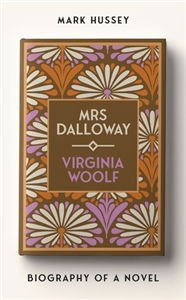
Mrs Dalloway
Biography of a novel
by Mark Hussey
A compelling biography of one of the most celebrated novels in the English language. The fourth and best-known of Virginia Woolf's novels, Mrs Dalloway is a modernist masterpiece that has remained popular since its publication in 1925. Its dual narratives follow a day in the life of wealthy housewife Clarissa Dalloway and shell-shocked war veteran Septimus Warren Smith, capturing their inner worlds with a vividness that has rarely been equalled. Mrs Dalloway: Biography of a novel offers new readers a lively introduction to this enduring classic, while providing Woolf lovers with a wealth of information about the novel's writing, publication and reception. It follows Woolf's process from the first stirrings in her diary through her struggles to create what was quickly recognised as a major advance in prose fiction. It then traces the novel's remarkable legacy to the present day. Woolf wrote in her diary that she wanted her novel 'to give life & death, sanity & insanity. to criticise the social system, & to show it at work, at its most intense.' Mrs Dalloway: Biography of a novel reveals how she achieved this ambition, creating a book that will be read by generations to come.
-
Promoted Content
 Political ideologiesMay 2017
Neoliberal power and public management reforms
by Professor Peter Triantafillou. Series edited by Mark Haugaard
This book examines the links between major contemporary public sector reforms and neoliberal thinking. The key contribution of the book is to enhance our understanding of contemporary neoliberalism as it plays out in the public administration and to provide a critical analysis of generally overlooked aspects of administrative power. The book examines the quest for accountability, credibility and evidence in the public sector. It asks whether this quest may be understood in terms of neoliberal thinking and, if so, how? The book makes the argument that while current administrative reforms are informed by several distinct political rationalities, they evolve above all around a particular form of neoliberalism: constructivist neoliberalism. The book analyses the dangers of the kinds of administrative power seeking to invoke the self-steering capacities of society and administration itself.
-
 Trusted Partner
 The ArtsSeptember 2025
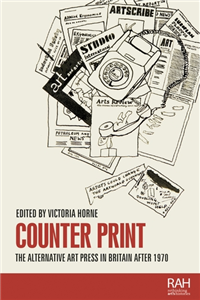
Counter print
The alternative art press in Britain after 1970
by Victoria Horne
The history of contemporary art is also a history of its newsletters, manifestos, magazines, pamphlets, and journals. Those periodical publications do not simply communicate or record ideas but have worked in exciting ways to shape art's practices, histories and communities. As a new generation of artists, activists and scholars seek to uncover the histories of alternative publishing and artistic networks, this book gathers original archival discoveries while offering methodologies for studying and thinking with those artefacts. As the first essay collection to focus on the periodical art press and the ways we study it, Counter print offers readers an alternative route into the past fifty years of contemporary art, one that is defiantly collaborative, border crossing and disruptive.
-
Trusted Partner
 The ArtsDecember 2024
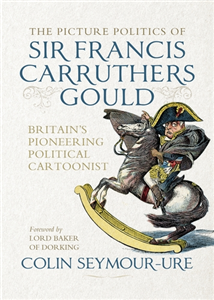
The picture politics of Sir Francis Carruthers Gould
Britain's pioneering political cartoonist
by Mark Bryant
This is the first major study of Britain's pioneering graphic satirist, Sir Francis Carruthers Gould (1844-1925), the first staff political cartoonist on a daily newspaper in Britain, and the first of his kind to be knighted. Written by the distinguished media historian, Colin Seymour-Ure, it is essential reading for anyone interested in cartoons, caricature and illustration and will also be welcomed by students of history, politics and the media. It examines Gould's career in Fleet Street until his retirement after the First World War. It also discusses his illustrations for magazines and books and there is an analysis of his use of symbolism and literary allusion to lampoon such eminent politicians as Gladstone and Joseph Chamberlain. As Lord Baker says in his Foreword, this book is 'a major contribution to our knowledge of British cartooning.'
-
Trusted Partner
 The ArtsJune 2026
The picture politics of Sir Francis Carruthers Gould
Britain's pioneering political cartoonist
by Colin Seymour-Ure, Mark Bryant
This is the first major study of Britain's pioneering graphic satirist, Sir Francis Carruthers Gould (1844-1925), the first staff political cartoonist on a daily newspaper in Britain, and the first of his kind to be knighted. Written by the distinguished media historian, Colin Seymour-Ure, it is essential reading for anyone interested in cartoons, caricature and illustration and will also be welcomed by students of history, politics and the media. It examines Gould's career in Fleet Street until his retirement after the First World War. It also discusses his illustrations for magazines and books and there is an analysis of his use of symbolism and literary allusion to lampoon such eminent politicians as Gladstone and Joseph Chamberlain. As Lord Baker says in his Foreword, this book is 'a major contribution to our knowledge of British cartooning.'
-
Trusted Partner
 The ArtsJanuary 2027
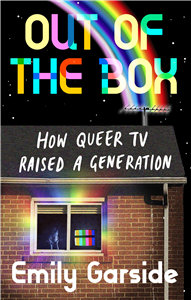
Out of the box
How queer TV raised a generation
by Emily Garside
A celebration of queer TV's past, present and exciting future. In Out of the box, Emily Garside takes the reader on a tour through the colourful, complicated world of queer television - where representation is never just entertainment. Examining a wide array of programmes, from Queer as Folk and Buffy the Vampire Slayer to Schitt's Creek and Heartstopper, she explores how queer viewers find themselves in the stories TV tells. Part I dives into the genres that have shaped queer visibility on screen, from the closeted tensions of TV drama to the evolving landscape of sitcoms, musicals, sci-fi and period pieces. Whether it's gay aliens, campy dance numbers or the queerness hidden in historical narratives, these chapters reveal how genre both limits and liberates LGBTQ+ storytelling. Part II turns to the stories themselves: queer teens navigating first love, coming-out arcs, the thorny politics of sex on screen and the lasting need for AIDS narratives. The book also tackles the negative sides of queer TV, from queerbaiting to the 'bury your gays' trope, and looks at how fans push back through creativity and fanfiction.
-
Trusted Partner
Humanities & Social SciencesMarch 2017
Popular imperialism and the military, 1850-1950
by John M. MacKenzie
Colonial war played a vital part in transforming the reputation of the military and placing it on a standing equal to that of the navy. The book is concerned with the interactive culture of colonial warfare, with the representation of the military in popular media at home, and how these images affected attitudes towards war itself and wider intellectual and institutional forces. It sets out to relate the changing image of the military to these fundamental facts. For the dominant people they were an atavistic form of war, shorn of guilt by Social Darwinian and racial ideas, and rendered less dangerous by the increasing technological gap between Europe and the world. Attempts to justify and understand war were naturally important to dominant people, for the extension of imperial power was seldom a peaceful process. The entertainment value of war in the British imperial experience does seem to have taken new and more intensive forms from roughly the middle of the nineteenth century. Themes such as the delusive seduction of martial music, the sketch of the music hall song, powerful mythic texts of popular imperialism, and heroic myths of empire are discussed extensively. The first important British war correspondent was William Howard Russell (1820-1907) of The Times, in the Crimea. The 1870s saw a dramatic change in the representation of the officer in British battle painting. Up to that point it was the officer's courage, tactical wisdom and social prestige that were put on display.
-
Trusted Partner
 Humanities & Social SciencesJanuary 2025
England’s military heartland
Preparing for war on Salisbury Plain
by Vron Ware, Antonia Lucia Dawes, Mitra Pariyar, Alice Cree
What is it like to live next door to a British Army base? England's military heartland provides an eye-opening account of the sprawling military presence on Salisbury Plain, drawing on a wide range of voices from both sides of the divide. Targeted for expansion under government plans to reorganise the UK's global defence estate, the Salisbury 'super garrison' offers a unique opportunity to explore the impact of the military footprint in a particular place. But this is no ordinary environment: as well as being the world-famous site of Stonehenge, the grasslands of Salisbury Plain are home to rare plants and wildlife. How does the army take responsibility for conserving this unique landscape as it trains young men and women to use lethal weapons? Are its claims that its presence is a positive for the environment anything more than propaganda? This book investigates these questions against the backdrop of a historic landscape inscribed with the legacy of perpetual war.
-
Trusted Partner
 Humanities & Social SciencesJuly 2016
The European Union's fight against terrorism
by Christopher Baker-Beall
-
Trusted Partner
Business, Economics & LawOctober 2004
Qualities of food
by Mark Harvey, Andrew McMeekin, Alan Warde
In this book, the complexity and the significance of the foods we eat are analysed from a variety of perspectives, by sociologists, economists, geographers and anthropologists. Chapters address a number of intriguing questions: how do people make judgments about taste? How do such judgments come to be shared by groups of people?; what social and organisational processes result in foods being certified as of decent or proper quality? How has dissatisfaction with the food system been expressed? What alternatives are thought to be possible? The multi-disciplinary analysis of this book explores many different answers to such questions. The first part of the book focuses on theoretical and conceptual issues, the second part considers processes of formal and informal regulation, while the third part examines social and political responses to industrialised food production and mass consumption. Qualities of food will be of interest to researchers and students in all the social science disciplines that are concerned with food, whether marketing, sociology, cultural studies, anthropology, human nutrition or economics.
-
Trusted Partner
 Humanities & Social SciencesJanuary 2025
England’s military heartland
Preparing for war on Salisbury Plain
by Vron Ware, Antonia Dawes, Mitra Pariyar, Alice Cree
A considered investigation of a long-standing army base's impact on the British countryside. What is it like to live next door to a British Army base? Beyond the barracks provides an eye-opening account of the sprawling military presence on Salisbury Plain, drawing on a wide range of voices from both sides of the divide. Targeted for expansion under government plans to reorganise the UK's global defence estate, the Salisbury 'super garrison' offers a unique opportunity to explore the impact of the military footprint in a particular place. But this is no ordinary environment: as well as being the world-famous site of Stonehenge, the grasslands of Salisbury Plain are home to rare plants and wildlife. How does the army take responsibility for conserving this unique landscape as it trains young men and women to use lethal weapons? Are its claims that its presence is a positive for the environment anything more than propaganda? Beyond the barracks investigates these questions against the backdrop of a historic landscape inscribed with the legacy of perpetual war.
-
Trusted Partner
 Humanities & Social SciencesMarch 2026
Negotiating identity conflicts in a fragmenting world order
by Paul Willem Meerts, Mark Anstey
At every level of human interaction new levels of identity-based tension are in evidence. Contributors to this book explore facets of fragmentation processes within systems of state and interstate organisation, how they influence the use of negotiation, and how negotiation might be used to effect renewed coherence. Following Anstey's (Ch1) introductory chapter framing the nature and shape of fragmentation dynamics, Zartman (Ch 2) argues that the use of negotiation as a process of conflict resolution is deeply shaped by identity groups whose internal coherence is dependent on sustaining a negative identity of others. International relations are no longer solely the realm of experienced diplomats but are shaped as Meerts (Ch3) points out by politicians seeking to be responsive to voting publics rather than wider concerns. Anstey digs into problems of fragmentation (Ch. 4) and Troitskiy (Ch 5) points out how a reluctant acceptance of the power of 'the other' can lead to a form of strategic stability in relations. Anstey and Meerts (Ch 6) point out in their analysis of the Israeli-Palestinian case as an identity conflict turned very bad. Guggenbuhl (Ch 7 ) reveals how structures and processes have been designed within the EU to prevent, contain and regulate conflicts to limit risks of confrontation and fragmentation. Schuessler (Ch 8) to advocates a shift away from a template or roadmap approach to EU membership to a cohesion based on non-dominance. There is still a strong desire on the part of some states, like Northern Macedonia, to become EU members, as reflected in Manton's (Ch 9). Paula Garzon and Frans Schram explain the success of the Colombia Peace Negotiations (Ch 10), while Odigie and da Rocha (Ch 11) analyse the struggle faced by ECOWAS to influence coup leaders in Mali to return to constitutional government and changes of government by constitutional means. Liang (Ch12) discusses how the internet as the modern vehicle of inter-state, inter-group and interpersonal communication has become weaponised. In Ch 13 Anstey draws some lessons from contributions to the compilation.
-
Trusted Partner
-
Trusted Partner
 Biography & True StoriesMay 2023
The invisible painting
by Gabriel Weisz Carrington, Jonathan P. Eburne
-
Trusted Partner
 Business, Economics & LawMay 2025
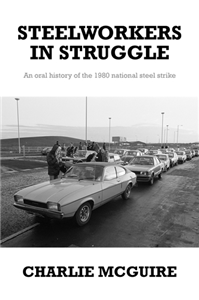
Steelworkers in struggle
An oral history of the 1980 national steel strike
by Charlie McGuire
Using oral histories gathered from trade unionists, this book explores the national steelworkers strike of 1980 and asserts its significance as a key turning point in modern British history. The strike was nominally a response to a 2% pay offer made by British Steel Corporation (BSC), at a time when inflation was 17%, but was generated by the widespread works closures that characterised the British steel industry at this time. The outcome of the strike was a much higher pay increase but no change to the deindustrialisation strategy of BSC and the government. The book explores the strike from the perspective of those who fought it and reveals the short and longer-term consequences it had on the industry, the unions and the workers themselves.
-
Trusted Partner
 The ArtsSeptember 2020
Science in performance
Theatre and the politics of engagement
by Simon Parry
This electronic version has been made available under a Creative Commons (BY-NC-ND) open access license. This book is about science in theatre and performance. It explores how theatre and performance engage with emerging scientific themes from artificial intelligence to genetics and climate change. The book covers a wide range of performance forms from Broadway musicals to educational theatre, from Somali drama to grime videos. It features work by pioneering companies including Gob Squad, Headlong Theatre and Theatre of Debate as well as offering fresh analysis of global blockbusters such as Wicked and Urinetown. The book offers detailed description and analysis of theatre and performance practices as well as broader commentary on the politics of theatre as public engagement with science. Science in performance is essential reading for researchers, students and practitioners working between science and the arts within fields such as theatre and performance studies, science communication, interdisciplinary arts and health humanities.
-
Trusted Partner
 Humanities & Social SciencesJanuary 2025
The four dimensions of power
Understanding domination, empowerment and democracy
by Mark Haugaard
In this accessible and sophisticated exploration of the nature and workings of social and political power, Haugaard examines the interrelation between domination and empowerment. Building upon the perspectives of Steven Lukes, Michel Foucault, Amy Allen, Hannah Arendt, Anthony Giddens, Pierre Bourdieu and others, he offers a clear theoretical framework, delineating power in four interrelated dimensions. The first and second dimensions of power entail two different types of social conflict. The third dimension concerns tacit knowledge, uses of truth and reification. Drawing upon genealogical theory and accounts of slavery as social death, the fourth dimension of power concerns the power to create social subjects. The book concludes with an original normative pragmatist power-based account of democracy. Offering lucid and entertaining illustrations of complex theoretical perspectives, this book is essential reading for scholars and activists.
-
Trusted Partner
 Humanities & Social SciencesApril 2009
Fighting like the Devil for the sake of God
by Mark Doyle, Rebecca Mortimer
-
Trusted Partner
 Humanities & Social SciencesFebruary 2026
New Labour, new Britain
How the Blair governments reshaped the country
by Glen O’Hara
A bold and balanced re-appraisal of New Labour in power. Rewriting the story of New Labour, Glen O'Hara challenges the prevailing narrative to present a more balanced and positive assessment. New Labour, new Britain is the first book to examine both the intentions behind New Labour's domestic policies and their real-world effects, moving beyond the entrenched left-right debates that have dominated the party's legacy. The period from 1997 to 2007 marked a pivotal moment in modern British history, as New Labour sought to reshape Britain into a more cohesive and forward-thinking society. It saw the rise of socially liberal attitudes and flourishing public services under a government committed to rebuilding and investing in them. Yet New Labour's track record was far from flawless and its legacy remains complicated and contested. Through interviews with key players and rigorous archival research, O'Hara offers a new perspective on Tony Blair's years in power. Painting a fuller picture of New Labour's successes and challenges, he highlights its lasting impact on Britain and offers a thoughtful reassessment of its place in history.
-
Trusted Partner
 Humanities & Social SciencesNovember 2009
The Northern veto
by Mark Sandford
This book provides the only available historical account and comprehensive assessment of the factors surrounding the 2004 referendum on an elected assembly in the North-East region of England. The referendum delivered a 'no' vote of considerable magnitude and called a halt to the programme of gradual reform being pushed through by the Labour government. This book examines the campaigns around and the lead-up to the referendum, and offers in-depth analysis of the result, plus explorations of future options available to policy-makers around the sub-national governance of England (a key aspect of the 'English Question'). Crucially, the book contains chapters from scholars who carried out cutting-edge research at the time of the referendum and are thus in a unique position to contribute authoritatively to the historical understanding of these events. This volume will be of great benefit to students and researchers in Regional Studies, Local Government Studies and Constitutional Studies. ;

