
Douglas & McIntyre
Livres Canada Books
View Rights Portal

Established in 2006 by publishing Fleurs des lettres (字花), a literary bimonthly in Chinese, Spicy Fish is a 15 year-old literary arts non-profit organization based in Hong Kong.
View Rights Portal
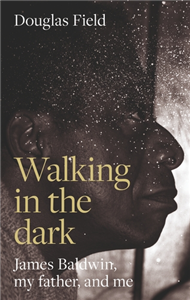
A moving exploration of the life and work of the celebrated American writer, blending biography and memoir with literary criticism. Since James Baldwin's death in 1987, his writing - including The Fire Next Time, one of the manifestoes of the Civil Rights Movement, and Giovanni's Room, a pioneering work of gay fiction - has only grown in relevance. Douglas Field was introduced to Baldwin's essays and novels by his father, who witnessed the writer's debate with William F. Buckley at Cambridge University in 1965. In Walking in the dark, he embarks on a journey to unravel his life-long fascination and to understand why Baldwin continues to enthral us decades after his death. Tracing Baldwin's footsteps in France, the US and Switzerland, and digging into archives, Field paints an intimate portrait of the writer's life and influence. At the same time, he offers a poignant account of coming to terms with his father's Alzheimer's disease. Interweaving Baldwin's writings on family, illness, memory and place, Walking in the dark is an eloquent testament to the enduring power of great literature to illuminate our paths.

Terence Fisher is best known as the director who made most of the classic Hammer horrors - including The Curse of Frankenstein, Dracula and The Devil Rides Out. But there is more to Terence Fisher than Hammer horror. In a busy twenty-five-year career, he directed fifty films, not just horrors but also thrillers, comedies, melodramas and science-fiction. This book offers an appreciation of all of Fisher's films and also gives a sense of his place in British film history. Looking at Fisher's career as a whole not only underlines his importance as a film-maker but also casts a new, interesting light on the areas in which he worked - Gainsborough melodrama, the 1950s B film, 1960s science-fiction and, of course, Hammer, one of the most successful independent film companies in the history of British cinema.
 Trusted Partner


George Bernard Shaw wurde am 26. Juli 1856 als Sohn eines Beamten in Dublin geboren. 1876 zog er nach London, wo er sich als einer der führenden Musik- und Theaterkritiker etablieren konnte. Shaw betätigte sich auch auf politischer Bühne und wurde u.a. Mitglied der Fabian Society. Seine schriftstellerische Laufbahn begann er mit fünf erfolglosen Romanen, wandte sich dann dem Schreiben von Dramen – darunter vielen Komödien – zu, die sich durch die Verbindung von Ironie, Satire und Kritik an gesellschaftlichen und politischen Mißständen auszeichnen. Shaws Gesamtwerk umfaßt über 60 Dramen. 1925 wurde er mit dem Literaturnobelpreis ausgezeichnet. Er starb am 2. November 1950 in Ayot Saint Lawrence.
Trusted Partner
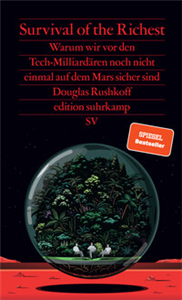
Spätestens seit der Allianz von Donald Trump und Elon Musk ist klar: Die Tech-Milliardäre sind nicht nur die reichsten Männer der Welt, es geht ihnen auch um politische Macht und um die radikale Umgestaltung von Gesellschaft und Natur. Als Douglas Rushkoff eine Einladung in ein exklusives Wüstenresort erhält, nimmt er an, dass er dort über Zukunftstechnologien sprechen soll. Stattdessen sieht er sich Milliardären gegenüber, die ihn zu Luxusbunkern und Marskolonien befragen. Während die Welt mit der Klimakatastrophe und sozialen Krisen ringt, zerbrechen sich diese Männer den Kopf, wie sie im Fall eines Systemkollapses ihre Privatarmeen in Schach halten können. Der Medientheoretiker Rushkoff verfolgt die Internetrevolution seit Jahrzehnten, ist Erfinder der Begriffe »viral gehen« und »Digital Natives«, bewegte sich lange im Kreis von Vordenkern und kreativen Zerstörern. In einer Zeit, in der Elon Musk und Peter Thiel sich immer stärker in die Politik einmischen, rekonstruiert er, wie aus der Aufbruchsstimmung der 1990er ein Programm aus Angst und Größenwahn werden konnte. Viele Tech-Unternehmer wollen uns Normalsterbliche einfach nur hinter sich lassen, werden aber als Visionäre gefeiert. Angesichts der Zerrüttungen, die ihre Geschäftsmodelle produzieren, müssen wir uns von ihrem Mindset befreien – denn mitnehmen werden sie uns auf ihrem Exodus sicher nicht. Ein flammendes Plädoyer gegen Egomanie und für die Wiederentdeckung kooperativen Handelns
Trusted Partner
Trusted Partner
Trusted Partner
 Trusted Partner
Trusted Partner
Trusted Partner
Trusted Partner
Trusted Partner
Though poets have always written about cities, the commonest critical categories (pastoral poetry, nature poetry, Romantic poetry, Georgian poetry, etc.) have usually stressed the rural, so that poetry can seem irrelevant to a predominantly urban populati. Explores a range of contemporary poets who visit the 'mean streets' of the contemporary urban scene, seeking the often cacophonous music of what happens here. Poets discussed include: Ken Smith, Iain Sinclair, Roy Fisher, Edwin Morgan, Sean O'Brien, Ciaran Carson, Peter Reading, Matt Simpson, Douglas Houston, Deryn Rees-Jones, Denise Riley, Ken Edwards, Levi Tafari, Aidan Hun, and Robert Hampson. Approaches contemporary poetry within a broad spectrum of personal, social, literary, and cultural concerns. Includes 'loco-specific' chapters, on cities including Hull, Liverpool, London, and Birmingham, with an additional chapter on 'post-industrial' cities such as Belfast, Glasgow and Dundee. ;
Trusted Partner
Trusted Partner

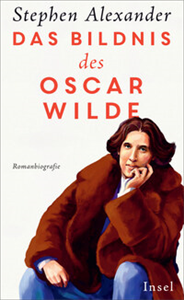
Zwei junge Männer schreiten die Freitreppe des Londoner St. James's Theaters hinab. Applaus brandet auf: Er gilt Oscar Wilde, der auf dem Weg ist, der erfolgreichste Autor Großbritanniens zu werden – seine Theaterstücke werden gefeiert; sein Roman Das Bildnis des Dorian Gray ist ein verruchter Bestseller. Er wird verehrt, doch auch kritisch beäugt. Denn den klatschsüchtigen Londonern entgeht nicht, dass der verheiratete Familienvater enge Beziehungen zu jungen Männern pflegt. An diesem Abend begleitet ihn ›Bosie‹, Lord Alfred Douglas, der Sohn des Marquess of Queensberry. Ihr Glück wird bald ein Ende finden: Homosexuelle Liebesbeziehungen sind im viktorianischen England verboten, und als Bosies Vater Oscar Wilde öffentlich der Sodomie bezichtigt, ist die Katastrophe nicht mehr aufzuhalten …
Trusted Partner
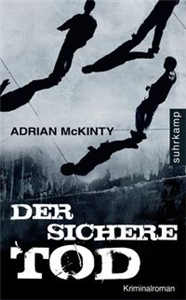
Die Bronx. Harlem. Mehr als 2000 Morde pro Jahr. Nicht gerade das, was Michael Forsythe, illegal aus Belfast eingereist, sich von New York erhofft hat. Aber als Neuling in der street gang des mächtigen Darkey White macht Michael sich gut. Jung, clever, mit wenig Skrupeln, erwirbt er sich schnell Darkeys Vertrauen. Bis er sich mit dessen Freundin einläßt. Was jetzt gegen Michael in Gang gesetzt wird, ist teuflisch – und bedeutet seinen sicheren Tod. Doch Darkey hat Michael unterschätzt: seine Zähigkeit und seinen eisernen Willen, sich an allen zu rächen, die ihn verraten haben. Der Auftakt zur preisgekrönten Dead-Trilogie: ein irischer Bad Boy auf Rachefeldzug in den härtesten Vierteln New Yorks
Trusted Partner
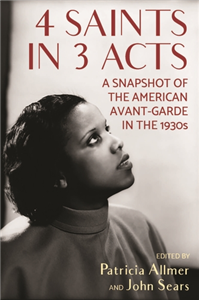
Four Saints in Three Acts by Gertrude Stein and Virgil Thomson was a major avant-garde phenomenon of the 1930s, an experimental opera that nonetheless achieved remarkable popular success. Photography was a key element of that success, but its complex roles in the construction, representation and dissemination of the opera have hitherto received little critical attention. The photographic recording of the all-African American cast in particular affords a unique insight into the complexities of Four Saints in relation to the Harlem Renaissance and the New York avant-gardes of the time. This book, published in collaboration with The Photographers' Gallery, London, presents a wide selection of photographs of the cast, performances, and other material - many images reproduced for the first time - alongside essays by an international range of scholars exploring different aspects of the opera, including dance, fashion, music, and avant-garde writing, as well as photography.
Trusted Partner

Suicide and the Gothic is the first protracted study of how the act of self-destruction recurs and functions within one of the most enduring and popular forms of fiction. Comprising eleven original essays and an authoritative introduction, this collection explores how the act of suicide has been portrayed, interrogated and pathologised from the eighteenth century to the present. The featured fictions embrace both canonical and the less-studied texts and examine the crisis of suicide - a crisis that has personal, familial, religious, legal and medical implications - in European, American and Asian contexts. Featuring detailed interventions into the understanding of texts as temporally distant as Thomas Percy's Reliques and Patricia Highsmith's crime fictions, and movements as diverse as Wertherism, Romanticism and fin-de-siècle decadence, Suicide and the Gothic provides a comprehensive and compelling overview of this recurrent crisis in fiction and culture.
Trusted Partner

Victorian demons provides the first extensive exploration of largely middle-class masculinities in crisis at the fin de siècle. It analyses how ostensibly controlling models of masculinity became demonised in a variety of literary and medical contexts, revealing the period to be much more ideologically complex than has hitherto been understood, and makes a significant contribution to Gothic scholarship. Andrew Smith demonstrates how a Gothic language of monstrosity, drawn from narratives such as 'The Strange Case of Dr Jekyll and Mr Hyde' and 'Dracula', increasingly influenced a range of medical and cultural contexts, destabilising these apparently dominant masculine scripts. He provides a coherent analysis of a range of examples relating to masculinity drawn from literary, medical, legal and sociological contexts, including Joseph Merrick ('The Elephant Man'), the Whitechapel murders of 1888, Sherlock Holmes's London, the writings and trials of Oscar Wilde, theories of degeneration and medical textbooks on syphilis.
Trusted Partner
Trusted Partner

 Trusted Partner
 Trusted Partner



