
Your Search Results
-

-

Guangdong Education Publishing House
Established in 1985, GEPH is a comprehensive publishing house, subordinated to Southern Publishing and Media. It is named “National Outstanding Publishing House” and “National Top 100 Publishing House”, by The Press and Publication Administration of the People‘s Republic of China.
View Rights Portal
-
Promoted Content
-
Promoted Content

 September 1979
Spectaculum 31
Fünf moderne Theaterstücke
by Herbert Achternbusch, Dario Fo, Barrie Keeffe, Bodo Kirchhoff, Heiner Müller, Wolfgang Storch
Herbert Achternbusch: EllaDie Lebensgeschichte einer Frau namens Ella als Geschichte einer Gefangenschaft - in der Familie, im Gefängnis, in der psychiatrischen Klinik. Die Geschichte von der systematischen Vernichtung eines Menschen durch die Gesellschaft.Dario Fo: Zufälliger Tod eines AnarchistenIn Mailand war 1969 der Anarchist Pino Pinelli aus einem Fenster im 4. Stock des Mailänder Polizeipräsidiums ›gestürzt‹. Die behördenoffizielle Version der Todesursache lautete auf Selbstmord. Eine Untersuchung der tatsächlichen Vorgänge kam erst nach der Uraufführung von Fos Stück im Jahre 1970 in Gang, einer volkstümlichen Groteske, die sich der gesammelten Widersprüche der polizeiamtlichen Erklärungen bediente, um die allgemeinen Zweifel an der Selbstmordversion zu artikulieren.Barrie Keeffe: Gimme shelterEine Trilogie über die Zwänge zur Anpassung junger Leute an Verhältnisse, die nicht die ihren sind, mit denen sie nicht fertig werden können. Junge Verwaltungsangestellte versuchen vergeblich, sich den Konkurrenzspannungen und kümmerlichen Berufsperspektiven zu entziehen. - Ein Schüler droht, Lehrer, Lehrerin und Direktor in die Luft zu sprengen, weil sie ihn durch ein mieses Zeugnis zum Versager ohne Berufsaussichten gestempelt haben. - Jungmanager versuchen, mit revolutionärem Geschwätz einen jungen Gärtner zum Widerstand gegen das System zu ermuntern, dem sie sich selbst total ergeben haben.Bodo Kirchhoff: Das Kind oder Die Vernichtung von NeuseelandDas Eigenheim als geschlossene Anstalt. Ein zurückgebliebenes Kind, das nur einen Ausweg hat: sich im Garten ein Loch zu graben, durch die Erde, bis nach Neuseeland. Eine Mutter, die ihren Sohn systematisch von allem fernhält. Ein Vater, der an die Begabung seines Sohnes glaubt und einen Therapeuten engagiert, der aus dem Fluchtloch eine Baustelle machen soll, um dem Tun des Kindes einen Sinn zu geben.Heiner Müller: Germania Tod in Berlin2000 Jahre deutsche Geschichte. Die Tradition von Spaltung und Demütigung, von Opportunismus und besinnungsloser Selbstzerstörung. Eine groteske Revue der deutschen Misere, ein Angriff auf die deutschen Werte und Mythologien, ein wüstes Panorama deutscher Übermenschen und Untertanen. Auch ein Stück über die deutsche Arbeiterbewegung und ihre Niederlagen.
-
 Trusted Partner

 October 2007
Darren Shans Dämonicon 4
Blutige Nächte
by Shan, Darren / Übersetzt von Reinhardus, Sabine
-
Trusted Partner
 August 2007
Darren Shans Dämonicon 3
Dämonenspiel
by Shan, Darren / Übersetzt von Reinhardus, Sabine
-
Trusted Partner
-
Trusted Partner

 Humanities & Social SciencesJanuary 2025
The four dimensions of power
Understanding domination, empowerment and democracy
by Mark Haugaard
In this accessible and sophisticated exploration of the nature and workings of social and political power, Haugaard examines the interrelation between domination and empowerment. Building upon the perspectives of Steven Lukes, Michel Foucault, Amy Allen, Hannah Arendt, Anthony Giddens, Pierre Bourdieu and others, he offers a clear theoretical framework, delineating power in four interrelated dimensions. The first and second dimensions of power entail two different types of social conflict. The third dimension concerns tacit knowledge, uses of truth and reification. Drawing upon genealogical theory and accounts of slavery as social death, the fourth dimension of power concerns the power to create social subjects. The book concludes with an original normative pragmatist power-based account of democracy. Offering lucid and entertaining illustrations of complex theoretical perspectives, this book is essential reading for scholars and activists.
-
Trusted Partner

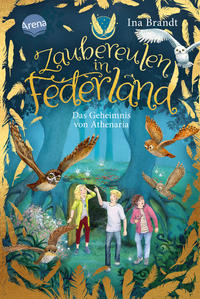 Children's & YA
Magic Owls in Featherland (1). Athenaria's Secret
by Ina Brandt/Irene Mohr
Flora is very excited: together with her magic owl Goldwing, she is to be part of a new team. The owl rulers of the Magical Kingdom have summoned them to Featherland, a hidden place in a mysterious monastery. There they meet the snowy owl Nordis, the spectacled owl Claro and, of course, Jona, who always tries to compete with Flora. How will they ever manage to make a team? It’s not long before they are given their first job: during the night of the next full moon they must help one another to awaken the magic of Featherland – and this proves to be more difficult than expected. Because suddenly Claro disappears from the face of the earth. And without him, no magic can ever succeed…
-
Trusted Partner
-
Trusted Partner
 Humanities & Social SciencesJuly 2021
Post-everything
An intellectual history of post-concepts
by Herman Paul, Adriaan van Veldhuizen
Postmodern, postcolonial and post-truth are broadly used terms. But where do they come from? When and why did the habit of interpreting the world in post-terms emerge? And who exactly were the 'post boys' responsible for this? Post-everything examines why post-Christian, post-industrial and post-bourgeois were terms that resonated, not only among academics, but also in the popular press. It delves into the historical roots of postmodern and poststructuralist, while also subjecting more recent post-constructions (posthumanist, postfeminist) to critical scrutiny. This study is the first to offer a comprehensive history of post-concepts. In tracing how these concepts found their way into a broad range of genres and disciplines, Post-everything contributes to a rapprochement between the history of the humanities and the history of the social sciences.
-
Trusted Partner

 September 2023
Ein Hoch auf die Freundschaft!
Ein herzerwärmendes Bilderbuch mit zweien, die man sofort ins Herz schließt!
by Milla Shan
-
Trusted Partner
 October 2024
Ein Funke nur, ein kleines Licht - Eine Geschichte über Liebe und Mut
Ein herzerwärmendes Bilderbuch ab 4 Jahren über eine mutige Maus und die Kraft der Liebe und Zuversicht
by Milla Shan
-
Trusted Partner
 September 2021
Wenn du groß bist: Eine Geschichte, die stark macht fürs Leben
Ein poetisch-schönes Mutmachbuch mit vielen liebevollen Wünschen fürs eigene Kind
by Milla Shan
-
Trusted Partner
 Humanities & Social SciencesMarch 2026
The dilemma of Authority
by Allyn Fives
The moral problem of authority is the challenge of reconciling legitimate authority (the right to rule) with the demands of freedom and rationality. In this book, I argue that authority can have legitimacy, but when it does it generates a moral dilemma, where the obligation to obey comes at some cost to freedom and reason. Hence, not only do I depart from the views of those who insist that authority can never have legitimacy, but also those who maintain that insofar as authority is legitimate it simply satisfies the demands of freedom or rationality. My focus here will be on both what it is that justifies authority (in particular focusing on membership, and the goods of membership) as well what type of reason an authoritative directive is, how it can come into conflict with others reasons, and how those conflicts are resolved.
-
Trusted Partner
-
Trusted Partner
-
Trusted Partner
-
Trusted Partner
 Humanities & Social SciencesMay 2021
Disciplined agency
Neoliberal precarity, generational dispossession and call centre labour in Portugal
by Patrícia Alves de Matos
Since the mid-2000s, the harsh reality of call centre employment for a generation of young workers in Portugal has been impossible to ignore. With its endless rows of small cubicles, where human agents endure repetitive telephone conversations with abusive clients under invasive modes of technological surveillance, discipline and control, call centre work remains a striking symbol of labour precarity, a condition particularly associated with the neoliberal generational disenchantment that 'each generation does better than its predecessor'. This book describes the emergence of a regime of disciplined agency in the Portuguese call centre sector. Examining the ascendancy of call centres as icons of precarity in contemporary Portugal, this book argues that call centre labour constitutes a new form of commodification of the labouring subject. De Matos argues that call centres represent an advanced system of non-manual labour power exploitation, due to the underestimation of human creativity that lies at the centre of the regimented structures of call centre labour. Call centres can only guarantee profit maintenance, de Matos argues, through the commodification of the human agency arising from the operators' moral, relational and social embedded agentive linguistic interventions of creative improvisation, decision-making, problem-solving and ethical evaluation.
-
Trusted Partner
-
Trusted Partner
August 2005
Die Weisheit der Katzen
Lebensphilosophie aus dem Alten China
by Kwong, Kuen Shan / Illustriert von Kwong, Kuen Shan; Übersetzt von Ressel, Jutta
-
Trusted Partner
 Humanities & Social SciencesMarch 2020
Toleration, power and the right to justification
by Rainer Forst, Bert van den Brink, Anthony Laden, Peter Niesen, David Owen



