
2024 Frankfurt Invitation Programme
Have a look at this compilation of titles from independent publishers from Africa, the Arab world, Asia and Latin America.
View Rights Portal Trusted Partner

Have a look at this compilation of titles from independent publishers from Africa, the Arab world, Asia and Latin America.
View Rights Portal Trusted Partner

The Invitation Programme offers publishers from Africa, the Arab world, Asia, Eastern Europe, Latin America and the Caribbean the chance to participate inthe Frankfurter Buchmesse.
View Rights Portal Trusted Partner

 Trusted Partner

 Trusted Partner
 Trusted Partner
Trusted Partner
Trusted Partner
 Trusted Partner

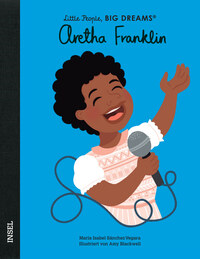
Aretha Franklin wuchs in einer Familie von Musikern auf. Ihre Mutter spielte Klavier und sang, der Vater, ein Prediger, leitete den Gospelchor seiner Kirche, in dem Aretha und ihre vier Geschwister schon als Kinder sangen. Bald wurde sie von einer Plattenfirma entdeckt. Ob Gospel, Jazz, Pop oder Soul: mit ihren Liedern, die vom Alltag der Menschen, vom Kampf um Gerechtigkeit handeln, bewegte sie Menschen auf der ganzen Welt. Ihr größter Hit heißt »Respect«, das Lieblingslied von Barack Obama wurde zur Hymne der afroamerikanischen Bürgerrechtsbewegung. Little People, Big Dreams erzählt von den beeindruckenden Lebensgeschichten großer Menschen: Jede dieser Persönlichkeiten, ob Künstlerin, Pilotin oder Wissenschaftler, hat Unvorstellbares erreicht. Dabei begann alles, als sie noch klein waren: mit großen Träumen.
Trusted Partner


Duncan Watts, the author of three previous books on the European Union and Britain's relationship with it, has produced a new account of this 'uneasy partnership'. This edition is based on the original by Colin Pilkington and provides a review of how European Unity has been handled by British governments and politics. The contents has been updated to include all new developments including the proposed new consititution and the euro-elections of 2004. Additional material aslo considers the role of pressure groups within the Union and the approach adopted by British Lobbyists. As an up-to-date edition of a well established text, this book will be essential reading for students and teachers interested in the relationship between Britain and Europe. ;
Trusted Partner
The Arctic region has been the subject of much popular writing. This book considers nineteenth-century representations of the Arctic, and draws upon an extensive range of evidence that will allow the 'widest connections' to emerge from a 'cross-disciplinary analysis' using different methodologies and subject matter. It positions the Arctic alongside more thoroughly investigated theatres of Victorian enterprise. In the nineteenth century, most images were in the form of paintings, travel narratives, lectures given by the explorers themselves and photographs. The book explores key themes in Arctic images which impacted on subsequent representations through text, painting and photography. For much of the nineteenth century, national and regional geographical societies promoted exploration, and rewarded heroic endeavor. The book discusses images of the Arctic which originated in the activities of the geographical societies. The Times provided very low-key reporting of Arctic expeditions, as evidenced by its coverage of the missions of Sir John Franklin and James Clark Ross. However, the illustrated weekly became one of the main sources of popular representations of the Arctic. The book looks at the exhibitions of Arctic peoples, Arctic exploration and Arctic fauna in Britain. Late nineteenth-century exhibitions which featured the Arctic were essentially nostalgic in tone. The Golliwogg's Polar Adventures, published in 1900, drew on adult representations of the Arctic and will have confirmed and reinforced children's perceptions of the region. Text books, board games and novels helped to keep the subject alive among the young.
Trusted Partner

This book is the first ever concordance to the rhymes of Spenser's epic. It gives the reader unparalleled access to the formal nuts and bolts of this massive poem: the rhymes which he used to structure its intricate stanzas. As well as the main concordance to the rhymes, the volume features a wealth of ancillary materials, which will be of value to both professional Spenserians and students, including distribution lists and an alphabetical listing of all the words in The Faerie Queene. The volume breaks new ground by including two studies by Richard Danson Brown and J. B. Lethbridge, so that the reader is given provocative analyses alongside the raw data about Spenser as a rhymer. Brown considers the reception of rhyme, theoretical models and how Spenser's rhymes may be reading for meaning. Lethbridge in contrast discusses the formulaic and rhetorical character of the rhymes. ;
Trusted Partner

This book is the first ever concordance to the rhymes of Spenser's epic. It gives the reader unparalleled access to the formal nuts and bolts of this massive poem: the rhymes which he used to structure its intricate stanzas. As well as the main concordance to the rhymes, the volume features a wealth of ancillary materials, which will be of value to both professional Spenserians and students, including distribution lists and an alphabetical listing of all the words in The Faerie Queene. The volume breaks new ground by including two studies by Richard Danson Brown and J. B. Lethbridge, so that the reader is given provocative analyses alongside the raw data about Spenser as a rhymer. Brown considers the reception of rhyme, theoretical models and how Spenser's rhymes may be reading for meaning. Lethbridge in contrast discusses the formulaic and rhetorical character of the rhymes.
Trusted Partner

This book offers an accessible critical introduction to the work of Graham Swift, one of Britain's most significant contemporary authors. Through detailed readings of his novels and short stories from 'The Sweet Shop Owner' (1980) to 'The Light of Day' (2003), Daniel Lea lucidly addresses the key themes of history, loss, masculinity and ethical redemption, to present a fresh approach to Swift. This study proposes that one of the side-effects of modernity has been the destruction of traditional pathways of self and collective belief, leading to a loss of understanding between individuals about their duties to each other and to society. Swift's writing returns repeatedly to the question of what we can believe in when all the established markers of identity - family, community, gender, profession, history - have become destabilised. Lea suggests that Swift increasingly moves towards a notion of redemption through a lived ethical practice as the only means of finding solace in a world lacking a central symbolic authority. ;
Trusted Partner
Trusted Partner


Was sind Bilder? Wie unterscheiden sie sich von Worten? Was genau sind Bilder heute, also in einer Zeit, in der die Macht des Sichtbaren größer scheint als je zuvor und in der der pictorial turn den linguistic turn abgelöst hat? W. J. T. Mitchell, einer der Pioniere der Visual Culture Studies, beantwortet diese Fragen, indem er das Zusammenspiel des Sichtbaren und des Sagbaren in allen kulturellen Bereichen untersucht, von der Literatur über die bildende Kunst bis zu den Massenmedien. Der Band versammelt seine wichtigsten Aufsätze, die längst als Klassiker der bildwissenschaftlichen Forschung gelten.
Trusted Partner

Schon als kleines Mädchen will Rosalind alles über die Natur wissen. Mit siebzehn besteht sie die Aufnahmeprüfung für das Studium von Chemie und Physik an der Universität von Cambridge. Sie experimentiert mit Röntgenstrahlen. Die braucht man, um Fotos von den kleinsten chemischen Verbindungen herzustellen, den Molekülen. Schließlich liefert ihr berühmtes »Foto 51« die Voraussetzung für die Entschlüsselung der DNA-Moleküle, in denen alle Informationen über unsere Körper stecken. Eine bahnbrechende Entdeckung, für die später zwei Männer mit dem Nobelpreis gewürdigt wurden, den eigentlich sie verdient hätte. Little People, Big Dreams erzählt von den beeindruckenden Lebensgeschichten großer Menschen: Jede dieser Persönlichkeiten, ob Philosophin, Forscherin oder Sportler, hat Unvorstellbares erreicht. Dabei begann alles, als sie noch klein waren: mit großen Träumen.
Trusted Partner
Trusted Partner

Im Jahr 1950 nahm Theodor W. Adorno, gerade aus der Emigration zurückgekehrt, erstmals an den legendären Internationalen Ferienkursen für Neue Musik in Darmstadt teil. Unter seinen Hörern war der damals achtzehnjährige Heinz-Klaus Metzger. Diese Begegnung war der Beginn einer Freundschaft, die erst mit dem Tod Adornos endete und anfangs ganz im Zeichen von Adornos Philosophie der neuen Musik stand – dem Paukenschlag in der Musikwissenschaft Nachkriegsdeutschlands. Der Briefwechsel selbst kam jedoch erst in Gang, als Metzger in Paris bei dem Schönberg-Schüler Max Deutsch Komposition studierte – und entzündete sich vollends an Adornos Essay Das Altern der neuen Musik, der als heftige Attacke auf die Nachkriegsavantgarde aufgenommen und alsbald ebenso heftig von Metzger öffentlich kritisiert wurde. Weitere Themen sind u.a. der Aufstieg und Niedergang der seriellen Musik und der »Komet« John Cage, dessen Kompositionen die internationale Musikszene polarisierten. Die Korrespondenz, die bis ins Jahr 1967 reicht, belegt nicht nur Adornos vitale Anteilnahme an den musikalischen Entwicklungen der 50er und 60er Jahre, sondern läßt auch ein Stück Musikgeschichte lebendig werden, das zu den spannendsten des vergangenen Jahrhunderts gehört.
Trusted Partner
This volume on Norman Italy (southern Italy and Sicily, c. 1000-1200) honours and reflects the pioneering scholarship of Graham A. Loud. An international group of scholars reassesses and recasts the paradigm by which Norman Italy has been conventionally understood, addressing varied subjects across four key themes: historiographies, identities and communities, religion and Church, and conquest. The chapters revise and refine our understanding of Norman Italy in the eleventh and twelfth centuries, demonstrating that it was not just a parochial Norman or Mediterranean entity but also an integral player in the medieval mainstream.
Trusted Partner

Die Frage nach der Identität von W. H., dem Shakespeare seine Sonette widmete, ist eines der klassischen Rätsel der Shakespeare-Forschung. Auch Cyril Graham, der jugendliche Held in Wildes Geschichte, verfällt dem Sog der Spekulation. Er ist überzeugt, W. H.s Identität gelüftet zu haben: Willie Hughes, ein jugendlicher Schauspieler aus Shakespeares Truppe, ist, so beweist er glaubhaft, der Adressat der Sonette. Um die letzten Zweifler zu überzeugen, begeht er eine Fälschung – doch der Betrug wird aufgedeckt ...Wildes virtuose Geschichte einer Obsession ist ein amüsantes Verwirrspiel über die enge Verflechtung von Kunst und Leben und eine gelungene Parodie der biographischen Methode in der Literaturwissenschaft – ein Muß für Wilde- und Shakespeare-Leser.



