Your Search Results

      • Christine Heimannsberg

        Gelobtes Land, die dystopische Climate Fiction Trilogie: Mit CO2 verbindet man den Klimawandel, schmelzende Gletscher und Überflutungen. Mittlerweile ist der Klimawandel auch in der Literatur angekommen. „Climate Fiction“ oder „Cli-fi“ lautet das Stichwort, das zuletzt verstärkt in den Feuilletons auftauchte. Die deutsche Autorin Christine Heimannsberg präsentiert mit ihrer Debüt-Trilogie „Gelobtes Land“ eine ungewöhnliche, spannende Dystopie, die ökologische wie humanistische Themen geschickt im neuen Genre zusammenführt.

        View Rights Portal
      • Trusted Partner
      • Trusted Partner
      • Trusted Partner
        January 2016

        Die Mathematik der Liebe

        Von der Berechenbarkeit eines großen Gefühls. TED Books (gebundene Ausgabe)

        by Fry, Hannah / Englisch Gabler, Irmengard

      • Trusted Partner
      • Trusted Partner
        Humanities & Social Sciences
        June 2009

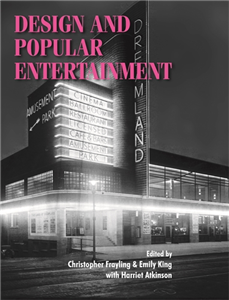
        Design and popular entertainment

        by Christopher Breward, Christopher Frayling, Emily King, Bill Sherman

        Design and Popular Entertainment offers a selection of nine essays that examine the range of design for popular entertainment, from theatre and film, to television and radio. Investigating entertainment design from the late nineteenth century to the 1960s, the book is divided into two sections. The first addresses the 'hardware' of popular entertainment, in other words the objects through which images, sound and performance are transmitted. The second explores the construction of cinematic and televisual imagery and the design of objects for the screen, the 'software' of entertainment. In so doing it offers important insights into this little explored aspect of design. Topics covered by the collection include the design of theatrical lighting and stage sets, cinema and radio design, the representation of designers within film, and the relationship between design and television. The book's concentration on the 1950s and 1960s reflects the profound changes in modes of entertainment that took place during that period, in particular the spread of television, which not only attracted a huge popular audience but also stimulated experimental designing approaches and thinking. With particular focus on the way that both the objects and the construction of entertainment have altered audience's experience, the essays present a novel approach to the subject. This book will be of particular interest to students and teachers working in design and cultural history as well as film and theatre studies. ;

      • Trusted Partner
        Humanities & Social Sciences
        June 2020

        Historiography

        by Roger Spalding, Christopher Parker

      • Trusted Partner
      • Trusted Partner
        Humanities & Social Sciences
        September 2007

        Historiography

        by Roger Spalding, Christopher Parker, Rebecca Mortimer

      • Trusted Partner
      • Trusted Partner
      • Trusted Partner
        Humanities & Social Sciences
        May 2008

        Intervention and state-building in the Pacific

        The legitimacy of 'cooperative intervention'

        by Peter Lawler, Greg Fry, Tarcisius Kabutaulaka, Emmanuel Pierre Guittet, Alan Rutter

        State-building intervention in weak, war-torn or failing states has become a priority for the international community. However, the question of how to legitimately engage in the shaping of national governance remains, at the very least, a vexed one. This book explores this key issue through a critical examination of a new model of state-building intervention which has recently emerged in relation to the Pacific 'arc of crisis'. Initiated by the Australian Government in 2003, this 'cooperative intervention' doctrine, built on declared principles of partnership and respect for sovereignty, seems to offer a legitimate way to engage in state-building intervention. Drawing on a group of distinguished Pacific specialists, this book mounts a critique of these claims, showing how international legitimacy does not automatically translate into political legitimacy among those in the affected societies; and how the attempt to legitimise the intervention internationally may actually work against such legitimacy in the recipient state. These insights will be of value to those interested in public policy studies, international law, development studies and international relations. ;

      • Trusted Partner
      • Trusted Partner
      • Trusted Partner
      • Trusted Partner
        History of Art / Art & Design Styles
        October 2016

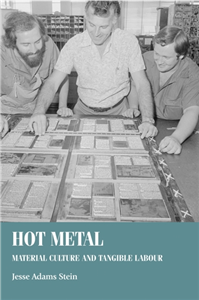
        Hot metal

        Material culture and tangible labour

        by Jesse Stein. Series edited by Bill Sherman, Christopher Breward

        The world of work is tightly entwined with the world of things. Hot metal illuminates connections between design, material culture and labour between the 1960s and the 1980s, when the traditional crafts of hot-metal typesetting and letterpress were finally made obsolete with the introduction of computerised technologies. This multidisciplinary history provides an evocative rendering of design culture by exploring an intriguing case: a doggedly traditional Government Printing Office in Australia. It explores the struggles experienced by printers as they engaged in technological retraining, shortly before facing factory closure. Topics explored include spatial memory within oral history, gender-labour tensions, the rise of neoliberalism and the secret making of objects 'on the side'. This book will appeal to researchers in design and social history, labour history, material culture and gender studies. It is an accessible, richly argued text that will benefit students seeking to learn about the nature and erosion of blue-collar work and the history of printing as a craft.

      • Trusted Partner
      • Trusted Partner
      • Trusted Partner
        The Arts
        June 2025

        Toronto New Wave cinema and the anarchist-apocalypse

        by David Christopher

        The Toronto New Wave (TNW) comprises a group of avant-garde filmmakers working in Canada from the 1980s and into the new millennium whose innovative film works share significant affinities with anarchist themes and aesthetics. Several of the TNW filmmakers openly identify as anarchists and/or acknowledge a debt to anarchism in their production of highly apocalyptic narratives as part of their cinematic political projects. However, recognition of anarchism's progressive apocalyptic theoretical relevance has yet to be substantially taken up by scholarship in cinema analysis. This analysis introduces an anarchist-inflected analytical methodology to understand the apocalyptic-revelatory political work these films attempt to accomplish in the perceptual space between the filmic texts and both their auteurs and potential viewers, and to re-locate the TNW within cinema history as an ongoing phenomenon with new significance in an apocalyptic era of digital distribution.

      Subscribe to our

      newsletter