
Dr. Constantin Pana Buchverlag
Aim of our publications is to provide generally understandable knowledge from philosophy, psychology and health to be able to reach a satisfied, healthy and happy life.
View Rights Portal
Aim of our publications is to provide generally understandable knowledge from philosophy, psychology and health to be able to reach a satisfied, healthy and happy life.
View Rights Portal
Ruth Tellis and Clare Hodder founded Rights2 to offer a unique consultancy service, bringing their collective experience of over 35 years in Rights management to provide practical, no-nonsense solutions to real-world rights issues for publishers of all sizes. They manage rights sales on behalf of Practical Inspiration Publishing (www.practicalinspiration.com) in addition to running the Small Publisher Rights Showcase with the UK's Department for International Trade (https://rightsshowcase.wordpress.com).
View Rights Portal

In the sweltering streets of St Petersburg, impoverished former student Rodion Raskolnikov convinces himself that one ruthless act can liberate him—and prove his theory that extraordinary people stand above the law. The murder he commits, however, opens a labyrinth of fear, fever, and moral reckoning. As the relentless investigator Porfiry closes in and the compassionate Sonia offers a different path, Raskolnikov is driven toward confession, punishment, and the hard-won possibility of redemption. Dostoyevsky’s masterpiece is a psychological thriller and a profound inquiry into guilt, justice, and the price of pride. Taut, unsettling, and fiercely humane, it captures a city on the edge—and a mind at war with itself. A novel of poverty and power, reason and faith, it still reads with shocking immediacy.
It is the time of the White Nights, when darkness never quite falls over Saint Petersburg. The narrator, a young man and lonesome dreamer, wanders through the quiet summer evenings, emptied of their usual bustle. One night he encounters a distraught girl, seventeen-year-old Nastenka. They strike up a conversation that continues over the course of four evenings, as they tell each other about their lives, their dreams, hopes, and sorrows. From this chance meeting a tender love begins to grow. But Nastenka’s heart belongs to someone else. Dostoevsky’s novella, one of the most celebrated love stories in world literature, is presented here in the classic translation by Constance Garnett. The volume is accompanied by distinctive illustrations by Stella Dreis.
 Trusted Partner


This book provides a comprehensive introduction to the work of Robert Bresson, one of the most respected and acclaimed directors in the history of cinema.. The first monograph on his work to appear in English for many years dealing not only with his thirteen feature-length films but also his little-seen early short Affaires publiques and his short treatise Notes on cinematography.. The films are considered in chronological order, using a perspective that draws variously on spectator theory, Catholic mysticism, gender theory and Lacanian psychoanalysis.. The major critical responses to his work, from the adulatory to the dismissive, are summarized and analyzed.. The work includes a full filmography and a critical bibliography.
Trusted Partner

Three of the most important chronicles of eleventh-century Germany were composed in the south-western duchy of Swabia. The chronicles reveal how between 1049 and 1100 the centripetal attraction of the reform papacy became the dominant fact of intellectual life in German reformed monastic circles. In the abbey of Reichenau Herman 'the Lame' composed a chronicle of the reign of Emperor Henry III (1039-56). His pupil, Berthold of Reichenau, continued his master's work, composing a detailed account of 1076-1079 in Germany. Bernold, a clergyman of Constance, continued the work of Herman and Berthold in a text containing the fullest extant account of 1080-1100. Herman's waning enthusiasm for the monarchy and growing interest in the newly reformed papacy were intensified in Berthold's chronicle, and writing in the new context of the reformed monasteries of south-western Germany, Bernold preached total obedience to the Gregorian papacy. The Swabian chronicles are an indispensable resource to the student of the changing loyalties and conflicts of eleventh-century Germany.
Trusted Partner
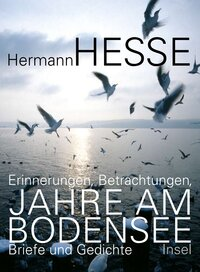
Hermann Hesse war ein Weltreisender und zugleich an eine Heimat gebunden. Diese Doppelrolle erlaubte es ihm, seine jeweilige Umgebung und deren Bewohner in ihren Besonderheiten, ihre Landschaft im Laufe der Geschichte und im Wechsel der Jahreszeiten präzise zu erfassen. Besonders intensiv und in überwältigenden literarischen Zeugnissen erwies sich Hermann Hesses Sinn für Orte und Stimmungen am Bodensee. Von 1904 bis 1912 lebte er in Gaienhofen, nachdem ihm sein erster Roman "Peter Camenzind" den literarischen Durchbruch gebracht hatte. In dieser Zeit kamen seine drei Söhne zur Welt, hier baute er sich 1907 sein einziges eigenes Haus, nachdem Jahr für Jahr jene Romane, Erzählungen und Gedichtsammlungen erschienen waren, die seinen frühen Ruhm als einen der eigenwilligsten und einflußreichsten Autoren des 20.Jahrhunderts begründet hatten. Dieser reich bebilderte Band versammelt alle poetischen und prosaischen Beschäftigungen Hesses mit dieser alten Kulturlandschaft. Eindringlich kommt in Hesses Berichten das Unverwechselbare dieser Region zum Ausdruck: in der ganzen Vielfalt ihrer landschaftlichen und klimatischen Erscheinungsformen vom tiegfelegenen Seeufer bis zu den Spitzen der Alpen. Doch nicht nur das Leben am See im Wechsel der Jahreszeiten, die Menschen und ihren Alltag vergegenwärtigen diese Aufzeichnungen, sondern auch Hesses Erfahrungen beim Gartenbau oder beim Flug in einem der ersten Zeppelin-Luftschiffe. Das von Volker Michels zusammengestellte Lese- und Bilderbuch zeigt also den Dichter und seine Landschaft – es ist somit ein Buch von und über Hermann Hesse sowie ein Buch zum Reisen mit Hermann Hesse am Bodensee.
Trusted Partner

Der Bodensee – von hier ist der Süden zum Greifen nah: blühende Obstgärten, sonnendurchflutete Rebhänge, die Blütenpracht auf der Mainau, die glitzernde Wasserfläche des Sees … Martin Walser, Arnold Stadler, Hermann Hesse, Robert Gernhardt und viele andere mehr erzählen vom See, seiner Umgebung und seinen Menschen, entführen in eine der schönsten und vielfältigsten Landschaften Deutschlands. Die schönsten Bodenseegeschichten für Urlauber und Ausflügler, Sehnsüchtige und Träumer!
Trusted Partner

Der Ritt über den Bodensee, obwohl ein Stück gegen das Theater, zumindest gegen seine herkömmlichen Formen, trägt dennoch höchst theatralische Züge. Es enthält eine Vielzahl minuziöser Beschreibungen, Beschreibungen von Vorgängen auch aus der Theaterwelt.
Trusted Partner
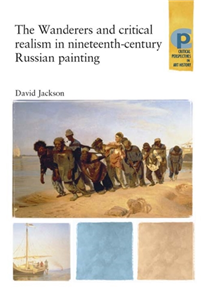
The rise of critical realism in nineteenth-century Russia culminated in 1870 with the formation of the Wanderers, Russia's first independent artistic society. Through depictions of the harsh lives of the peasantry, the fate of political activists, Russian history, landscapes, and portraits of the nation's cultural elite, such as Tolstoy and Dostoevsky, the society became synonymous with dissident sentiments. Yet its members were far from being purveyors of anti-Tsarist propaganda and their canvases reflect also a warm humanity and a fierce pride for such nationalistic themes as Russian myth and legend. Through close readings of single canvases, investigations of major themes and a multi-disciplinary integration of the Wanderers within Russian society, this book gives the first comprehensive analysis of the crucial cultural role played by one of the most successful and genuinely popular schools of art, the legacy of which comprises a fascinating panorama of life and thought in pre-revolutionary Russia.
Trusted Partner

Can terrorism and state violence cause democratic breakdown? Although the origins of violence have been studied, only rarely are its consequences examined. In this detailed comparative study of Uruguay, Spain, and Peru, Holmes claims that to understand the consequences of violence on democratic stability, terrorism and state responses to terrorism must be studied together. This extensively revised and expanded second edition takes advantage of new historical sources, an extended time span, and new theories that have emerged since the original publication. In addition to adding new data sources in the Peruvian and Spanish cases, the time period covered has been expanded from the late 1990s to early 2007, allowing a more comprehensive treatment of the consequences of state and non-state violence on democratic stability and the prospects for stability. The literature reviews have been significantly revised and updated and an entirely new chapter covers the special case of Spain, which faces both a domestic and an international threat. ;
Trusted Partner
Tony Garnett is the first book-length study of one of the most respected and prolific producers working in British television. From ground-breaking dramas from the 1960s such as Up the Junction and Cathy Come Home to the 'must see' series in the 1990s and 2000s such as This Life and The Cops, Garnett has produced some of the most important and influential British television drama. This book charts Garnett's career from his early days as an actor to his position as executive producer and head of World Productions. Drawing on personal interviews, archival research, contextual analysis and selected case studies, Tony Garnett examines the ways in which Garnett has helped to define the role of the producer in British television drama. Arguing that Garnett was both a key creative and political influence on the work he produced and an enabler of the work of others, the book traces his often combative relationships with broadcasting institutions (especially the BBC). Additionally, the study discusses the films he made for the cinema and considers some of the ways in which Garnett's experiments in film technology 16 mm in the 1960s, digital video in the 1990s have shaped his creative output. Tony Garnett will be of interest to all levels of researchers and students of British television drama, media and film. ;
Trusted Partner
Trusted Partner
Trusted Partner
Trusted Partner
 Trusted Partner
Trusted Partner
Trusted Partner
Trusted Partner
Trusted Partner
Trusted Partner
Trusted Partner
Trusted Partner
Trusted Partner
Trusted Partner
Trusted Partner



