
GCE - Gabriele Capelli Editore
The Gabriele Capelli Editore (GCE) is a small Swiss publishing house, primarily focused on fiction but occasionally expanding into essays and poetry.
View Rights Portal
The Gabriele Capelli Editore (GCE) is a small Swiss publishing house, primarily focused on fiction but occasionally expanding into essays and poetry.
View Rights Portal
Verlag J.H.W. Dietz is an independent publishing house founded in 1881 and located in Bonn. We focus on political and historical non-fiction and academic literature.
View Rights Portal

 Trusted Partner
Trusted Partner
Trusted Partner
 Trusted Partner


What happened with forest dieback? The predictions of the 1980s that forests would be in decline across Europe have not come true. Currently, attention again focuses on the doom scenarios of the loss of entire forests and cultural landscapes in an emotional and sometimes hysterical debate. Biogeographer Hans Jürgen Böhmer refers to updated case studies and his 30 years of research experience on global ecosystems to demonstrate extremely complex interrelations of the natural world that various actors monitor in contrasting ways and characterized by different times and ideologies. Böhmer advocates to embed the sustainability debate more strongly in the living environment, rather than relying exclusively on model calculations.
Trusted Partner
Trusted Partner
Trusted Partner
Trusted Partner
Trusted Partner
Trusted Partner
Trusted Partner
Trusted Partner
Trusted Partner
Trusted Partner


Zu Max Frischs 100. Geburtstag versammelt eine DVD-Box in der filmedition suhrkamp auf fünf DVDs die wichtigsten Filme von, mit und über den großen Schweizer Schriftsteller: ein Porträt des öffentlichen Intellektuellen Frisch (Matthias von Guntens Dokumentation "Max Frisch. Citoyen"), die vielfach ausgezeichnete Verfilmung "Holozän" von Heinz Bütler und Manfred Eicher, Richard Dindos "Journal I-III" (eine filmische Lektüre der Erzählung Montauk) sowie die Gespräche im Alter, die Philippe Pilliod in den Jahren 1985/1986 geführt hat. Vervollständigt wird das Paket durch ein besonderes Extra: Volker Schlöndorffs "Homo faber"-Adaption. Die Verfilmung mit internationaler Starbesetzung macht die Box zu einem Ereignis. Ein einzigartiger Zugang zu Leben und Werk des großen Autors.
Trusted Partner
Trusted Partner
Trusted Partner
Trusted Partner

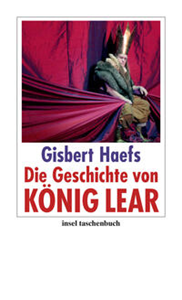
Gisbert Haefs hat die Geschichte von König Lear neu in Prosa übertragen: König Lear will abdanken und das Reich unter seinen Töchtern aufteilen: Wer ihn am meisten liebt, soll am meisten bekommen. Die beiden älteren, Goneril und Regan, bekunden wortreich ihre Liebe, während die jüngste, Cordelia, schweigt, weil Sprache ihre Gefühle nicht ausdrücken kann. Lear erkennt die wahre Liebe seiner jüngsten Tochter nicht, Eitelkeit und Machtverliebtheit machen ihn blind, so daß er sein Reich den beiden älteren zuspricht, die Jüngste aber enterbt. Doch schon bald muß er erfahren, wie sehr er sich getäuscht hat. Goneril und Regan, die ihrem Vater Schutz und Unterhalt versprochen haben, verstoßen ihn bald. Begleitet von einem Getreuen und einem Narren irrt Lear durchs wüste Land und verfällt dem Wahnsinn.
Trusted Partner
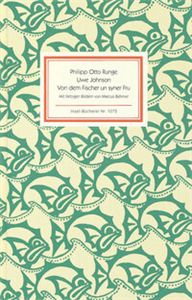
Dieses Buch hat eine vielfache Geschichte: Zum einen enthält es das Märchen, das der Hamburger Maler Philipp Otto Runge nach der Volksüberlieferung aufgeschrieben hat und das später von den Brüdern Grimm in deren Märchensammlung übernommen wurde. Zum anderen enthält es die 1913 von Marcus Behmer geschaffenen Illustrationen. Erstmals erschien dieses kleine Buch 1920 und gehört zu jenen Veröffentlichungen, die das bibliophile Anliegen des Insel Verlages auf das Beste bezeugen. In bewußter Wahl von Papier, Schrift, Satz, Format und Illustration war eine Ausgabe entstanden, die wohl zu Recht von Buchliebhabern und Fachleuten – wie Hans A. Halbey schrieb – als »eines der vollkommensten Buchkunstwerke des zwanzigsten Jahrhunderts« geschätzt wird.Nun wird eine dritte – festtägliche – Fassung vorgelegt: mit farbigen Bildern, deren Reproduktion ein von Marcus Behmer koloriertes Exemplar der Ausgabe von 1920 zugrunde liegt; und einem zusätzlichen, sich dem Künstler widmenden Nachwort.



