
Your Search Results
-

-

ZNN Network Literary and Illustrator Agency
- International Copyright, Licensing, and Literary Agency - International Illustrator Agency and Management Services - Creative Content Development Services
View Rights Portal
-
Promoted Content
-
Promoted Content
-
 Trusted Partner
-
Trusted Partner
-
Trusted Partner
-
Trusted Partner
-
Trusted Partner

 September 2025
Mord in besserer Gesellschaft
Miss Beeton ermittelt | Zwischen Tee, Täuschung und Tatverdacht | Cosy Crime in der Londoner High Society
by Josie Lloyd, Brigitte Heinrich
Für Fans von Agatha Christie, Nita Prose und Richard Osman und Mord ist ihr Hobby. Sie sind Mitglied der Londoner High Society und benötigen qualifiziertes Hauspersonal? Dann sind Sie bei Alice Beeton genau an der richtigen Adresse. Das weiß auch ihre langjährige Kundin, Camille Messent, die dringend eine neue Haushälterin benötigt, denn sie erwartet eine große Festgesellschaft. Miss Beeton schickt ihr die etwas forsche Enya, die gerade erst aus der Schweiz gekommen ist. Sie hat erstklassige Referenzen und spricht auch noch fließend Französisch. Einige Tage später wird Enya in den frühen Morgenstunden tot aufgefunden. Während der noch zuständige Detective Rigby darum kämpft, eine Untersuchung auf die Beine zu stellen, übernimmt Miss Beeton die Ermittlungen …
-
Trusted Partner

 September 2002
Illustrator 10
Lösungen für Anwender (für Mac und PC)
by Pankalla, Andreas; Donner, Harald
-
Trusted Partner
-
Trusted Partner
-
Trusted Partner
 June 2008
Father Browns Geheimnis
Erzählungen
by Gilbert Keith Chesterton, Hanswilhelm Haefs
Gilbert Keith Chesterton wurde am 29. Mai 1874 in London geboren. Er begann eine Ausbildung als Illustrator an der Slade School of Art und besuchte Literaturvorlesungen am Londoner King’s College. Als Kolumnist und Literaturkritiker schrieb er für verschiedene liberale Zeitungen. Von 1900 an erschienen von ihm über hundert Bücher, Gedichte, Kurzgeschichten und Theaterstücke, die durch ihre stilistische Brillanz schnell eine große Bekanntheit erlangten. In besonderem Maße setzte sich Chesterton, der 1922 zum Katholizismus konvertierte, in seinen Büchern und Aufsätzen mit seiner Beziehung zum Christentum auseinander, meistens allerdings – wie in der bekannten Gestalt des Priester-Detektivs Pater Brown – auf humoristische Weise. Er starb am 14. Juni 1936 in Beaconsfield.
-
Trusted Partner
 June 2008
Father Browns Skandal
Erzählungen
by Gilbert Keith Chesterton, Hanswilhelm Haefs
Gilbert Keith Chesterton wurde am 29. Mai 1874 in London geboren. Er begann eine Ausbildung als Illustrator an der Slade School of Art und besuchte Literaturvorlesungen am Londoner King’s College. Als Kolumnist und Literaturkritiker schrieb er für verschiedene liberale Zeitungen. Von 1900 an erschienen von ihm über hundert Bücher, Gedichte, Kurzgeschichten und Theaterstücke, die durch ihre stilistische Brillanz schnell eine große Bekanntheit erlangten. In besonderem Maße setzte sich Chesterton, der 1922 zum Katholizismus konvertierte, in seinen Büchern und Aufsätzen mit seiner Beziehung zum Christentum auseinander, meistens allerdings – wie in der bekannten Gestalt des Priester-Detektivs Pater Brown – auf humoristische Weise. Er starb am 14. Juni 1936 in Beaconsfield.
-
Trusted Partner
-
Trusted Partner

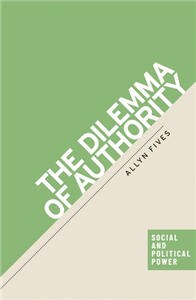 Humanities & Social SciencesMarch 2026
The dilemma of Authority
by Allyn Fives
The moral problem of authority is the challenge of reconciling legitimate authority (the right to rule) with the demands of freedom and rationality. In this book, I argue that authority can have legitimacy, but when it does it generates a moral dilemma, where the obligation to obey comes at some cost to freedom and reason. Hence, not only do I depart from the views of those who insist that authority can never have legitimacy, but also those who maintain that insofar as authority is legitimate it simply satisfies the demands of freedom or rationality. My focus here will be on both what it is that justifies authority (in particular focusing on membership, and the goods of membership) as well what type of reason an authoritative directive is, how it can come into conflict with others reasons, and how those conflicts are resolved.
-
Trusted Partner

 March 2012
»Wer lacht, hat noch Reserven«
Die schönsten Chef-Weisheiten
by Schultz, Stefan / Illustrator Hauck, Elias; Illustrator Bauer, Dominik
-
Trusted Partner
 Humanities & Social SciencesMay 2021
Disciplined agency
Neoliberal precarity, generational dispossession and call centre labour in Portugal
by Patrícia Alves de Matos
Since the mid-2000s, the harsh reality of call centre employment for a generation of young workers in Portugal has been impossible to ignore. With its endless rows of small cubicles, where human agents endure repetitive telephone conversations with abusive clients under invasive modes of technological surveillance, discipline and control, call centre work remains a striking symbol of labour precarity, a condition particularly associated with the neoliberal generational disenchantment that 'each generation does better than its predecessor'. This book describes the emergence of a regime of disciplined agency in the Portuguese call centre sector. Examining the ascendancy of call centres as icons of precarity in contemporary Portugal, this book argues that call centre labour constitutes a new form of commodification of the labouring subject. De Matos argues that call centres represent an advanced system of non-manual labour power exploitation, due to the underestimation of human creativity that lies at the centre of the regimented structures of call centre labour. Call centres can only guarantee profit maintenance, de Matos argues, through the commodification of the human agency arising from the operators' moral, relational and social embedded agentive linguistic interventions of creative improvisation, decision-making, problem-solving and ethical evaluation.
-

 The ArtsJanuary 1905
The Elements of Drawing
by John Ruskin
Can drawing — sound, honest representation of the world as the eye sees it, not tricks with the pencil or a few "effects" — be learned from a book? One of the most gifted draftsmen, who is also one of the greatest art critics and theorists of all time, answers that question with a decided "Yes." He is John Ruskin, the author of this book, a classic in art education as well as a highly effective text for the student and amateur today. The work is in three parts, cast in the form of letters to a student, successively covering "First Practice," "Sketching from Nature," and "Colour and Composition." Starting with the bare fundamentals (what kind of drawing pen to buy; shading a square evenly), and using the extremely practical method of exercises which the student performs from the very first, Ruskin instructs, advises, guides, counsels, and anticipates problems with sensitivity. The exercises become more difficult, developing greater and greater skills until Ruskin feels his reader is ready for watercolors and finally composition, which he treats in detail as to the laws of principality, repetition, continuity, curvature, radiation, contrast, interchange, consistency, and harmony. All along the way, Ruskin explains, in plain, clear language, the artistic and craftsmanlike reasons behind his practical advice — underlying which, of course, is Ruskin's brilliant philosophy of honest, naturally observed art which has so much affected our aesthetic. Three full-page plates and 48 woodcuts and diagrams (the latter from drawings by the author) show the student what the text describes. An appendix devotes many pages to the art works which may be studied with profit.
-

 Business, Economics & LawApril 1905
The Acquisitive Society
by R.H. Tawney
This 1926 survey, written by a distinguished social and economic historian, examines the role of religion in the rise of capitalism. Arguing that material acquisitiveness is morally wrong and a corrupting social influence, the author draws upon his profound knowledge of labor and politics to show how concentrated wealth distorts economic policies. Colorful but credible, this study offers a timeless vision of alternative means toward a just economic, social, and intellectual order.
-

 Technology, Engineering & AgricultureMarch 1905
The First Book of Farming
by Charles L. Goodrich
This book is a result of the author's search for these facts and truths as a student and farmer and his endeavor as a teacher to present them in a simple manner to others. The object in presenting the book to the general public is the hope that it may be of assistance to farmers, students and teachers, in their search for the fundamental truths and principles of farming.



