
Your Search Results
-

-

Global Collective Publishers
Global Collective Publishers, based in Philadelphia, Pennsylvania, is an independent publisher whose mission is to provide a platform for voices from around the world, crossing the borders of language, culture, religion, and gender, and to create a space where diverse communities can share and exchange stories that express their individual and shared sense of humanity through a variety of literary genres in fiction and non-fiction. In a world that feels increasingly more alienating, it is our aim to work towards dispelling the fear of the other and stand against literature of hatred, embracing the shared human experience in its myriad textures and voices through a curiosity-driven life. Global Collective is committed to publishing across a diverse landscape of fiction and non-fiction, in the areas of religion and spirituality, personal growth and self-transformation, gender and LGBT+ studies, social awareness, art and cinema. Global Collective takes to heart Booker Prize winner Ben Okri’s assertion that “stories can conquer fear… they can make the heart bigger.”Global Collective Publishers seeks unique and extraordinary literature that satiates our desire to gain a deeper understanding of the world around us and to discover points of commonality amongst our differences where words have no borders.
View Rights Portal
-
Promoted Content

 Humanities & Social SciencesFebruary 2025
Global counter-terrorism
by Tahir Abbas, Sylvia I. Bergh, Sagnik Dutta
This collection aims to inaugurate a new direction in research on counterterrorism by exploring global connections - both in terms of practices and discourses, as well as shared ideas and epistemes - that animate counterterrorism practices. The chapters - grouped under the themes of postcoloniality and coloniality, and entanglements of the transnational and the local, and counterterrorism and right-wing extremism - are attentive to global connections and are mindful of the complexities of global historical processes that constitute the politics of counterterrorism. This book aims to bring together scholars studying counterterrorism in the global North and the global South to explore convergence and divergence in how counterterrorism policies function in a range of national and local contexts.
-
Promoted Content
 Humanities & Social SciencesNovember 2024
The rise of global Islamophobia in the War on Terror
by Naved Bakali, Farid Hafez
-
 Trusted Partner
 Humanities & Social SciencesMarch 2026
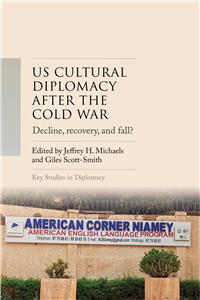
US cultural diplomacy after the Cold War
Decline, recovery, and fall
by Jeffrey H. Michaels, Giles Scott-Smith
In the decades following the USSR's collapse, the US has gone from unrivalled hegemon to a position of relative decline. With America 'triumphant' after 1991, its culture, like its diplomatic, military and economic power, remained unmatched. Such favourable circumstances seemed to undercut the need for cultural diplomacy. Why should the US government sell a product that was already selling so well? After 9/11, however, it was apparent the US image was less popular than previously assumed. To reverse this negative image, cultural diplomacy was revived. Despite being beset by internal and external challenges, US officials supported various cultural initiatives and partnerships to promote the American brand globally. Along the way, cultural diplomacy has made use of new forms of expression to promote American culture and build positive foreign relations. The arrival of the second Trump administration in 2025 has clearly signalled an end to using cultural diplomacy to further causes of empowerment and diversity, making the future uncertain for this field of activity.
-
Trusted Partner
 Humanities & Social SciencesSeptember 2021
Counter-terrorism and civil society
by Scott N. Romaniuk, Emeka Thaddues Njoku
-
Trusted Partner
 Humanities & Social SciencesDecember 2016
The role of terrorism in twenty-first-century warfare
by Susanne Martin, Max Taylor, Mark Currie, John Hogan, Leonard Weinberg
-
Trusted Partner
 Humanities & Social SciencesMay 2026
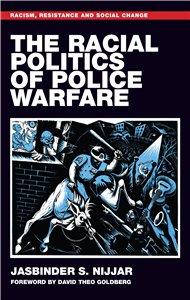
The racial politics of police warfare
by Jasbinder S. Nijjar
Amid renewed anti-racist resistance to violent policing, The racial politics of police warfare unpacks the racisms that rationalise militarised policing in contemporary Britain. Jasbinder S. Nijjar shatters prevailing myths about British police as an impartial public service, by revealing it as an institution where racism and war reinforce one another. In examining flagship anti-gang and counter-terrorism policies and practices, the book offers a unique analysis of the relationship between anti-black and anti-Muslim racisms, to demonstrate how racialised populations are institutionalised as common enemies of modernity. Combining perspectives from sociology, history, criminology and social policy, Nijjar illustrates how British policing defends law and order and national security from the perceived threat of race through hyper-intrusive, pre-emptive and deathly measures. Accordingly, he gives a fresh take on resisting racial police warfare, calling for strategies that are at once political, collective, anti-militaristic and abolitionist.
-
Trusted Partner
-
Trusted Partner
 Humanities & Social SciencesJuly 2016
The European Union's fight against terrorism
by Christopher Baker-Beall
-
Trusted Partner
 Humanities & Social SciencesDecember 2022
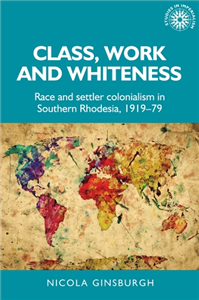
Class, work and whiteness
Race and settler colonialism in Southern Rhodesia, 1919–79
by Nicola Ginsburgh
This book offers the first comprehensive history of white workers from the end of the First World War to Zimbabwean independence in 1980. It reveals how white worker identity was constituted, examines the white labouring class as an ethnically and nationally heterogeneous formation comprised of both men and women, and emphasises the active participation of white workers in the ongoing and contested production of race. White wage labourers' experiences, both as exploited workers and as part of the privileged white minority, offer insight into how race and class co-produced one another and how boundaries fundamental to settler colonialism were regulated and policed. Based on original research conducted in Zimbabwe, South Africa and the UK, this book offers a unique theoretical synthesis of work on gender, whiteness studies, labour histories, settler colonialism, Marxism, emotions and the New African Economic History.
-
Trusted Partner
 Humanities & Social SciencesJuly 2025
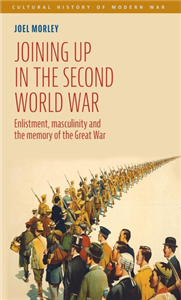
Joining up in the Second World War
Enlistment, masculinity and the memory of the Great War
by Joel Morley
This book connects the First and Second World Wars. It uses oral histories and Mass Observation material to explore men's attitudes to Second World War enlistment and the relationship they perceived between military service and masculinity, and how these were influenced by understandings of the First World War. Locating the cultural legacy of First World War in the subjectivities of men who participated in the Second World War demonstrates the breadth of sources that informed men's understandings of the First World War in interwar Britain. Its cultural legacy was omnipresent and diverse, and informed young men's attitudes and service preferences, but it reinforced Edwardian conceptions of wartime masculinity as often as it undermined them. Two decades after the First World War ended, they remained resilient in the subjective understandings of men who grew up in the Great War's shadow.
-
Trusted Partner
 June 2025
Proxy war in Afghanistan
The politics of state-wrecking
by Abbas Farasoo
This book provides a compelling analysis of proxy warfare and its far-reaching implications for statehood, focusing on the conflict in Afghanistan. Introducing the innovative concept of "state-wrecking," it bridges theory and practice to unravel how external support for insurgent actors fuels violence, undermines territorial control and sovereignty, intensifies violence, and dismantles political legitimacy. The work shifts the discourse on proxy wars from the strategies of global powers to the procedural and structural impacts within target states. Grounded in rigorous empirical research, including interviews, archival data, and conflict analysis, the book critically examines the Pakistan-Taliban nexus and the limitations of US-led interventions. By blending a robust theoretical framework with in-depth case studies, it reveals how proxy dynamics shape conflicts, disrupt governance, and challenge international security. This is an essential resource for those seeking to understand the entanglements of modern warfare and the fragility of states under external influence.
-
Trusted Partner
-
Trusted Partner
 Business, Economics & LawJuly 2025
Medical care, humanitarianism and intimacy in the long Second World War, 1931-1953
by Marie-Luce Desgrandchamps, Laure Humbert, Bertrand Taithe, Raphaële Balu
This book offers a micro-global history of humanitarianism and medical care during the 'long' Second World War, which challenges the traditional and Eurocentric chronological boundaries of 1939/1945. It takes as its starting point the Japanese invasion of Manchuria in 1931, which led to the progressive dislocation of the League of Nations, with the Japanese, German and Soviet departures in the 1930s. It ends with the termination of the Korean War in 1953, and the subsequent dismantlement of the first United Coalition and UN Peace enforcement operation. It considers the slow, messy and ambivalent transformation of humanitarian actors' relations to the suffering of distant others through a study of humanitarian encounters, practices, spaces and affects. Paying close attention to a variety of actors, such as French colonial doctors, Swiss ICRC delegates, Egyptian relief workers, Chinese-style physicians, Peruvian and Ecuadorian nurses or American member of the Unitarian Service Committee, the book provides a more holistic story of humanitarianism.
-
Trusted Partner
Humanities & Social SciencesJune 2025
Humanitarianism and the Greater War, 1914–24
by Elisabeth Piller, Neville Wylie
-
Trusted Partner
 Business, Economics & LawOctober 2008
Terrorism and democratic stability revisited
by Jennifer S. Holmes
Can terrorism and state violence cause democratic breakdown? Although the origins of violence have been studied, only rarely are its consequences examined. In this detailed comparative study of Uruguay, Spain, and Peru, Holmes claims that to understand the consequences of violence on democratic stability, terrorism and state responses to terrorism must be studied together. This extensively revised and expanded second edition takes advantage of new historical sources, an extended time span, and new theories that have emerged since the original publication. In addition to adding new data sources in the Peruvian and Spanish cases, the time period covered has been expanded from the late 1990s to early 2007, allowing a more comprehensive treatment of the consequences of state and non-state violence on democratic stability and the prospects for stability. The literature reviews have been significantly revised and updated and an entirely new chapter covers the special case of Spain, which faces both a domestic and an international threat. ;
-
Trusted Partner
-
Trusted Partner
 Humanities & Social SciencesJuly 2025
Murder in Marseille
Right-wing terrorism in 1930s Europe
by Christopher Millington
On 9 October 1934, terrorists murdered King Alexander I of Yugoslavia in a Marseille street. The Croatian ultranationalist Ustashe was behind the attack. The Ustashe hoped that the king's death would cause the collapse of Yugoslavia and the liberation of the Croat people. This book examines the circumstances, processes, and trajectories that shaped the Ustashe terrorists and their attack in Marseille. It brings questions about contemporary terrorism to bear on a historical attack: what prompts people to join terrorist organisations? How are these people 'radicalised' to commit violence? What roles do women play in terrorism? Murder in Marseille bridges the scholarly gap between historical and contemporary terrorism, paying attention to, and often guided by, current concerns, ideas, theories, and notions about terrorist violence.
-
Trusted Partner
-
Trusted Partner
-
Trusted Partner



