
Goldblatt Verlag
We create beautifully illustrated books that take readers of all ages on an adventurous journey to a life full of miracles and wisom.
View Rights Portal
We create beautifully illustrated books that take readers of all ages on an adventurous journey to a life full of miracles and wisom.
View Rights Portal Trusted Partner
Trusted Partner
Trusted Partner


The Marte-Meo Method, developed by the Dutch educational counselor Maria Aarts, is a resource and solution focused communication- and video-analysis-method that supports care takers as well as patients in their daily (challenging) interactions. The method uses short film clips from real life situations and analyses these together with the participants. Using this method, inter personal skills as well as the quality of nursing improve and participants learn how to strengthen the emotional competence of those in need of their care. Target Group: Nurses, Nurse Educators
Trusted Partner
Trusted Partner
Trusted Partner
Trusted Partner
Trusted Partner
Trusted Partner
Trusted Partner
Trusted Partner
Trusted Partner
Trusted Partner
Trusted Partner
Trusted Partner


Terence Fisher is best known as the director who made most of the classic Hammer horrors - including The Curse of Frankenstein, Dracula and The Devil Rides Out. But there is more to Terence Fisher than Hammer horror. In a busy twenty-five-year career, he directed fifty films, not just horrors but also thrillers, comedies, melodramas and science-fiction. This book offers an appreciation of all of Fisher's films and also gives a sense of his place in British film history. Looking at Fisher's career as a whole not only underlines his importance as a film-maker but also casts a new, interesting light on the areas in which he worked - Gainsborough melodrama, the 1950s B film, 1960s science-fiction and, of course, Hammer, one of the most successful independent film companies in the history of British cinema.
Trusted Partner
Trusted Partner
Trusted Partner
 Trusted Partner
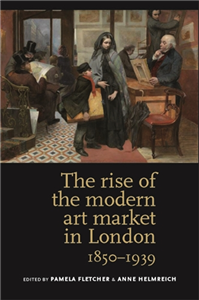
Now available in paperback for the first time, this study of the modern London art market establishes the central importance of London for the development of the modern retail market in fine art. Leading experts track the emergence and development of the structures and practices that have come to characterize the commercial art system, including the commercial art gallery, the professional dealer, the exhibition cycle and its accompanying rhetoric of press coverage and publicity, and an international network for the circulation of goods. This new commercial system involved a massive transformation of the experience of viewing art; of the relationships between artists, dealers, collectors, art objects and audiences; and of the very criteria of aesthetic value itself. Its history is thus a vital part of the history of modern art, and this anthology will be of interest to art historians as well as scholars of Victorian Studies, Museum Studies, and Social History.



