
Gramedia International
We provide a very rich variety of children's books, fiction and non-fiction which rights have been sold and translated into different languages in Asia, Europe, and Middle-East.
View Rights Portal
We provide a very rich variety of children's books, fiction and non-fiction which rights have been sold and translated into different languages in Asia, Europe, and Middle-East.
View Rights Portal
We are a Spanish graphic novel publisher, specialized in comic books for adults, young readers and children. Our publications are mostly one shot and we work with all literary genres. Click here to discover our graphic novel catalogue, as well as those of the comic publishers and authors that we also represent. https://www.grafitoeditorial.com/foreign-rights/
View Rights Portal
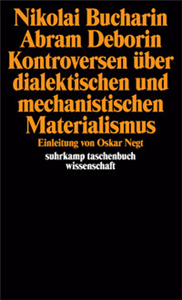
Der Band enthält wichtige Dokumente zur Geschichte der ideologischen Auseinandersetzung innerhalb der sowjetischen kommunistischen Partei, die sich nach Lenins Tod in der spektakulären Kontroverse über mechanistischen und dialektischen Materialismus zuspitzte. In dieser Kontroverse ging es, wie der Herausgeber bemerkt, nur »vordergründig um die Polarisierung der philosophischen Positionen nach Dialektikern und naturwissenschaftlichen orientierten Mechanizisten«. In seinem Einleitungsessay geht Negt dem Problem »Marxismus als Legitimationswissenschaft« nach und untersucht neben dem philosophischen Gehalt der abgedruckten Schriften auch deren politisch-ideologische Funktion. Die Texte von Deborin sind in erster Linie Aufsätze zu Problemen der Dialektik, die von Bucharin Auszüge aus seiner »Theorie des historischen Materialismus«. Kritische Bemerkungen zu dieser Theorie enthalten die Beiträge von Lukács und Gramsci.

Ob es um Deutschlands Rolle in Europa geht oder um das Bröckeln des neoliberalen Konsens – ein Wort hat derzeit Konjunktur: Hegemonie. Seit der griechischen Antike bezeichnet dieser Begriff eine Beziehung zwischen Staaten (etwa in der Theorie der Internationalen Beziehungen) oder Klassen (z. B. bei Antonio Gramsci), die von einer bestimmten Mischung aus Freiwilligkeit und Zwang geprägt ist. Indem Perry Anderson die Geschichte des Konzepts in verschiedenen Kulturen nachzeichnet, zeigt er zugleich, dass seine jeweiligen Konnotationen stets ein politisches Barometer für sich wandelnde Machtverhältnisse sind.
 Trusted Partner

»Wir«, das »Volk«, gegen »die da oben«? Kaum ein Thema wird gegenwärtig so kontrovers diskutiert wie der Populismus. Die einen warnen vor dessen Gefahren für die liberale Demokratie, die anderen halten ihn für den konsequenten Ausdruck demokratischer Volkssouveränität. In den Sozialwissenschaften findet schon seit Jahrzehnten Populismusforschung statt: in der Soziologie und politischen Theorie, in der Sozialpsychologie und in der Kulturforschung. Der Band versammelt Schlüsseltexte dieser Diskussion, u. a. von Antonio Gramsci, Isaiah Berlin, Chantal Mouffe, Stuart Hall, Ernesto Laclau, Ralf Dahrendorf, Jan-Werner Müller, Cas Mudde und Karin Priester, und bietet eine umfassende Einführung in den Forschungsstand zu dieser hochaktuellen Debatte.
Trusted Partner

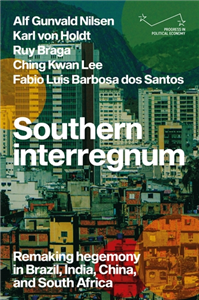
How do governing elites in the global South attempt to remake hegemony in a conjuncture of durable crisis? This is the question at the core of Southern interregnum, a comparative conjunctural analysis of hegemonic projects in Brazil, India, China, and South Africa. Working with a Gramscian notion of crisis, centred on the interregnum as an enduring period of instability and uncertainty, in which hegemonic authority erodes and competing projects for crisis resolution emerge, the book proposes a novel critical reading of the convulsions that are currently reshaping the political economy of the global South and the world-system. Mapping the variegated trajectories of elite projects to reconcile accumulation and legitimation - and probing the limits of these projects - the book breaks new ground in the study of the contemporary global South.
Trusted Partner

This book explores radical dissent from orthodox mainstream economics, and sets out a theoretically grounded vision for the emerging paradigm of social ecological economics. At the heart of this paradigmatic shift lies an acknowledgement of the inextricable embeddedness of economies in biophysical reality and social structure. The struggle for this transformative vision unfolds through a critical examination of mainstream environmental thought, followed by a nuanced evaluation of contributions from Marxists, socialists, critical institutionalists, feminists and Post-Keynesians grappling with the urgent environmental crisis. Synthesising insights from these diverse and heterodox schools, the book navigates the philosophical underpinnings of science, embracing a critical realist approach that challenges not only mainstream economic thought but also eclectic pluralism, relativism and strong constructionism. The question of what constitutes revolutionary science is explored in light of works by Kuhn, Schumpeter and Neurath, emphasising the pivotal role of values and ideology in works from Marx to Gramsci. Building on these radical and philosophical foundations, the book articulates a preanalytic vision of social ecological economics, dismantling entrenched notions of growth and efficiency in favour of a framework centered on social provisioning and needs embedded in ethics. In a thought-provoking conclusion, the book applies its analytical lens to the multiple crises of modernity within industrialised capital-accumulating economies. An agenda for social ecological transformation toward diverse alternative economies emerges, providing a compelling call to action in the face of contemporary challenges.
Trusted Partner

Egypt and the rise of fluid authoritarianism focuses on the struggle of the post-2013 political authorities for internal political legitimacy after the crisis following the 2013 coup d'état. It explores the microstructural and macro-systemic dynamics of leadership, power, protests and the authority-making process in political systems. These cannot simply be defined as structural, political, social and economic projections of the authoritarianism of the past, but rather as a rupture with that past. The book offers a complex, ground-breaking socio-political and economic analysis into how the forging of an internal political legitimacy claim has eventually modified the regime in Egypt along the authoritarian spectrum, turning into a fluid autocracy closer to a non-exclusivist personalist regime. This shift had implications that resonated both politically and economically.
Trusted Partner

This book examines Turkey's integration with Europe within structural dynamics of globalisation from a critical political economy perspective. Critical approaches have been sidelined within European Studies. Turkish enlargement is not an exemption. The analyses are based on original data generated by 109 interviews conducted in 2010, 2017 and 2023 with five categories of actors: representatives of capital and labour, political parties, state officials, and struggles around ecology, patriarchy and migration. It argues that the pro-membership was hegemonic in the 2000s which was contested by two rival class strategies, Ha-vet and neo-mercantilism. In the 2010s, pro-membership is no longer hegemonic within rising critical tone of social forces supporting rival class strategies. Unevenness of Turkey's trajectory of integration to Europe is likely to be consolidated through market integration and management of migration through transactional approach.
Trusted Partner

Oben, auf der Mastspitze, im Ausguck sitzen die Kolumnenschreiber. Karten auf den Knien studieren sie Untiefen, Küstenlinien und Fahrtrinnen. Manchmal, wenn sie in Verlegenheit kommen, bedienen sie sich der Hilfe sozialwissenschaftlich versierter Geographen, die ihnen die fehlenden Stichworte zurufen. Die »formierte Gesellschaft« war ein solches Stickwort in den sechziger, »Unregierbarkeit« und »Wertewandel« bestimmten die siebziger Jahre. Es gibt Anzeichen dafür, daß dieses Jahrzehnt das des »Neokonservatismus« ist. Der vorliegende Essay geht davon aus, daß nicht das Wort »Neokonservatismus«, wohl aber das, was es objektiv bezeichnet, die politisch-intellektuelle Szenerie westlicher Gesellschaften noch bestimmen wird, wenn die tagespolitischen Umstände, unter denen es seine gegenwärtige Karriere antrat, längst in den Archiven der Zeitgeschichte verschwunden sind. Deshalb zeichnet er zunächst nach, wie die neokonservative sozialwissenschaftliche Intelligenz in den USA und der Bundesrepublik die zentralen politischen Diskurse »besetzt« hat. Der praktisch-politische Erfolg ihres semantischen Feldzuges in den siebziger Jahren liest sich wie eine Bestätigung von Gramscis Behauptung, daß die politische Macht der »kulturellen Hegemonie« auf dem Fuße folgt. Die ideologiepolitische Topographie wird im Licht der kritischen Theorie des Spätkapitalismus kritisiert. Anhand einer Reinterpretation der Begriffe »Kultur«, »Demokratie«, »Gleichheit«, »Wohlfahrt« und »Intelligenz« wird die These entfaltet, daß der konservative Bann über die gegenwärtige Politik nur durch eine neue Buchstabierung des Fortschritts gebrochen werden kann.

