
Seren Books
Seren Books is proud to be the leading independent publisher of English-language writing from Wales publishing fiction, non-fiction and poetry.
View Rights Portal
Seren Books is proud to be the leading independent publisher of English-language writing from Wales publishing fiction, non-fiction and poetry.
View Rights Portal
Independent publisher of crime, thrillers, sci-fi, mysteries, romantic comedies and mash-ups.
View Rights Portal Trusted Partner

 Trusted Partner
Trusted Partner
Trusted Partner

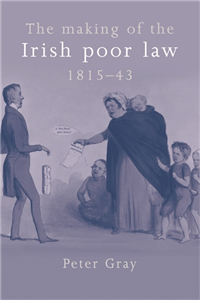
The making of the Irish poor law, 1815-43 examines the debates preceding and surrounding the 1838 act on the nature of Irish poverty and the responsibilities of society towards it. It traces the various campaigns for a poor law from the later eighteenth century. The nature and internal frictions of the great Irish poor inquiry of 1833-36 are analysed, along with the policy recommendations made by its chair, Archbishop Whately. It considers the aims and limitations of the government's measure and the public reaction to it in Ireland and Britain. Finally, it describes the implementation of the Poor Law between 1838 and 1843 under the controversial direction of George Nicholls. It will be of particular importance to those with a serious interest in the history of social welfare, of Irish social thought and politics, and of British governance in Ireland in the early nineteenth century. ;
Trusted Partner
Trusted Partner
Trusted Partner
 Trusted Partner
Trusted Partner
Trusted Partner
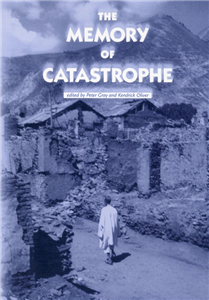
Investigates the dynamic relationship between experiences of profound social and cultural disruption, and human memory. Critical comparisons are made across a wide variety of catastrophic experiences and memories; not just of war, but also of massacre, genocide, rebellion, famine, partition, shipwreck and fire. The book is an accessible showcase for a wide range of methodological approaches to the study of memory, including literary studies, cultural studies, participant-observation and historical studies, and uses a variety of oral, visual and written sources. Offers a diverse chronological and geographical range of catastrophic cases, from seventeenth-century England to the recent conflicts in the former Yugoslavia, from Ireland to the Indian sub-continent, from Mexico to wartime Leningrad. Well-written and accessible - a fascinating read. ;
Trusted Partner

 Trusted Partner
Trusted Partner
Trusted Partner
Trusted Partner
Trusted Partner

A compilation of case studies illustrating the use of arts, culture and other community assets individuals and communities used to cope and develop resilience during the Covid-19 pandemic, demonstrating valuable lessons that might help us develop resilience in similar future crises.
Trusted Partner
Trusted Partner
Trusted Partner
Trusted Partner
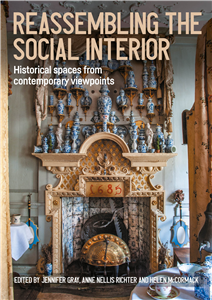
At the intersection of heritage, design history and contemporary art, this book offers new perspectives on the way historical interiors are encountered by, and viewed and presented for, present-day audiences. Many studies have highlighted the historical significance and meanings embedded in the landscape, architecture, decoration and objects to be found within houses and homes. But what about the social meanings of these spaces? Central to this book is the idea that in reflecting, remaking and reimagining historical interiors, the contributions of artists, designers and craftspeople should be foregrounded in constructing ideas of authenticity, transparency, and materiality in the making process. The chapters present a range of case studies that reflect upon on how historical interiors are remade and reimagined by looking in and out; at how a reassembling of spaces ought to avoid 'a shrinking definition of the social itself' (Latour, 2005). Surveying a range of interior 'types' from a number of historical periods, the book includes contributions from practitioners, scholars and makers. From digital reconstructions of a seventeenth-century Belgian constcamer to the interior and exterior worlds of specific historical figures, including Charles Rennie Mackintosh and Beatrix Potter, the book considers how these spaces have powerful significance for contemporary audiences, particularly in ways that are relatable to shared experiences of work, leisure, family, community, power and politics. This book will be of interest to scholars of the history of interiors and collections, museology, archaeology, architectural history, art, and design history, as well as curators and caretakers of historical sites, spaces and objects.
Trusted Partner
Trusted Partner



