
Guilford Publications, Inc.
Founded in 1973, Guilford has built an international reputation as a publisher of books in mental health; psychology, psychiatry, mindfulness, CBT, DBT, and more.
View Rights Portal
Founded in 1973, Guilford has built an international reputation as a publisher of books in mental health; psychology, psychiatry, mindfulness, CBT, DBT, and more.
View Rights Portal
Guild of Master Craftsman (GMC) Publications publish a diverse range of craft & lifestyle books aimed at all skill levels, from the absolute beginner to the professional crafts person. Beautifully produced with full-colour photographs and step-by-step illustrations throughout, often with patterns included, these books are as appealing as they are hardworking. Written by expert authors, these publications offer a wealth of information and inspiration on a broad range of specialist subjects, ranging from basic ‘how-to’ and children’s craft books, to technical guides and books on creative projects. In addition to its own publishing, GMC is the publisher of design-led and uniquely finished children’s books which combine innovative ideas with stunning illustrations, through its Button Books imprint. GMC’s Ammonite Press imprint produces illustrated reference, guide and gift books on photography, history and pop culture.
View Rights Portal

Eine unsterbliche Geschichte über die Gefahren grenzenlosen Ehrgeizes und die Essenz des Menschlichen Der brillante Wissenschaftler Victor Frankenstein ist besessen davon, das Geheimnis des Lebens zu entschlüsseln. In einer schicksalhaften Nacht gelingt ihm das Undenkbare: Er erweckt eine von ihm geschaffene Kreatur zum Leben. Doch entsetzt von der Hässlichkeit seines Werkes, verstößt er das sensible Wesen, das so verzweifelt nach Liebe und Akzeptanz sucht. Von der Welt verachtet und von Rachsucht getrieben, wendet sich das Geschöpf schließlich gegen seinen Schöpfer und alles, was ihm lieb ist. Inmitten der erhabenen Landschaft der Schweizer Alpen entspinnt sich ein erbitterter Wettlauf, der von den eisigen Weiten des Nordpols bis in die dunkelsten Winkel der menschlichen Seele führt. Mary Shelleys zeitloses Meisterwerk ist viel mehr als eine Gruselgeschichte: Es ist ein Roman über Selbstüberschreitung, Einsamkeit und das existenzielle Bedürfnis nach Zugehörigkeit.


 Trusted Partner

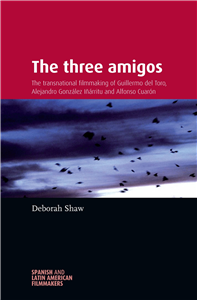
Now available in paperback, this is the first academic book dedicated to the filmmaking of the three-best known Mexican-born directors, Guillermo del Toro, Alejandro González Iñárritu and Alfonso Cuarón. Deborah Shaw examines the career trajectories of the directors and presents a detailed analysis of their most significant films with a focus on both the texts and the production contexts in which they were made. These include studies on del Toro's Cronos/Chronos, El laberinto del fauno/Pan's Labyrinth, and Hellboy II: The Golden Army; Iñárritu's Amores Perros, 21 Grams and Babel; and Cuarón's Sólo con tu pareja/Love in the Time of Hysteria, Y tu mamá también, and Children of Men. The Three Amigos will be of interest to all those who study Hispanic and Spanish cinema in particular, and world and contemporary cinema in general.
Trusted Partner
Trusted Partner


Guillermo Cabrera Infante wurde 1929 in Gibara, Kuba, geboren. Mit 12 Jahren kam er nach Havanna und nach einem kurzen Studium an der Escuela de Periodismo, der Journalistenschule, arbeitete er als Journalist. Er war Mitgründer der Cinemateca de Cuba und leitete diese von 1951 bis 1956. Ab 1954 schrieb er, unter dem Pseudonym "G. Caín", Filmkritiken für die Wochenzeitschrift Carteles. Er kämpfte gegen das diktatorische Regime Batistas, und seine Eltern waren Mitgründer der kubanischen Kommunistischen Partei. Nach der kubanischen Revolution war er einige Jahre Direktor des nationalen Filminstituts und Chefredakteur der Literaturbeilage Lunes de Revolución, die 1962 eingestellt wurde. Guillermo Cabrera Infante wurde im gleichen Jahr zum Kulturattaché der kubanischen Botschaft in Belgien ernannt. 1965 legte er sein Amt nieder und ging ins freigewählte Exil. Der Autor brach damals, noch vor dem berühmten Padilla-Fall, mit dem Regime Fidel Castros, das die Intellektuellen auf Kuba immer stärker verfolgte und zensierte. Seit 1967 lebte Cabrera Infante in London. Der Autor wurde mit seinem Roman Tres tristes tigres, 1967, (dt. Drei traurige Tiger, 1987) bekannt, der den Preis Biblioteca Breve in Spanien 1964 gewann. Dieser Roman gilt als eines der Hauptwerke der lateinamerikanischen Literatur. Zu den bedeutenden Werken Cabrera Infantes gehören außerdem: Holy smoke (dt. Rauchzeichen, 1990), Vista del amanecer en el trópico (dt. Ansicht der Tropen im Morgengrauen, 1995), Así en la paz como en la guerra (dt. Wie im Kriege also auch im Frieden, 1996), La Habana para un Infante difunto und Cine o sardina (dt. Nichts als Kino, 2001), eine mitunter giftige Liebeserklärung an das Kino. 1997 erhielt Guillermo Cabrera Infante den renommierten Premio Cervantes. Guillermo Cabrera Infante starb am 21. Februar 2005 in London.
Trusted Partner

The fifteen groundbreaking essays contained in this book address the concept of adaptation in relation to horror cinema. Adaptation is not only a key cultural practice and strategy for filmmakers, but it is also a theme of major importance within horror cinema as a hole. The history of the genre is full of adaptations that have drawn from fiction or folklore, or that have assumed the shape of remakes of pre-existing films. The horror genre itself also abounds with its own myriad transformations and transmutations. The essays within this volume engage with an impressive range of horror texts, from the earliest silent horror films by Thomas Edison and Jean Epstein through to important contemporary phenomena, such as the western appropriation of Japanese horror motifs. Classic works by Alfred Hitchcock, David Cronenberg and Abel Ferrara receive cutting-edge re-examination, as do unjustly neglected works by Mario Bava, Guillermo del Toro and Stan Brakhage.
Trusted Partner

The fifteen groundbreaking essays contained in this book address the concept of adaptation in relation to horror cinema. Adaptation is not only a key cultural practice and strategy for filmmakers, but it is also a theme of major importance within horror cinema as a hole. The history of the genre is full of adaptations that have drawn from fiction or folklore, or that have assumed the shape of remakes of pre-existing films. The horror genre itself also abounds with its own myriad transformations and transmutations. The essays within this volume engage with an impressive range of horror texts, from the earliest silent horror films by Thomas Edison and Jean Epstein through to important contemporary phenomena, such as the western appropriation of Japanese horror motifs. Classic works by Alfred Hitchcock, David Cronenberg and Abel Ferrara receive cutting-edge re-examination, as do unjustly neglected works by Mario Bava, Guillermo del Toro and Stan Brakhage.
Trusted Partner

This collection offers a new lens through which to examine Spain's cinema production following the isolation imposed by the Franco regime. The seventeen key films analysed in the volume span a period of thirty-five years that have been crucial in the development of Spain, Spanish democracy and Spanish cinema. They encompass different genres (horror, thriller, melodrama, social realism, documentary), both popular (Los abrazos rotos/Broken Embraces, Vicky Cristina Barcelona) and more select art house fare (En la ciudad de Sylvia/In the City of Sylvia, El espíritu de la colmena/Spirit of the Beehive) and are made in English (as both first and second language), Basque, Castilian, Catalan and French. Offering an expanded understanding of 'national' cinemas, the volume explores key works by Guillermo del Toro and Lucrecia Martel alongside an examination of the ways in which established auteurs (Almodóvar, José Garci, Carlos Saura) and the younger generations of filmmakers (Cesc Gay, Amenábar, Bollaín) have harnessed cinematic language towards a commentary on the nation-state.
Trusted Partner

This collection offers a new lens through which to examine Spain's cinema production following the isolation imposed by the Franco regime. The seventeen key films analysed in the volume span a period of 35 years that have been crucial in the development of Spain, Spanish democracy and Spanish cinema. They encompass different genres (horror, thriller, melodrama, social realism, documentary), both popular (Los abrazos rotos/Broken Embraces, Vicky Cristina Barcelona) and more select art house fare (En la ciudad de Sylvia/In the City of Sylvia, El espíritu de la colmena/Spirit of the Beehive) and are made in English (as both first and second language), Basque, Castilian, Catalan and French. Offering an expanded understanding of 'national' cinemas, the volume explores key works by Guillermo del Toro and Lucrecia Martel alongside an examination of the ways in which established auteurs (Almodóvar, José Garci, Carlos Saura) and younger generations of filmmakers (Cesc Gay, Amenábar, Bollaín) have harnessed cinematic language towards a commentary on the nation-state. The result is a bold new study of the ways in which film has created new prisms that have determined how Spain is positioned in the global marketplace.
Trusted Partner

In this, the first full-length treatment of the child in Spanish cinema, Sarah Wright explores the ways that the cinematic child comes to represent 'prosthetic memory'. The central theme of the child and the monster is used to examine the relationship of the self to the past, and to cinema. Concentrating on films from the 1950s to the present day, the book explores religious films, musicals, 'art-house horror', science-fiction, social realism and fantasy. It includes reference to Erice's The Spirit of The Beehive, del Toro's Pan's Labyrinth, Mañas's El Bola and the Marisol films. The book also draws on a century of filmmaking in Spain and intersects with recent revelations concerning the horrors of the Spanish past. The child is a potent motif for the loss of historical memory and for its recuperation through cinema. This book is suitable for scholars and undergraduates working in the areas of Spanish cinema, Spanish cultural studies and cinema studies.
Trusted Partner

Eine Frau auf der Suche nach Wahrheit, Liebe und ihren Wurzeln 1866 erblickt Emilia del Valle in San Francisco das Licht der Welt – sie ist die Tochter einer irischen Nonne und eines chilenischen Aristokraten, großgezogen wird sie von ihrem liebevollen Stiefvater, in einem ärmlichen Viertel in San Francisco. Von klein auf eigensinnig, beeindruckt sie wenig, was andere für richtig halten, ihre große Leidenschaft ist das Schreiben. Siebzehnjährig veröffentlicht sie, unter männlichem Pseudonym, erfolgreich Groschenromane, doch das echte Leben findet sie abenteuerlicher und wird Reporterin bei einer Zeitung. Ihr Kollege ist Eric, ein junger Mann mit großer Strahlkraft, und gemeinsam gehen sie nach Chile, in das Land ihrer Vorfahren, über den sich anbahnenden Bürgerkrieg zu berichten. Emilia und Eric kommen sich näher – ist das Liebe? –, und während Emilia immer tiefer in die Geschichte ihres Vaters eintaucht, gerät sie selbst zwischen die Fronten: Sie muss sich nicht nur der Gefahr, sondern auch den drängenden Fragen nach ihrer eigenen Herkunft stellen. Mein Name ist Emilia del Valle ist die Geschichte einer Frau, die über alle Konventionen hinweg ihren eigenen Weg zu gehen versucht, ein fesselnder historischer Roman über schmerzhafte Liebe und unverbrüchlichen Mut – erzählt von einer der »Meistererzählerinnen unserer Zeit« (Vogue).
Trusted Partner
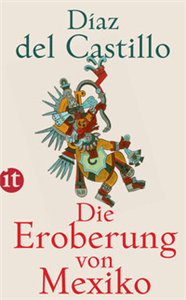
Der Zusammenprall zweier Kulturwelten – die Chronik eines der folgenreichsten Geschehnisse der frühen Neuzeit Die Eroberung Mexikos und der Untergang der Azteken: Bernal Díaz del Castillo, der sich als Fußsoldat den Truppen des spanischen Konquistadors Hernán Cortés angeschlossen hatte, war Augenzeuge dieses Geschehens. Und er hat der Nachwelt mit seinen Aufzeichnungen eine der zuverlässigsten und informationsreichsten Quellen hinterlassen. Anders als Hernán Cortés in seinen Briefen an Kaiser Karl V. beschönigt Díaz del Castillo nichts: Er schildert anschaulich das grausame Vorgehen mit Kreuz und Schwert gegen die Eingeborenen, berichtet von den Intrigen unter den Spaniern, der Suche nach Schätzen und der ungleichen Aufteilung der Kriegsbeute, dem Unwillen der Soldaten, die sich zu Recht betrogen fühlten und sich dennoch der Faszination durch Cortés nicht entziehen konnten.
Trusted Partner
Crónica del alba is a novel by Sender with a Civil War background, like the popular Réquiem por un campesino español, also in this series. The author evokes his childhood in rural Aragón at the beginning of the twentieth century in a book which has a charm and something of the character of The Adventures of Tom Sawyer. The young Pepe fights to believe in himself as a hero in the face of a world, and a father bent on putting him down. He is supported by his girlfriend, Valentina, who believes in him implicitly and often ends up in as much trouble as him. But there is something more here than scrapes and mischief-making. It is written by an older and disillusioned Pepe who has known real heroism and is now detained in a prison camp for Spanish Civil War refugees in southern France. The novel raises challenging questions about the loss of hope, how people cope with disillusionment, and the place of writing in that process. Moreover, since the novel reflects Sender's own childhood it sheds light on the complex relationship of fact and fiction in autobiographical novels. ;
Trusted Partner
Trusted Partner
Trusted Partner

Diaz del Castillo berichtet von den Intrigen zwischen den Spaniern, ihrem Vorgehen mit Schwert und Kreuz gegen die Eingeborenen, den weiteren Feldzügen in Honduras auf der Suche nach noch mehr Schätzen, der ungleichen Aufteilung der Kriegsbeute durch Hernan Cortes, dem Unwillen der Soldaten, die sich zu Recht betrogen fühlen und doch stets aufs neue Cortes’ Faszination erliegen.
Trusted Partner
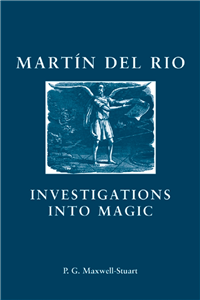
This is the first English translation of one of the most important, interesting and comprehensive discussions of the occult sciences ever published. Investigations into magic deals not only with magic in all its forms, from the manipulation of angelic and demonic powers to straightforward conjuring and illusion, but also with witchcraft, alchemy, astrology, divination, prophecy, and possession by evil spirits. In addition, Del Rio gives judges and confessors practical advice on the most effective ways of dealing with people who are accused of practising magic, and enlivens his whole discussion with anecdotes drawn from a remarkable range of sources, including his own experience. Nothing so panoramic had ever appeared before, and for the next one hundred and fifty years Investigations into magic was the indispensable reference work on the subject. ;
Trusted Partner
Trusted Partner
Trusted Partner



