
September 2005
Your Search Results
-
Promoted Content


-
Promoted Content
 Humanities & Social SciencesJanuary 2026
Humour, subjectivity and world politics
by Alister Wedderburn
-
 Trusted Partner
-
Trusted Partner

 April 2001
Strafverfahren gegen HIV-Infizierte.
Unter besonderer Berücksichtigung der Situation jugendlicher Beschuldigter.
by Franck, Katharina
-
Trusted Partner
-
Trusted Partner
-
Trusted Partner
-
Trusted Partner
-
Trusted Partner
-
Trusted Partner
-
Trusted Partner
 MedicineJuly 2022
Histories of HIV/AIDS in Western Europe
by Janet Weston, Hannah J. Elizabeth, David Cantor
-
Trusted Partner
-
Trusted Partner
October 1989
Durchführung von HIV-Tests ohne den Willen des Betroffenen.
Pflicht und Befugnis zur Befundmitteilung aus der Sicht des Strafrechts.
by Pfeffer, Hans
-
Trusted Partner
 October 2026
Aids
Chronik einer Pandemie
by Axel Schock
Mehr als 40 Millionen Menschenleben hat die Immunschwächekrankheit Aids seit ihrer Entdeckung weltweit gefordert. Noch immer infizieren sich jeden Tag über 3500 Personen, doch längst nicht alle haben Zugang zu HIV-Medikamenten. Eine effektive Heilung und einen wirksamen Impfstoff gibt es bis heute nicht. Axel Schock erzählt die Geschichte dieser Pandemie: wie sich ein Erreger zoonotischen Ursprungs über den gesamten Erdball ausbreitete und ganze Gemeinschaften verheerte. Er beschreibt die medizinische Erforschung, die gesellschaftliche Ausgrenzung HIV-Infizierter, den entschlossenen Kampf mutiger Aktivistinnen und Aktivisten. Vor allem aber erzählt Schock die Geschichte der Menschen hinter den Zahlen und Fakten. Aus Tagebucheinträgen, Dokumenten und Zeitzeugenberichten entsteht so ein polyphones Panorama.
-
Trusted Partner
-
Trusted Partner
 Humanities & Social SciencesFebruary 2026
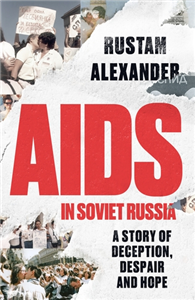
AIDS in Soviet Russia
A story of deception, despair and hope
by Rustam Alexander
The first book to tell the shocking story of the AIDS crisis in Soviet Russia. Throughout the 1980s, as the world was grappling with the escalating crisis of AIDS, Soviet Russia continued to deny there was a problem. Arguing that the disease was limited to foreigners and 'immoral' groups, the government failed to take meaningful action, long past the point other countries had begun to recognise the full scale of the threat. In this ground-breaking book, Rustam Alexander tells the story of AIDS in Soviet Russia. Fixated on disinformation, censorship and the persecution of marginalised communities, the Soviet authorities wasted precious time, allowing the epidemic to strike at the very heart of the nation: its children. Yet, despite the government's failure, a number of brave journalists, doctors and nascent gay groups decided to take matters into their own hands and engage in full-fledged AIDS activism. Tracing the political and social response to AIDS in the final years of the Soviet era, Alexander sheds light on the devastating consequences of government inaction. He draws on personal stories, media reports and archival materials to provide a riveting account of the Russian people's fight against AIDS amid the tumultuous transformations of Gorbachev's perestroika.
-
Trusted Partner

 2019
2019When a Virus Defeated Napoleon
How nature makes history
by Sebastian Jutzi
Humans write history, but nature and coincidence often play a significant part in making history. The weather, volcanoes, celestial bodies, pathogens: all of them can influence historical events. In 413 BC, a lunar eclipse contributed to the defeat of the Athenians by Syracuse. In 1802, Napoleon’s soldiers on Saint-Domingue, the Haiti of today, were carried off in their thousands by yellow fever; the slave revolt that the troops had been sent to suppress succeeded, and the island declared itself independent in 1804. Nature not only makes history, it can also contribute to the understanding of history. For example, the route that the Carthaginians took over the Alps was only revealed recently by the discovery of ancient manure – not too surprising since Hannibal was accompanied by an estimated 10,000 horses. Sebastian Jutzi relates these and many other (hi)stories in a knowledgeable, entertaining and informative way – a treasure trove for anyone who wants to get to know history from an “unusual” perspective.
-
Trusted Partner
 MedicineDecember 2020
African nurses and everyday work in twentieth-century Zimbabwe
by Clement Masakure, Jane Schultz
-
Trusted Partner
 May 2021
On the Amazement of the World
(Im-)Possibilities of science
by Ernst Peter Fischer
The current debate on the corona virus shows that knowledge, and with that science, plays a central role in the struggle to preserve humanity. Knowledge provides opportunities to influence the world, for better or worse. In times when emotions and appeals to baser instincts often triumph over reason and humanity, Ernst Peter Fischer reminds us of the goal of science that has been pursued since the Enlightenment: “to facilitate the conditions of human existence”. In his new book, the bestselling author takes us on an instructive, varied and enjoyable journey through the history of knowledge and science.
-
Trusted Partner
 June 2018
Die Kapsel
Aids in der Bundesrepublik
by Martin Reichert
»Gib Aids keine Chance« – fast jeder Deutsche über dreißig kennt den Slogan dieser 1987 von der Bundeszentrale für gesundheitliche Aufklärung gestarteten Kampagne. »Truvada« heißt das Wundermittel, mit dem sich diese Forderung nun erfüllen soll. Die Kapsel, die HIV-Infizierten schon seit einiger Zeit zu Therapiezwecken verschrieben wird, dient mittlerweile auch der Prophylaxe. Was die Mehrheit der Deutschen nicht kennt, sind der Schmerz und die Isolation, die viele Menschen vor der Aufklärungs- und Präventionsarbeit sowie der Entwicklung effektiver Medikamente erfahren mussten. Anhand zahlreicher Begegnungen mit Betroffenen und Zeitzeugen erzählt Martin Reichert die Geschichte dieser Menschen, etwa jener homosexueller Männer, die, abgekapselt von der Gesellschaft, allein mit dem Verlust ihres Partners zurechtkommen mussten: enterbt von der pfälzischen Familie, ausgeladen von der Beerdigung im Schwarzwald und von ihren Mitmenschen stigmatisiert. Aids hat die Art und Weise, wie wir leben und wie wir lieben, tiefgreifend verändert. Die Kapsel berichtet davon, wie die Krankheit ihren Weg ins Bewusstsein der Bundesrepublik fand.


