
Hunan Yuelu Publishing House
Publishing ancient books, sorting local documents, publishing academic monographs.
View Rights Portal
Publishing ancient books, sorting local documents, publishing academic monographs.
View Rights Portal
Hunan People's Publishing House is a comprehensive publishing house that mainly edits, publishes and distributes philosophy, literature, history and social sciences.
View Rights Portal
At every level of human interaction new levels of identity-based tension are in evidence. Contributors to this book explore facets of fragmentation processes within systems of state and interstate organisation, how they influence the use of negotiation, and how negotiation might be used to effect renewed coherence. Following Anstey's (Ch1) introductory chapter framing the nature and shape of fragmentation dynamics, Zartman (Ch 2) argues that the use of negotiation as a process of conflict resolution is deeply shaped by identity groups whose internal coherence is dependent on sustaining a negative identity of others. International relations are no longer solely the realm of experienced diplomats but are shaped as Meerts (Ch3) points out by politicians seeking to be responsive to voting publics rather than wider concerns. Anstey digs into problems of fragmentation (Ch. 4) and Troitskiy (Ch 5) points out how a reluctant acceptance of the power of 'the other' can lead to a form of strategic stability in relations. Anstey and Meerts (Ch 6) point out in their analysis of the Israeli-Palestinian case as an identity conflict turned very bad. Guggenbuhl (Ch 7 ) reveals how structures and processes have been designed within the EU to prevent, contain and regulate conflicts to limit risks of confrontation and fragmentation. Schuessler (Ch 8) to advocates a shift away from a template or roadmap approach to EU membership to a cohesion based on non-dominance. There is still a strong desire on the part of some states, like Northern Macedonia, to become EU members, as reflected in Manton's (Ch 9). Paula Garzon and Frans Schram explain the success of the Colombia Peace Negotiations (Ch 10), while Odigie and da Rocha (Ch 11) analyse the struggle faced by ECOWAS to influence coup leaders in Mali to return to constitutional government and changes of government by constitutional means. Liang (Ch12) discusses how the internet as the modern vehicle of inter-state, inter-group and interpersonal communication has become weaponised. In Ch 13 Anstey draws some lessons from contributions to the compilation.
 Trusted Partner
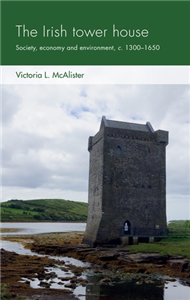
The Irish tower house examines the social role of castles in late-medieval and early modern Ireland. It uses a multidisciplinary methodology to uncover the lived experience of this historic culture, demonstrating the interconnectedness of society, economics and the environment. Of particular interest is the revelation of how concerned pre-modern people were with participation in the economy and the exploitation of the natural environment for economic gain. Material culture can shed light on how individuals shaped spaces around themselves, and tower houses, thanks to their pervasiveness in medieval and modern landscapes, represent a unique resource. Castles are the definitive building of the European Middle Ages, meaning that this book will be of great interest to scholars of both history and archaeology.
Trusted Partner

This book examines the links between major contemporary public sector reforms and neoliberal thinking. The key contribution of the book is to enhance our understanding of contemporary neoliberalism as it plays out in the public administration and to provide a critical analysis of generally overlooked aspects of administrative power. The book examines the quest for accountability, credibility and evidence in the public sector. It asks whether this quest may be understood in terms of neoliberal thinking and, if so, how? The book makes the argument that while current administrative reforms are informed by several distinct political rationalities, they evolve above all around a particular form of neoliberalism: constructivist neoliberalism. The book analyses the dangers of the kinds of administrative power seeking to invoke the self-steering capacities of society and administration itself.
Trusted Partner

Rescaling the state provides a theoretically-informed and empirically-rich account of the process of devolution undertaken in the UK since 1997, focusing in particular on the devolution of economic governance. Using case studies from England, Scotland, Northern Ireland and Wales, the book examines the purported reasons for, and the unintended consequences of, devolution. As well as comparing policy and practice across the four devolved territories, the book also explores the pitfalls and instances of good practice associated with devolution in the UK. Rescaling the state is an important text for all social scientists - particularly political scientists, sociologists, anthropologists and human geographers - interested in the devolution of power in the UK and, indeed, all instances of contemporary state restructuring. It is also a significant book for all policy-makers interested in understanding the increasing complexity of the policy landscapes of economic governance in the UK. ;
Trusted Partner
Trusted Partner

 Trusted Partner
Trusted Partner
Trusted Partner

On 25 January 1474, Charles the Bold, duke of Burgundy, appeared before his subjects in Dijon. Robed in silk, gold and precious jewels and wearing a headpiece that gave the illusion of a crown, he made a speech in which he cryptically expressed his desire to become a king. Three years later, Charles was killed at the battle of Nancy, an event that plunged the Great Principality of Burgundy into chaos. This book, innovative and essential, not only explores Burgundian history and historiography but offers a complete synthesis about the nature of politics in this region, considered both from the north and the south. Focusing on political ideologies, a number of important issues are raised relating to the medieval state, the signification of the nation under the 'Ancien Regime', the role of warfare in the creation of political power and the impact of political loyalties in the exercise of government. In doing so, the book challenges a number of existing ideas about the Burgundian state.
Trusted Partner

Provides a comprehensive introduction and essential guide to one of the most important institutions in medieval England and to its substantial archive. This is the first book to offer a detailed explanation of the form, structure and evolution of the manor and its records. Offers translations of, and commentaries upon, each category of document to illustrate their main features. Examples of each category of record are provided in translation, followed by shorter extracts selected to illustrate interesting, commonly occurring, or complex features. A valuable source of reference for undergraduates wishing to understand the sources which underpin the majority of research on the medieval economy and society.
Trusted Partner
Trusted Partner

This collection offers a new lens through which to examine Spain's cinema production following the isolation imposed by the Franco regime. The seventeen key films analysed in the volume span a period of 35 years that have been crucial in the development of Spain, Spanish democracy and Spanish cinema. They encompass different genres (horror, thriller, melodrama, social realism, documentary), both popular (Los abrazos rotos/Broken Embraces, Vicky Cristina Barcelona) and more select art house fare (En la ciudad de Sylvia/In the City of Sylvia, El espíritu de la colmena/Spirit of the Beehive) and are made in English (as both first and second language), Basque, Castilian, Catalan and French. Offering an expanded understanding of 'national' cinemas, the volume explores key works by Guillermo del Toro and Lucrecia Martel alongside an examination of the ways in which established auteurs (Almodóvar, José Garci, Carlos Saura) and younger generations of filmmakers (Cesc Gay, Amenábar, Bollaín) have harnessed cinematic language towards a commentary on the nation-state. The result is a bold new study of the ways in which film has created new prisms that have determined how Spain is positioned in the global marketplace.
Trusted Partner
Migration and social policy in a changing world bridges the generally separate fields of social policy and migration studies. This book traces social policy responses to migration from the Industrial Revolution to today's era of globalisation and large-scale migration. Through case studies from across the globe, the book explores key themes including rural-urban migration, social citizenship, welfare internationalism and diasporic care systems. It examines how migrants are included in or excluded from social citizenship in host societies, and how they become providers of welfare services such as health and social care. Moving beyond a methodological nationalist focus, the book investigates migrant incorporation into welfare states through family networks, faith communities, and other informal welfare structures. It combines migrants' experiences with host societies' immigration politics, institutional perspectives and policies to present a comprehensive analysis of the migration-welfare relationship. This volume fills a gap in academic literature and offers policymakers, practitioners and scholars a framework for understanding the interplay between migration and social policy in our changing world.
Trusted Partner
Trusted Partner
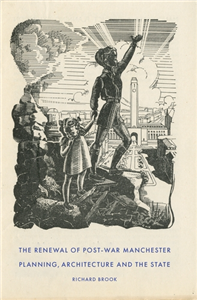
A compelling account of the project to transform post-war Manchester, revealing the clash between utopian vision and compromised reality. Urban renewal in Britain was thrilling in its vision, yet partial and incomplete in its implementation. For the first time, this deep study of a renewal city reveals the complex networks of actors behind physical change and stagnation in post-war Britain. Using the nested scales of region, city and case-study sites, the book explores the relationships between Whitehall legislation, its interpretation by local government planning officers and the on-the-ground impact through urban architectural projects. Each chapter highlights the connections between policy goals, global narratives and the design and construction of cities. The Cold War, decolonialisation, rising consumerism and the oil crisis all feature in a richly illustrated account of architecture and planning in post-war Manchester.
Trusted Partner

This electronic version has been made available under a Creative Commons (BY-NC-ND) open access license. This book is about science in theatre and performance. It explores how theatre and performance engage with emerging scientific themes from artificial intelligence to genetics and climate change. The book covers a wide range of performance forms from Broadway musicals to educational theatre, from Somali drama to grime videos. It features work by pioneering companies including Gob Squad, Headlong Theatre and Theatre of Debate as well as offering fresh analysis of global blockbusters such as Wicked and Urinetown. The book offers detailed description and analysis of theatre and performance practices as well as broader commentary on the politics of theatre as public engagement with science. Science in performance is essential reading for researchers, students and practitioners working between science and the arts within fields such as theatre and performance studies, science communication, interdisciplinary arts and health humanities.
Trusted Partner
Trusted Partner
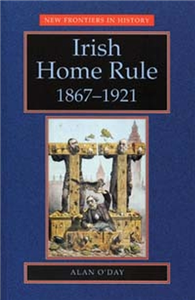
Irish Home Rule considers the pre-eminent issue in British politics during the late nineteenth and early twentieth-centuries. It is the first account to explain the various self-government plans, to place these in context and examine the motives for putting the schemes forward. The book distinguishes between moral and material home rulers, making the point that the first appealed especially to outsiders, some Protestants and the intelligentsia, who saw in self-government a means to reconcile Ireland's antagonistic traditions. In contrast, material home rulers viewed a Dublin Parliament as a forum of Catholic interests. This account appraises the home rule movement from a fresh angle, distinguishing it from the usual division drawn between physical force and constitutional nationalists It maintains that an ideological continuity runs from Young Ireland, the Fenians, the early home rulers including Isaac Butt and Charles Stewart Parnell, to the Gaelic Revivalists to the Men of 1916. These nationalists are distinguishable from material home rulers not on the basis of methods or strategy but by a fundamental ideological cleavage. ;
Trusted Partner
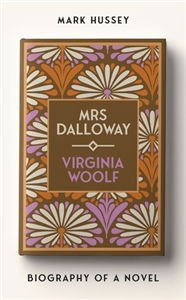
A compelling biography of one of the most celebrated novels in the English language. The fourth and best-known of Virginia Woolf's novels, Mrs Dalloway is a modernist masterpiece that has remained popular since its publication in 1925. Its dual narratives follow a day in the life of wealthy housewife Clarissa Dalloway and shell-shocked war veteran Septimus Warren Smith, capturing their inner worlds with a vividness that has rarely been equalled. Mrs Dalloway: Biography of a novel offers new readers a lively introduction to this enduring classic, while providing Woolf lovers with a wealth of information about the novel's writing, publication and reception. It follows Woolf's process from the first stirrings in her diary through her struggles to create what was quickly recognised as a major advance in prose fiction. It then traces the novel's remarkable legacy to the present day. Woolf wrote in her diary that she wanted her novel 'to give life & death, sanity & insanity. to criticise the social system, & to show it at work, at its most intense.' Mrs Dalloway: Biography of a novel reveals how she achieved this ambition, creating a book that will be read by generations to come.
Trusted Partner

This topical and innovative study is the first book on Algerian cinema to be published in English since the 1970s. At a time when North African and Islamic cultures are of increasing political significance, Algerian National Cinema presents a dynamic, detailed and up to date analysis of how film has represented this often misunderstood nation. Algerian National Cinema explores key films from The Battle of Algiers (1966) to Mascarades (2007). Introductions to Algerian history and to the national film industry are followed by chapters on the essential genres and themes of filmmaking in Algeria, including films of anti-colonial struggle, representations of gender, Berber cinema, and filming the 'black decade' of the 1990s. This thoughtful and timely book will appeal to all interested in world cinemas, in North African and Islamic cultures, and in the role of cinema as a vehicle for the expression of contested identities. By the author of the critically-acclaimed Contemporary French Cinema.



