
EDGE Science Fiction and Fantasy Publishing
Livres Canada Books
View Rights Portal
 Trusted Partner

Chile is Guest of Honour at Frankfurter Buchmesse 2027. At the Chilean organiser’s invitation, an open call was conducted among Chilean publishers to find out which titles they would recommend for translation. This is the result. The Chilean Ministry of Foreign Affairs supports the translation and production of Chilean books through the programmeTranslating Chile. Next call for all languages 2026-2027: November 2025 More information:https://www.dirac.gob.cl/open-call-2026-for-translating-chilean-literature
View Rights Portal
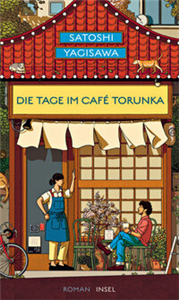
Ein Café in Tokio, Kaffeeduft und große Gefühle in kleinen Gesten Kaum betritt man den kleinen Laden in der Seitenstraße des belebten Tokioter Stadtviertels Yanaka, umfängt einen das herrliche Aroma frisch gebrühten Kaffees. Das Café Torunka wird seit zwanzig Jahren von einem begeisterten Cafébesitzer betrieben, zusammen mit seiner Tochter und dem jungen schweigsamen Shuichi, der dort aushilft. Seit einiger Zeit kommt sonntags immer eine Frau ins Café, Chinatsu, die sich in rätselhafte Geschichten hüllt, und die stets eine kleine Balletttänzerin aus ihrer Serviette faltet und zurücklässt. Sie behauptet, Shuichi von früher zu kennen, doch dieser kann sich keinen Reim auf sie machen. Erst als er beginnt, sie nach ihrem Besuch ein Stück zu begleiten, öffnet sie sich ihm wirklich – und ihre gemeinsamen Erinnerungen lassen eine neue Freundschaft entstehen … Der neue Roman des internationalen Bestsellerautors Satoshi Yagisawa versammelt bittersüße, herzerwärmende Geschichten um Liebe und Verlust rund um das Café Torunka und die besonderen Menschen, die sich hier begegnen.


Through the Fiction of Phebe Gibbes places this prolific, newly recovered English writer at the centre of the revolutionary period. Gibbes's novels mark the struggles of women for agency in an expanding British empire, from the Seven Years' War to revolutions in American, Haiti and France. With Gibbes as a nexus in a lineage of women writers from Aphra Behn to Jane Austen, Kathryn S. Freeman offers a valuable perspective on the 'long eighteenth century', with Gibbes' own evolution mirroring that of the larger period. The study traces the development of Gibbes' authorial voice from satire to irony through a range of female characters subverting patriarchal oppression. Freeman guides the reader through patterns of narrative voice, concerns with gender and sexuality, and elements of wordplay through detailed discussion of five novels representing Gibbes' evolving representation of a subversive female subjectivity.
Trusted Partner

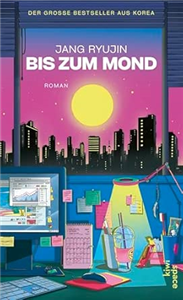
Der Bestseller aus Südkorea, der Healing Fiction und Female Finance vereint Jang Ryujins Debütroman »Bis zum Mond« hat in Südkorea einen regelrechten Hype ausgelöst. Drei junge Frauen, die für einen der führenden Snack-Hersteller Koreas arbeiten, kämpfen mit mittelmäßigen Jobs und winzigen Wohnungen in Seoul – fast so klein wie Schuhkartons. Als eine der Freundinnen in Kryptowährungen investiert und dabei Erfolg hat, steigen auch die anderen ein. Doch führt dieser Schritt wirklich zum großen Geld und zur Freiheit vom öden Bürojob? Bestseller aus Südkorea: Ein literarischer Hype, der Leserinnen und Leser begeistert. Kryptowährungen & Female Finance: Die mutige Entscheidung, sein sowieso schon schmales Geld zu investieren. Healing Fiction: Eine Geschichte, die von Selbstbestimmung und dem Überwinden sozialer Grenzen erzählt. Der Roman erzählt eine bittersüße Geschichte über soziale Klasse, Reichtum und die Kraft starker Frauenfreundschaften. Es geht darum, sein Schicksal selbst in die Hand zu nehmen und neue Wege zu gehen.
Trusted Partner

Introduction - Peter Elmer 1 Medicine in western Europe in 1500 - Sachiko Kusukawa 2 The sick and their healers - Silvia De Renzi 3 The medical renaissance of the sixteenth century: Vesalius, medical humanism and bloodletting - Sachiko Kusukawa 4 Medicine and religion in sixteenth-century Europe - Ole Peter Grell 5 Chemical medicine and the challenge to Galenism: the legacy of Paracelsus, 1560-1700 - Peter Elmer 6 Policies of health: diseases, poverty and hospitals - Silvia De Renzi 7 Old and new models of the body - Silvia De Renzi 8 Women and medicine - Silvia De Renzi 9 The care and cure of mental illness - Peter Elmer 10 War, medicine and the military revolution - Ole Peter Grell 11 Environment, health and population - Mark Jenner 12 Medicine and health in the age of European colonialism - Andrew Wear 13 Organization, training and the medical marketplace in the eighteenth century - Laurence William Brockliss ;
Trusted Partner

Any reader who has ever visited Asia knows that the great bulk of Western-language fiction about Asian cultures turns on stereotypes. This book, a collection of essays, explores the problem of entering Asian societies through Western fiction, since this is the major port of entry for most school children, university students and most adults. In the thirteenth century, serious attempts were made to understand Asian literature for its own sake. Hau Kioou Choaan, a typical Chinese novel, was quite different from the wild and magical pseudo-Oriental tales. European perceptions of the Muslim world are centuries old, originating in medieval Christendom's encounter with Islam in the age of the Crusades. There is explicit and sustained criticism of medieval mores and values in Scott's novels set in the Middle Ages, and this is to be true of much English-language historical fiction of the nineteenth and early twentieth centuries. Even mediocre novels take on momentary importance because of the pervasive power of India. The awesome, remote and inaccessible Himalayas inevitably became for Western writers an idealised setting for novels of magic, romance and high adventure, and for travellers' tales that read like fiction. Chinese fictions flourish in many guises. Most contemporary Hong Kong fiction reinforced corrupt mandarins, barbaric punishments and heathens. Of the novels about Japan published after 1945, two may serve to frame a discussion of Japanese behaviour as it could be observed (or imagined) by prisoners of war: Black Fountains and Three Bamboos.
Trusted Partner
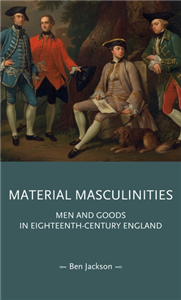
Material Masculinities examines the material and consumer practices of over 1000 men from the middling and upper ranks of eighteenth-century society, c.1650-1850. It draws upon evidence from over 35 archives and museum collections to detail how material objects were integral for men in forming identities and shaping experiences. For men of all social ranks, ages, and geographic locations, material knowledge was imperative for masculine social identities to operate in a commercial society. Before the centralised factory and widespread mass-produced goods, men personalised and repaired their goods; products were shaped by men's attitudes and concerns. Objects were tools in men's identity formation and the exercise of social and gendered power. There was a reciprocal relationship between men and goods in this period; men were active agents of material and commercial change driving product and aesthetic innovation.
Trusted Partner
Penny politics offers a new way to read early Victorian popular fiction such as Jack Sheppard, Sweeney Todd, and The Mysteries of London. It locates forms of radical discourse in the popular literature that emerged simultaneously with Brittan's longest and most significant people's movement. It listens for echoes of Chartist fiction in popular fiction. The book rethinks the relationship between the popular and political, understanding that radical politics had popular appeal and that the lines separating a genuine radicalism from commercial success are complicated and never absolute. With archival work into Newgate calendars and Chartist periodicals, as well as media history and culture, it brings together histories of the popular and political so as to rewrite the radical canon.
Trusted Partner
 Trusted Partner
Trusted Partner
Trusted Partner


Aus dem Englischen von Elisabeth Liebl
Trusted Partner


Dieser Abschlussband von Lems Essays enthält nur Arbeiten, die in der Insel-Ausgabe der Essays (1981) nicht enthalten waren. Stärker als die früheren Bände ist dieser persönlich bestimmt. Einmal handelt es sich um Essays, die autobiografisch sind oder sich auf das eigene Werk beziehen. Zum anderen gibt es Vorworte zu Rezensionen von Büchern und Autoren, die Lem menschlich besonders nahestehen: Szymon Kobyliński, Władysław Bartoszewski und Jan Józef Szczepański. Neben Rezensionen, die Lem deutsche RIAS Berlin schrieb, vornehmlich über populärwissenschaftliche und pseudowissenschaftliche Bücher, aus denen Lems rationalistische Denkhaltung offenbar wird, und spekulativen Aufsätzen enthält dieser Band auch einige von Lems scharfsinnigsten Kritiken zu Autoren, denen er sich geistesverwandt fühlt oder die ihm widerstreben: Dick, Borges, die Strugatzkis und eine scharfe Abrechnung mit der Gattung, der der Großteil von Lems eigenem Werk zugezählt wird: der Science-Fiction. Eine beachtliche Anzahl der Essays schrieb Lem gleich in deutscher Sprache. Weitere Essays von Stanisław Lem liegen in den Bänden Sade und die Spieltheorie und Über außersinnliche Wahrnehmungen vor.
Trusted Partner
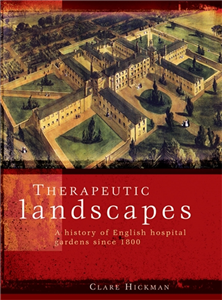
Therapeutic landscapes uniquely brings together historical and contemporary debates on the use of the garden as a therapeutic space. Hickman narrates the story of the landscapes associated with psychiatric, general and specialist medical institutions and asks what did they look like, how were they used and how did this relate to medical concepts? It traces the history of these gardens from the grottos, Chinese galleries and summer houses of elite nineteenth-century lunatic asylums, through Florence Nightingale's championing of the Victorian pavilion hospital design with its courtyard gardens, and the open-air institutions of the Edwardian period with their revolving chalets. It concludes with a discussion of new hospital gardens being created by designers such as Dan Pearson in the twenty-first century. This book will be essential reading for those interested in the histories of place, space and material culture, and in particular medical historians, garden historians and historical geographers. ;
Trusted Partner
Trusted Partner

 Trusted Partner
Trusted Partner
Trusted Partner
Trusted Partner
Trusted Partner
Trusted Partner
Trusted Partner
Trusted Partner
Trusted Partner
 Trusted Partner



