Wilfrid Laurier University Press
Wilfrid Laurier University Press is a scholarly press based in Waterloo, Ontario.
View Rights Portal
Wilfrid Laurier University Press is a scholarly press based in Waterloo, Ontario.
View Rights Portal
Red Hen Press seeks to discover and publish works of literary excellence, support diversity in a creative industry, promote literacy in our local schools, and serve as a hub for literary events and enrichment. We are a community of readers and writers who are actively engaged in the essential human practice known as literature.
View Rights Portal

 Trusted Partner
Trusted Partner
Trusted Partner
Trusted Partner
Trusted Partner
Trusted Partner
Trusted Partner
Trusted Partner
Trusted Partner


Aus dem Englischen von Juliane Zaubitzer
Trusted Partner


Lange erzählten Historiker der Bundesrepublik Geschichten von wachsendem Wohlstand, Modernisierung, erlernter Liberalität und stabiler Demokratie. Deutschland schien »im Westen« angekommen. Die Herausforderungen der Gegenwart aber verändern unseren Blick auf die jüngere Vergangenheit: Klimawandel, neuer Nationalismus, Ungleichheit und zunehmende Gewalt im politischen Alltag führen vor Augen, was mit diesen Geschichten nicht stimmte – und was sie nicht erzählten. Mit Blick auf zentrale Themen der Zeitgeschichte präsentieren renommierte Historiker:innen wie Frank Bösch, Benno Gammerl, Roman Köster, Simone Derix, Dominik Rigoll, Lauren Stokes und Winfried Süß in diesem Band neue Perspektiven auf die bundesdeutsche Geschichte seit 1945.
Trusted Partner
Trusted Partner
Trusted Partner
Trusted Partner
Trusted Partner
Trusted Partner
 Trusted Partner
Trusted Partner
Trusted Partner
Trusted Partner
Trusted Partner

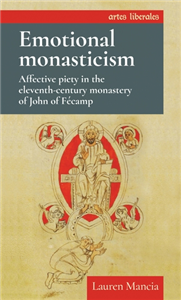
Medievalists have long taught that highly emotional Christian devotion, often called 'affective piety', appeared in Europe after the twelfth century and was primarily practiced by communities of mendicants, lay people and women. Emotional monasticism challenges this view. The first study of affective piety in an eleventh-century monastic context, it traces the early history of affective devotion through the life and works of the earliest known writer of emotional prayers, John of Fécamp, abbot of the Norman monastery of Fécamp from 1028-78. Exposing the early medieval monastic roots of later medieval affective piety, the book casts a new light on the devotional life of monks in Europe before the twelfth century and redefines how medievalists should teach the history of Christianity.
Trusted Partner
Trusted Partner
Trusted Partner