Your Search Results

      • World for kids

        Our passion is to show kids, how colourful and fascinating the world is. There is not only one way to live but so many. We love curious children and we do the books they need to explore the world. So we do travel books for kids and novels for the journey in a hammock.

        View Rights Portal
      • Fenek's World

        WE BELIEVE THAT THE GOOD TRIUMPHS Where did the idea to make children’s educational tales that are different from the rest come from? One day, we decided to create a character who would be loved by thousands of children. We looked at our youngest and realised how much depends on us, adults.   It dawned on us that if we bring up our children to become good and noble people, there is a big chance that they will do the same in the future. They will pass the love they got from us on to their children, who will then do the same, and so on…

        View Rights Portal
      • Trusted Partner
        November 1988

        Über Deutschland reden

        by Martin Walser

        Seit zehn Jahren beschäftigt sich Martin Waiser mit einem Thema, das in der öffentlichen Meinung, bei den Politikern und bei den Intellektuellen als obsolet gilt: Deutschland. Und er beharrt darauf, daß das Wort Deutschland nicht nur im Wetterbericht Verwendung findet. Für Waiser bezeichnet dieses Wort vielmehr ein Fehlendes, das nicht dadurch einfach zu beseitigen ist, daß man es als geschichtlich notwendig ansieht, als verdientes, zu bejahendes Resultat der Geschichte. Eine solche Auffasssung ist für Waiser gerade unhistorisch - versperrt sie doch von vornherein die Möglichkeiten jedweden historischen Prozesses.

      • Trusted Partner
        Society & culture: general

        A TIME OF WOLVES: GERMANY AND THE GERMANS 1945 - 1955

        by Harald Jähner

        A dance among the ruins: Harald Jähner’s major new portrait of Germany’s post-war societyCountless former soldiers drift through the towns and cities; countless children grow up without a father. The old order has been destroyed and although the streets seem eerily empty, the traditional annual street carnivals are soon back in full swing, jazz can be heard among the ruins, intellectuals rekindle a culture of discussion and debate.Harald Jähner’s book is the first history of Germany’s national mentality in the immediate post-war period. It focusses on the German people in all their diversity: the “re-educators” Alfred Döblin and Rudolf Herrnstadt, who tried in two different zones of occupation to win the trust of their fellow Germans; Beate Uhse, owner of a mail order company for “marital hygiene”, who questioned the old moral code governing what was deemed proper; the many nameless black market traders, pockets stuffed with Lucky Strike cigarettes; stylish housewives sitting at kidney-shaped coffee tables that were to become emblematic for a freer and affordable world. Using major political developments as a backdrop, this book weaves a series of life stories into a nuanced panorama that makes the monumental changes affecting the nation tangible for its readers. 1945 to 1955 was a raw, wild decade poised between two eras, portrayed here as a period that proved decisive for Germany’s future development – and one starkly different to how most Germans imagine it today.

      • Trusted Partner
        July 2018

        Deutschland und Israel

        by Amos Oz, Lydia Böhmer, Norbert Lammert

        Als Kind im Jerusalem der 40er Jahre erlebt Amos Oz den Hass auf Deutschland als etwas Absolutes, Unverrückbares. Die Deutschen sind Mörder, ihre Sprache, ihre Produkte geächtet, das Wiedergutmachungsabkommen von 1952 noch als Schande verschrien. Und in jedem Pass des jungen Landes steht "Gültig für alle Länder – mit Ausnahme von Deutschland". Doch dann sind da die Bücher, die Literatur, dann liest er und das ganze Land Lenz, Böll, Grass, und ein Wandel vollzieht sich, im Kleinen wie im Großen, in ihm wie im Staate Israel … Amos Oz kombiniert persönliche Erfahrungen mit historisch-politischem Nachdenken. Auf diese Weise liefert er eine beeindruckende Bestandsaufnahme des alles andere als normalen Verhältnisses zweier Nationen. Ein Buch über Deutschland, über Israel, über den mehr als sechzig Jahre währenden Prozess der Verständigung. Und zur gleichen Zeit ein Plädoyer für die brückenschlagende Kraft des Erzählens.

      • Trusted Partner
        February 1992

        Über Juden in Deutschland

        by Gert Mattenklott

        Der Schriftsteller und Literaturwissenschaftler Gert Mattenklott schaut hinter die großen Linien historischer Darstellung, fragt nach dem Innenleben, den Erfahrungen von Juden in Deutschland. Hier ist der Plural genau zu nehmen: Mattenklott zeichnet eine Vielzahl jüdischer Lebensgeschichten nach, die alle zu der einen Geschichte von Juden in Deutschland und zu deren tiefem Einschnitt nach 1933, der Entrechtung, Vertreibung und dem Völkermord, gehören. Am Leitfaden von Korrespondenzen zeichnet Gert Mattenklott nach, wie sich jüdisches Bewußtsein äußert. Das Spektrum reicht von unbekannten Kaufleuten der frühen Neuzeit bis zu den großen Briefschreibern des 19. und 20. Jahrhunderts. Die Gegenwart ist nicht durch Briefe, sondern durch Gespräche dargestellt, die Gert Mattenklott geführt hat.

      • Trusted Partner
        December 1995

        Das nationalsozialistische Deutschland

        1933–1945. Die Entfesselung der Gewalt: Rassismus und Krieg

        by Ludolf Herbst, Hans-Ulrich Wehler

        Das vorliegende Buch von Ludolf Herbst macht es sich zur Aufgabe, diese Prozesse zu untersuchen. Dabei stehen Krieg und Rassenpolitik im Mittelpunkt. Sie werden jedoch nicht isoliert betrachtet, sondern mit wesentlichen innenpolitischen und gesellschaftlichen Entwicklungen verknüpft. Dies geschieht in der Annahme, daß die außerordentliche Dynamik, mit der das nationalsozialistische Deutschland in der Außen- und Rassepolitik agierte, wesentlich von diesen korrespondierenden Bereichen mitgeprägt wurde.

      • Trusted Partner
        Fiction
        September 2017

        A Vision of Battlements

        by Anthony Burgess

        by Andrew Biswell, Paul Wake

        A Vision of Battlements is the first novel by the writer and composer Anthony Burgess, who was born in Manchester in 1917. Set in Gibraltar during the Second World War, the book follows the fortunes of Richard Ennis, an army sergeant and incipient composer who dreams of composing great music and building a new cultural world after the end of the war. Following the example of his literary hero, James Joyce, Burgess takes the structure of his book from Virgil's Aeneid. The result is, like Joyce's Ulysses, a comic rewriting of a classical epic, whose critique of the Army and the postwar settlement is sharp and assured. The Irwell Edition is the first publication of Burgess's forgotten masterpiece since 1965. This new edition includes an introduction and notes by Andrew Biswell, author of a prize-winning biography of Anthony Burgess.

      • Trusted Partner
      • Trusted Partner
        Humanities & Social Sciences
        July 2025

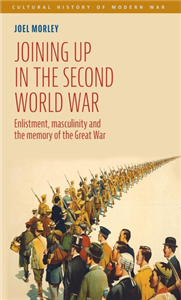
        Joining up in the Second World War

        Enlistment, masculinity and the memory of the Great War

        by Joel Morley

        This book connects the First and Second World Wars. It uses oral histories and Mass Observation material to explore men's attitudes to Second World War enlistment and the relationship they perceived between military service and masculinity, and how these were influenced by understandings of the First World War. Locating the cultural legacy of First World War in the subjectivities of men who participated in the Second World War demonstrates the breadth of sources that informed men's understandings of the First World War in interwar Britain. Its cultural legacy was omnipresent and diverse, and informed young men's attitudes and service preferences, but it reinforced Edwardian conceptions of wartime masculinity as often as it undermined them. Two decades after the First World War ended, they remained resilient in the subjective understandings of men who grew up in the Great War's shadow.

      • Trusted Partner
        Humanities & Social Sciences
        January 2013

        Christian Dualist Heresies in the Byzantine World, c. 650-c. 1450

        by Janet Hamilton, Bernard Hamilton

        Christian dualism originated in the reign of Constans II (641-68). It was a popular religion, which shared with orthodoxy an acceptance of scriptual authority and apostolic tradition and held a sacramental doctrine of salvation, but understood all these in a radically different way to the Orthodox Church. One of the differences was the strong part demonology played in the belief system. This text traces, through original sources, the origins of dualist Christianity throughout the Byzantine Empire, focusing on the Paulician movement in Armenia and Bogomilism in Bulgaria. It presents not only the theological texts, but puts the movements into their social and political context.

      • Trusted Partner
        Literature & Literary Studies
        January 2013

        Eleventh-century Germany

        The Swabian chronicles

        by I. Robinson

        Three of the most important chronicles of eleventh-century Germany were composed in the south-western duchy of Swabia. The chronicles reveal how between 1049 and 1100 the centripetal attraction of the reform papacy became the dominant fact of intellectual life in German reformed monastic circles. In the abbey of Reichenau Herman 'the Lame' composed a chronicle of the reign of Emperor Henry III (1039-56). His pupil, Berthold of Reichenau, continued his master's work, composing a detailed account of 1076-1079 in Germany. Bernold, a clergyman of Constance, continued the work of Herman and Berthold in a text containing the fullest extant account of 1080-1100. Herman's waning enthusiasm for the monarchy and growing interest in the newly reformed papacy were intensified in Berthold's chronicle, and writing in the new context of the reformed monasteries of south-western Germany, Bernold preached total obedience to the Gregorian papacy. The Swabian chronicles are an indispensable resource to the student of the changing loyalties and conflicts of eleventh-century Germany.

      • Trusted Partner
        Humanities & Social Sciences
        February 2026

        AIDS in Soviet Russia

        A story of deception, despair and hope

        by Rustam Alexander

        The first book to tell the shocking story of the AIDS crisis in Soviet Russia. Throughout the 1980s, as the world was grappling with the escalating crisis of AIDS, Soviet Russia continued to deny there was a problem. Arguing that the disease was limited to foreigners and 'immoral' groups, the government failed to take meaningful action, long past the point other countries had begun to recognise the full scale of the threat. In this ground-breaking book, Rustam Alexander tells the story of AIDS in Soviet Russia. Fixated on disinformation, censorship and the persecution of marginalised communities, the Soviet authorities wasted precious time, allowing the epidemic to strike at the very heart of the nation: its children. Yet, despite the government's failure, a number of brave journalists, doctors and nascent gay groups decided to take matters into their own hands and engage in full-fledged AIDS activism. Tracing the political and social response to AIDS in the final years of the Soviet era, Alexander sheds light on the devastating consequences of government inaction. He draws on personal stories, media reports and archival materials to provide a riveting account of the Russian people's fight against AIDS amid the tumultuous transformations of Gorbachev's perestroika.

      • Trusted Partner
        The Arts
        June 2026

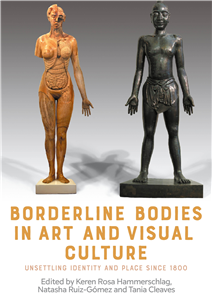
        Borderline bodies in art and visual culture

        Unsettling identity and place since 1800

        by Keren Hammerschlag, Natasha Ruiz-Gómez, Tania Anne Cleaves

        Borderline bodies offers original interpretations of visual representations of human bodies as bounded and unbounded, fortified and permeable, mobile and static-subject to borders and able to traverse and challenge them. It also takes as its focus images and objects that might be considered 'borderline' because they sit at the intersection of disciplines or sit outside accepted notions of what constitutes serious 'art.' By mapping the ways human bodies traverse borders and straddle-even dismantle-categories, this volume's essays approach afresh the relationship of bodies to traditional modes of representation, especially in art and medicine, and encourage us to think anew about how we understand the relationship between human corporeality, identity and place. Critical transdisciplinary and transnational analyses of objects and images from a range of geographies shed new light on the themes of: bodies and identity; typologies of the body; racialised bodies; 'normal' and 'abnormal' bodies; encounters between bodies; bodies in transition; bodies and mobility; and the bounded and unbounded human body. The outcome is a fresh approach to depictions of the human body produced for the purposes of artistic and medical education, aesthetic edification, and scientific and professional advancement, which disrupts assumptions about the normative human body perpetuated through Western image-making traditions.

      • Trusted Partner
        Medicine
        February 2025

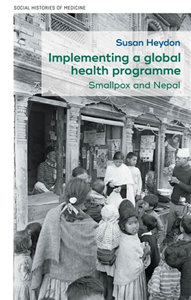
        Implementing a global health programme

        Smallpox and Nepal

        by Susan Heydon

        Worldwide eradication of the devastating viral disease of smallpox was devised as a distant global policy, but success depended on implementing a global vaccination programme within nation states. How this was achieved remains relevant and topical for responding to today's global communicable disease challenges. The small and poor Himalayan kingdom of Nepal faced enormous geographical and infrastructure challenges if it was going to succeed in a nationwide vaccination programme. This book acknowledges the key role of the WHO but disrupts the top-down, centre-led standard narrative. Against a background of widespread internal political and social change, Nepal's programme was expanded, effectively decentralised and a vaccination strategy introduced that aligned with people's beliefs. Few foreign personnel were involved.

      • Trusted Partner
        Humanities & Social Sciences
        April 2025

        Britain’s 'Mr X’

        Sir Frank Roberts and the making of British foreign policy, 1930-68

        by Jonathan Colman

        Over four decades as a diplomat, Sir Frank Roberts dealt with headline issues, including policy towards Germany during the years of appeasement, the Second World War alliance with the Soviet Union, the origins of the Cold War, NATO affairs, the Berlin and Cuban Missile Crises, European integration, and relations with the Federal Republic of Germany. Collaborating with the renowned American diplomat, George F. Kennan (the cryptonymous author 'X' of an influential 1947 article), his despatches from Moscow in 1946 shaped Britain's Cold War strategy. In 1954 he played an integral part in the diplomacy behind the rearmament of the Federal Republic and her incorporation into NATO, helping to build an enduring structure of transatlantic security. Roberts' career sheds new light on British foreign policy across an era in which Britain slipped from global pre-eminence to regional power status.

      • Trusted Partner
        Humanities & Social Sciences
        June 2025

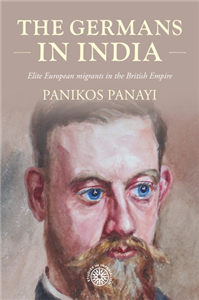
        The Germans in India

        Elite European migrants in the British Empire

        by Panikos Panayi

        Based on years of research in libraries and archives in England, Germany, India and Switzerland, this book offers a new interpretation of global migration from the early nineteenth until the early twentieth century. Rather than focusing upon the mass transatlantic migration or the movement of Britons towards British colonies, it examines the elite German migrants who progressed to India, especially missionaries, scholars and scientists, businessmen and travellers. The story told here questions, for the first time, the concept of Europeans in India. Previous scholarship has ignored any national variations in the presence of white people in India, viewing them either as part of a ruling elite or, more recently, white subalterns. The German elites undermine these conceptions. They developed into distinct groups before 1914, especially in the missionary compound, but faced marginalisation and expulsion during the First World War.

      • Trusted Partner
        October 2015

        Jugend 2015

        17. Shell Jugendstudie

        by Herausgegeben von Shell Deutschland

      • Trusted Partner
        July 2004

        Jugend 2002

        14. Shell Jugendstudie

        by Herausgegeben von Shell Deutschland

      • Trusted Partner
        October 2022

        What Does the Ball Think?

        Why football is not just kicking

        by Johannes Schweikle, Oliver Lück

        A football is a moody thing, and the art of mastering it a highly challenging concern. Whether fan or philosopher, football is a fascination, and its various facets are revealed in this anthology with memorable, intelligent and curious contributions. How and with what (human rights-violating) methods did Qatar prepare for the World Cup? Actress Christiane Paul explains why she supports FC Bayern. Herman van Veen explains the difference between Dutch and German football fans, and the report 'Five balls for Angola' takes readers on a journey to football in Africa. A book for dedicated fans and critical football observers.

      Subscribe to our

      newsletter