
Hirzel Verlag Stuttgart
Non-fiction books (f.e. society, health, ecology, evolution, philosophy) specialist books (f.e chemistry, physics, ancient history, history of science/medicine, German studies)
View Rights Portal Trusted Partner

Non-fiction books (f.e. society, health, ecology, evolution, philosophy) specialist books (f.e chemistry, physics, ancient history, history of science/medicine, German studies)
View Rights Portal
 Trusted Partner
Trusted Partner
Trusted Partner
Trusted Partner
Trusted Partner


Leó Szilárd is a brilliant physicist - although he originally began his studies in Berlin without even being enrolled. On long walks home from university, he discusses scientific issues of all kinds with his professor and neighbour Albert Einstein. Szilárd, who is of Jewish descent, flees to London in 1933. His goal is to prevent the Germans from being the first to have nuclear weapons. With Albert Einstein and other scientists, he puts himself at the service of the American government to advance the development of an atomic bomb for defence purposes. When he realises that the Manhattan Project is not about defence, but about an attack on Japan, he is horrified. Author and journalist Arne Molfenter traces the life of this brilliant man whose invention was used completely against his intentions. It is an exciting book about a scientist whose research influenced the course of history.
Trusted Partner
Trusted Partner


Die Tagebücher des Schriftstellers und Philosophen Günther Anders (1902–1992) zählen zu den bedeutendsten literarischen Journalen des 20. Jahrhunderts. Seine zahlreichen, Jahrzehnte übergreifenden Notizen, von ihm selbst nie zu einem geschlossenen Werk zusammengestellt, sondern bruchstückhaft in verschiedenen seiner Bücher zitiert (so auch in seinem Hauptwerk Die Antiquiertheit des Menschen): Hier werden sie nun erstmals – in exemplarischer Auswahl – chronologisch angeordnet und zusammengestellt. Anders, der eigene schriftstellerische Projekte zeitlebens zurückstellte und als Warner vor einer neuen Atomkatastrophe international bekannt wurde, hat wie kein zweiter Autor deutscher Sprache die Erfahrungen von Flucht, US-Exil, Heimkehr ins Nachkriegseuropa und seine Eindrücke von Reisen zu Schauplätzen des Grauens wie Auschwitz und Hiroshima darzustellen gewußt.
Trusted Partner

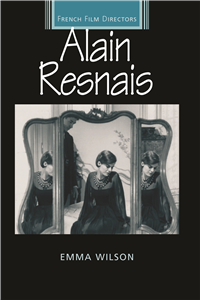
Alain Resnais, director of 'Hiroshima mon amour' (1959) and 'L'Annee derniere a Marienbad' (1961), has transformed the representation of memory, fantasy and desire in modern cinema. This illuminating introduction to his work, extending from his earliest documentaries to the musical films of the last decade, traces the evolving patterns of his filmmaking, its changing reflections on mortality, guilt, chance and human doubt. Exploring questions of the time-image, of trauma, of the senses, this volume sets Resnais' films in the context of important current debates in film theory, and provides a concise account of critical discussions of his work in France and beyond. Yet it also offers a highly personal and detailed engagement with individual images and scenes in Resnais' films. A passionate and partial defence of Resnais' work, old and new, this volume stands apart in its attention to the more tangible and moving pleasures of his films, their pathos, rigour and visual beauty. ;
Trusted Partner

Alain Resnais, director of 'Hiroshima mon amour' (1959) and 'L'Annee derniere a Marienbad' (1961), has transformed the representation of memory, fantasy and desire in modern cinema. This illuminating introduction to his work, extending from his earliest documentaries to the musical films of the last decade, traces the evolving patterns of his filmmaking, its changing reflections on mortality, guilt, chance and human doubt. Exploring questions of the time-image, of trauma, of the senses, this volume sets Resnais' films in the context of important current debates in film theory, and provides a concise account of critical discussions of his work in France and beyond. Yet it also offers a highly personal and detailed engagement with individual images and scenes in Resnais' films. A passionate and partial defence of Resnais' work, old and new, this volume stands apart in its attention to the more tangible and moving pleasures of his films, their pathos, rigour and visual beauty.
Trusted Partner

When the atomic bomb exploded over Hiroshima on 6 August 1945, it precipitated a nuclear age that shaped the Cold War and post-Cold War periods. States of suspense is about the representation of this nuclear age in United States literature from 1945-2005. The profound psychological and cultural impact of living in anticipation of the Bomb is apparent not only in end-of-the-world fantasies, but also in mainstream and postmodern literature. This book traces the ways in which key motifs - the fragility of reality; the fear of closure; the inadequacies of language to represent the world - move between nuclear and postmodern cultures of the Cold War era. Taking three symbolically threatened environments - the home, the city, the planet - the book explores their recasting as 'nuclear places' in literature, and shows how these nuclear concerns resonate with those of other cultures. States of suspense will be of interest to students and scholars of American literature, and postmodern and technological culture. It will also be interest to those more generally intrigued by the cultural fallout of the nuclear age. ;
Trusted Partner



