Your Search Results

      • Guangdong People's Publishing House Ltd.

        Guangdong People’s Publishing House (GPPH), founded in 1951, has the longest history among 20 publishing houses in Guangdong Province. We are a comprehensive publishing house, consisting of independent editorial departments on Social Science, History, Politics, Culture, Education and etc. We have published over 20,000 different kinds of books in the past 60 years with a rough estimation of over 800 million copies. More than 790 titles have won national and provincial awards.    From 1997 to 2004, GPPH has successively won the National Book Award, the Five-Ones Project Award and the China Book Award. Many best-selling titles have won favor of readers as well as good reputation in academic circles. GPPH has also been honored as “Good Publishing House” by the General Administration of Press (GAP) many times. In 2006, GPPH has been awarded as one of “the pioneering publishing houses in copyright trade” by the State Copyright Bureau.   As for copyright trading, we have already cooperated with publishers from many countries, buying and selling book copyrights with a wide range of genre. Our most popular titles includes: Concise History of Chinese Family, What is the China Dream, Brief Introduction of Chinese Classical Philosophy, etc.

        View Rights Portal
      • Hunan People's Publishing House

        Hunan People's Publishing House is a comprehensive publishing house that mainly edits, publishes and distributes philosophy, literature, history and social sciences.

        View Rights Portal
      • Trusted Partner
        Humanities & Social Sciences
        March 2017

        Britain in China

        by Robert Bickers

        This is a study of Britain's presence in China both at its peak, and during its inter-war dissolution in the face of assertive Chinese nationalism and declining British diplomatic support. Using archival materials from China and records in Britain and the United States, the author paints a portrait of the traders, missionaries, businessmen, diplomats and settlers who constituted "Britain-in-China", challenging our understanding of British imperialism there. Bickers argues that the British presence in China was dominated by urban settlers whose primary allegiance lay not with any grand imperial design, but with their own communities and precarious livelihoods. This brought them into conflict not only with the Chinese population, but with the British imperial government. The book also analyzes the formation and maintenance of settler identities, and then investigates how the British state and its allies brought an end to the reign of freelance, settler imperialism on the China coast. At the same time, other British sectors, missionary and business, renegotiated their own relationship with their Chinese markets and the Chinese state and distanced themselves from the settler British.

      • Trusted Partner
        Literature & Literary Studies
        January 2013

        The English manor c.1200–c.1500

        by Mark Bailey

        Provides a comprehensive introduction and essential guide to one of the most important institutions in medieval England and to its substantial archive. This is the first book to offer a detailed explanation of the form, structure and evolution of the manor and its records. Offers translations of, and commentaries upon, each category of document to illustrate their main features. Examples of each category of record are provided in translation, followed by shorter extracts selected to illustrate interesting, commonly occurring, or complex features. A valuable source of reference for undergraduates wishing to understand the sources which underpin the majority of research on the medieval economy and society.

      • Trusted Partner
        Humanities & Social Sciences
        June 2025

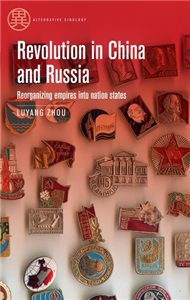
        Revolution in China and Russia

        Reorganizing empires into nation states

        by Luyang Zhou

        Most scholars believe that China's nationality policy, like that of other socialist states, imitated the Soviet nationality model, a system which has been termed an "affirmative action empire." This book offers two contributions to the literature which run counter to this convention. First, it argues that the People's Republic of China (PRC) and the Soviet Union (USSR) were different; while the PRC was aimed to build an ideal-typical nation-state, the USSR was an open union of nation-states that was only temporarily confined to a physical territory. Second, while scholars who have noted this difference attribute it to contextual factors, such as ethnic structure, geopolitical status, and Russia's intervention into the Chinese Revolution, this book contends that context shaped the Sino-Soviet difference, yet it did not determine it. Rather, there was significant leeway between the implications of the contextual factors, and what the policy-designers ultimately established. This book probes who held agency, and how these individuals bridged this gap.

      • Trusted Partner
      • Trusted Partner
      • Trusted Partner
      • Trusted Partner
        September 2016

        House-of-Night - Die Storys

        Alle 4 Storys in einem Band

        by Cast, P.C.; Cast, Kristin

      • Trusted Partner
        Humanities & Social Sciences
        March 2026

        Negotiating identity conflicts in a fragmenting world order

        by Paul Willem Meerts, Mark Anstey

        At every level of human interaction new levels of identity-based tension are in evidence. Contributors to this book explore facets of fragmentation processes within systems of state and interstate organisation, how they influence the use of negotiation, and how negotiation might be used to effect renewed coherence. Following Anstey's (Ch1) introductory chapter framing the nature and shape of fragmentation dynamics, Zartman (Ch 2) argues that the use of negotiation as a process of conflict resolution is deeply shaped by identity groups whose internal coherence is dependent on sustaining a negative identity of others. International relations are no longer solely the realm of experienced diplomats but are shaped as Meerts (Ch3) points out by politicians seeking to be responsive to voting publics rather than wider concerns. Anstey digs into problems of fragmentation (Ch. 4) and Troitskiy (Ch 5) points out how a reluctant acceptance of the power of 'the other' can lead to a form of strategic stability in relations. Anstey and Meerts (Ch 6) point out in their analysis of the Israeli-Palestinian case as an identity conflict turned very bad. Guggenbuhl (Ch 7 ) reveals how structures and processes have been designed within the EU to prevent, contain and regulate conflicts to limit risks of confrontation and fragmentation. Schuessler (Ch 8) to advocates a shift away from a template or roadmap approach to EU membership to a cohesion based on non-dominance. There is still a strong desire on the part of some states, like Northern Macedonia, to become EU members, as reflected in Manton's (Ch 9). Paula Garzon and Frans Schram explain the success of the Colombia Peace Negotiations (Ch 10), while Odigie and da Rocha (Ch 11) analyse the struggle faced by ECOWAS to influence coup leaders in Mali to return to constitutional government and changes of government by constitutional means. Liang (Ch12) discusses how the internet as the modern vehicle of inter-state, inter-group and interpersonal communication has become weaponised. In Ch 13 Anstey draws some lessons from contributions to the compilation.

      • Trusted Partner
      • Trusted Partner
      • Trusted Partner
        Humanities & Social Sciences
        March 2017

        Science and society in southern Africa

        by Saul Dubow

        This collection, dealing with case studies drawn from South Africa, Zimbabwe, Mozambique and Mauritius, examines the relationship between scientific claims and practices, and the exercise of colonial power. It challenges conventional views that portray science as a detached mode of reasoning with the capacity to confer benefits in a more or less even-handed manner. That science has the potential to further the collective good is not fundamentally at issue, but science can also be seen as complicit in processes of colonial domination. Not only did science assist in bolstering aspects of colonial power and exploitation, it also possessed a significant ideological component: it offered a means of legitimating colonial authority by counter-poising Western rationality to native superstition and it served to enhance the self-image of colonial or settler elites in important respects. This innovative volume ranges broadly through topics such as statistics, medicine, eugenics, agriculture, entomology and botany.

      • Trusted Partner
        Humanities & Social Sciences
        April 2021

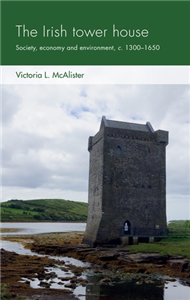
        The Irish tower house

        Society, economy and environment, c. 1300–1650

        by Victoria L. McAlister

        The Irish tower house examines the social role of castles in late-medieval and early modern Ireland. It uses a multidisciplinary methodology to uncover the lived experience of this historic culture, demonstrating the interconnectedness of society, economics and the environment. Of particular interest is the revelation of how concerned pre-modern people were with participation in the economy and the exploitation of the natural environment for economic gain. Material culture can shed light on how individuals shaped spaces around themselves, and tower houses, thanks to their pervasiveness in medieval and modern landscapes, represent a unique resource. Castles are the definitive building of the European Middle Ages, meaning that this book will be of great interest to scholars of both history and archaeology.

      • Trusted Partner
      • Trusted Partner
        November 2025

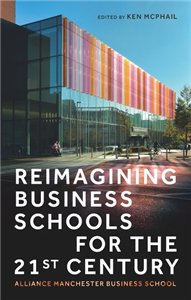
        Reimagining business schools for the 21st century

        Alliance Manchester Business School

        by Kenneth McPhail, James Pendrill

        Whether it's dealing with regional economic disparities, global geopolitical upheaval, climate change, or the impact of new technologies such as artificial intelligence, we are living in pivotal times. To mark its 60th anniversary in 2025, this accessible book from Alliance Manchester Business School outlines in detail how business schools can play a significant role in confronting these huge challenges, and equip the next generation of business leaders with the skills they need to embrace them. Informing public and political debate on the role of business in both the causes and solutions to our biggest challenges the book offers a rethinking of the role of business in society. It will also discuss specific examples of how collaborations with business are leading to impact and change in society. Featuring a range of thought-provoking essays co-authored by eminent academics and business leaders, this collection will challenge the status quo and outline how business and management research is helping address grand challenges, generate economic growth, inform policy development, and define business thinking over the next generation.

      • Trusted Partner
        Humanities & Social Sciences
        May 2009

        Consumerism and the Co-operative movement in modern British history

        Taking stock

        by Lawrence Black, Nicole Robertson

        Despite the abundance and quality of recent historical writing on consumerism, it cannot be said that the modern Co-operative movement (Co-op) has been well served. It has also been by-passed in studies that locate Britons' identity in their consumption. The reasons for this can be found in the widely perceived decline of the Co-op since the 1950s, but also in various historiographical agendas that have resulted in its relative invisibility in modern British history. This book, by demonstrating the variety of broader issues that can be addressed through the Co-op and the vibrancy of new historical research into consumption, seeks to remedy this. Taking stock, both of the Co-op in a broader context and of new approaches to the history of consumption, combines the work of leading authorities on the Co-op with recent scholarly research. It explores the Co-op's distinctive interface between everyday issues and grander idealistic concerns. The chapters intersect to examine a broad range of themes, notably: the politics of consumerism including consumer protection, ethical and fair trading and alternatives to corporate commerce; design and advertising; the Co-op's relations with other components of the labour movement; and its ideology, image and memory. The collection looks at the Co-operative movement locally (through specific case studies), nationally and also in comparison to the European movement. This collection will appeal to academics, researchers, teachers and students of the economic, cultural and political history of twentieth-century Britain. It will also be of interest to academics and students of business studies, and co-operative members themselves. ;

      • Trusted Partner
        Humanities & Social Sciences
        October 2023

        The illusion of the Burgundian state

        by Élodie Lecuppre-Desjardin, Christopher Fletcher

        On 25 January 1474, Charles the Bold, duke of Burgundy, appeared before his subjects in Dijon. Robed in silk, gold and precious jewels and wearing a headpiece that gave the illusion of a crown, he made a speech in which he cryptically expressed his desire to become a king. Three years later, Charles was killed at the battle of Nancy, an event that plunged the Great Principality of Burgundy into chaos. This book, innovative and essential, not only explores Burgundian history and historiography but offers a complete synthesis about the nature of politics in this region, considered both from the north and the south. Focusing on political ideologies, a number of important issues are raised relating to the medieval state, the signification of the nation under the 'Ancien Regime', the role of warfare in the creation of political power and the impact of political loyalties in the exercise of government. In doing so, the book challenges a number of existing ideas about the Burgundian state.

      • Trusted Partner
      • Trusted Partner
        April 2015

        Dark House

        Roman

        by Kastura, Thomas

      Subscribe to our

      newsletter