
Your Search Results
-

-

AITBS Publishers India
We are one of the leading publishers in India dealing in more than 400 titles. We are well reputed for publishing quality books mainly in Medical, Nursing, Pharmacy, Dentistry, Dictionaries, Management, Economics, Mathematics, Engineering and English Literature. We have published many good books authored by learned and eminent Indian authors. We sell and purchase reprint rights. Our aim is to publish good books, useful for students, colleges, professional institutes and public libraries.
View Rights Portal
-
Promoted Content

 Humanities & Social SciencesJuly 2021
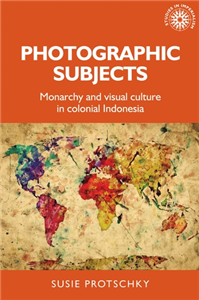
Photographic subjects
Monarchy and visual culture in colonial Indonesia
by Susie Protschky
Winner of the ASAA mid-career book prize in Asian Studies 2020 and joint winner of the 2020 Royal Studies Journal Book Prize Photographic subjects examines photography at royal celebrations during the reign of Queens Wilhelmina (1898-1948) and Juliana (1948-80), a period spanning the zenith and fall of Dutch rule in Indonesia. It is the first monograph in English on the Dutch monarchy and the Netherlands' modern empire in the age of mass and amateur photography. Photographs forged imperial networks, negotiated relations of recognition and subjecthood between Indonesians and Dutch authorities, and informed cultural modes of citizenship at a time of accelerated colonial expansion and major social change in the East Indies/Indonesia. This book advances methods in the uses of photographs for social and cultural history and provides a new interpretation of Queens Wilhelmina and Juliana as imperial monarchs.
-
Promoted Content
-
 Trusted Partner
-
Trusted Partner
-
Trusted Partner
 Humanities & Social SciencesSeptember 2025
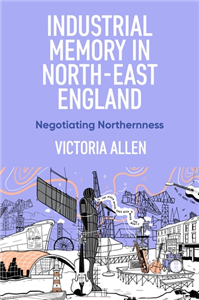
Industrial memory in North East England
Negotiating northernness
by Victoria Allen
Industrial memory in North East England examines how the region's industrial myth and memory have been articulated in the renegotiation of northernness. The book offers a critical contextualisation of the concept of northernness and the English North, and an introduction to the concept of the PopCultural Portfolio, a mixed-methods approach to conjunctural analysis in cultural and memory studies. The book provides six richly illustrated case studies to demonstrate the practical application of cultural studies' expansive and inclusive understanding of texts, bringing together materials from North East football, folk, indie and exhibition culture to establish how the North East's industrial past continues to be remembered and functionalised as industrial memory. In turn, the conjunctural analysis demonstrates how industrial memory is articulated and mythologised as north(east)ernes in contemporary popular culture.
-
Trusted Partner
 Humanities & Social SciencesJuly 2025
International Relations in a multipolar Middle East
by Francesco Belcastro, Edward Wastnidge
This volume explores the international relations of today's Middle East, a region that has become increasingly multi-polar. The tumult following the Arab Uprisings has expanded the arenas competed over by regional powers, global actors and non-state players. The United States, once seemingly intent on a hegemonic 'Pax Americana' has stepped back, leaving powers such as Russia, China, India and the EU, with opportunities to increase their reach and expand their influence. Meanwhile, regional rivalries and alliances have continued to shape conflict and cooperation in the Middle East. As global politics moves towards a new, multipolar era, this volume sheds important light on how this transition will impact on the region. Comprised of two macro sections that offer theoretical reflections and empirical case studies, this volume is essential reading for scholars of the politics and international relations of the Middle East.
-
Trusted Partner
 Humanities & Social SciencesSeptember 2025
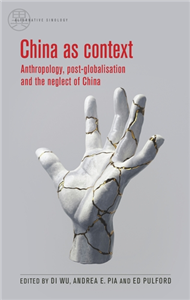
China as context
Anthropology, post-globalisation and the neglect of China
by Di Wu, Andrea E. Pia, Ed Pulford
Decades-old calls to promote the significance of China for anthropological theory and the social sciences more generally ring more urgently today given China's importance to social, political and economic life globally. Yet Chinese-grounded ideas remain marginal to the discipline, and scholarly discussions retain a sense of China as an 'Other' apart from the 'real' world, and thus unsuitable or generating widely applicable theoretical ideas. Inspired by East Asian postcolonial scholarship, this volume tackles this unsettling situation head-on, arguing that without taking China seriously as a powerful agent, a locus of knowledge production, and a new discursive topos of an emerging post-global imaginary, anthropologists and other social scientists may fail to adequately analyse the global present and make sense of both the material and immaterial forces that animate it, wherever and however they work. Amid the end of Western globalisation and shifting anthropological understandings of relations between ethnography and theory, we show how 'China' must be understood as the ordinary 'context' for anthropological research practices worldwide.
-
Trusted Partner
 Humanities & Social SciencesDecember 2024
Iran, Saudi Arabia and the United States
Power, identity and strategy in the Persian Gulf triangle
by Luíza Cerioli
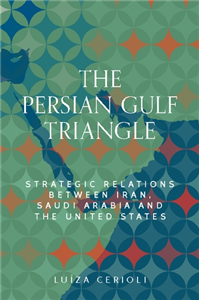
This book offers a nuanced snapshot of the complex geopolitical dynamics in the Persian Gulf, underlining the interaction between Iran, Saudi Arabia, and the US. Examining their interwoven relations since the 1970s, Luíza Cerioli's framework reveals how changes in US-Saudi ties have ripple effects on Iran-US and Iran-Saudi relations and vice versa. Using a historical lens, she explores how enduring US-Saudi connections hinge on order expectations, delves into the cognitive factors shaping US-Iran enmity and traces the source of oscillation in the Saudi-Iran ties. Employing Neoclassical Realism, the book investigates status-seeking, national identities and leadership preferences, offering a deeper understanding of the region's multipolar system. By combining International Relations and Middle East Studies, Cerioli's work contributes to both fields, unravelling the intricate interplay between international structures, regional nuances and agency in shaping Persian Gulf geopolitics.
-
Trusted Partner
 Literature & Literary StudiesApril 2026
Re-examining nineteenth-century Easts
Gendered narratives of encounter
by Claudia Capancioni, Julia Kuehn, Mariaconcetta Costantini
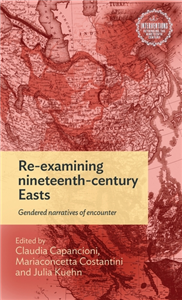
Re-examining nineteenth-century Eastscontributes novel approaches to gendered and gendering fictions and travel writing in and of the cultural-geographical-ideological contexts surrounding nineteenth-century Easts. It examines underexplored stories of travel and narratives of encounter to reconsider the western allure of travelling to the Easts - from the Balkans to the Middle and Far East, through a range of diverse critical approaches. It discusses writers - travellers, novelists, and short-story writers - who authored texts based on their varied experiences in eastern lands. It also analyses how views of eastern places became a rich source of material for identity formations related to Empire but also discussions about masculinity and femininity at 'home'.
-
Trusted Partner
 Humanities & Social SciencesApril 2023
Monarchies and decolonisation in Asia
by Robert Aldrich, Cindy McCreery
With original case studies of a more than a dozen countries, Monarchies and decolonisation in Asia offers new perspectives on how both European monarchs who reigned over Asian colonies and Asian royal houses adapted to decolonisation. As colonies became independent states (and European countries, and other colonial powers, lost their overseas empires), monarchies faced the challenges of decolonisation, republicanism and radicalism. These studies place dynasties - both European and 'native' - at the centre of debate about decolonisation and the form of government of new states, from the sovereigns of Britain, the Netherlands and Japan to the maharajas of India, the sultans of the East Indies and the 'white rajahs' of Sarawak. It provides new understanding of the history of decolonisation and of the history of modern monarchy.
-
Trusted Partner
 Humanities & Social SciencesDecember 2014
East German intelligence and Ireland, 1949–90
Espionage, terrorism and diplomacy
by Jerome de Wiel
This book is an in-depth examination of the relations between Ireland and the former East Germany between the end of the Second World War and the fall of the Berlin Wall. It explores political, diplomatic, economic, media and cultural issues. The long and tortuous process of establishing diplomatic relations is unique in the annals of diplomatic history. Central in this study are the activities of the Stasi. They show how and where East German intelligence obtained information on Ireland and Northern Ireland and also what kind of information was gathered. A particularly interesting aspect of the book is the monitoring of the activities of the Irish Republican Army and the Irish National Liberation Army and their campaigns against the British army in West Germany. The Stasi had infiltrated West German security services and knew about Irish suspects and their contacts with West German terrorist groups. East German Intelligence and Ireland, 1949-90 makes an original contribution to diplomatic, intelligence, terrorist and Cold War studies. ;
-
Trusted Partner
 Humanities & Social SciencesFebruary 2017
East German intelligence and Ireland, 1949–90
Espionage, terrorism and diplomacy
by Jérôme de Wiel
This book is an in-depth examination of the relations between Ireland and the former East Germany between the end of the Second World War and the fall of the Berlin Wall. It explores political, diplomatic, economic, media and cultural issues. The long and tortuous process of establishing diplomatic relations is unique in the annals of diplomatic history. Central in this study are the activities of the Stasi. They show how and where East German intelligence obtained information on Ireland and Northern Ireland and also what kind of information was gathered. A particularly interesting aspect of the book is the monitoring of the activities of the Irish Republican Army and the Irish National Liberation Army and their campaigns against the British army in West Germany. The Stasi had infiltrated West German security services and knew about Irish suspects and their contacts with West German terrorist groups. East German Intelligence and Ireland, 1949-90 makes an original contribution to diplomatic, intelligence, terrorist and Cold War studies.
-
Trusted Partner
 The ArtsMarch 2026
Contemporary art and ecological transformation in East and Southeast Asia
by Meiqin Wang
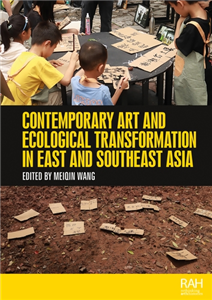
This anthology, presenting new research from fourteen scholars, delves into the interplay between contemporary art and ecological concerns in East and Southeast Asia. Focused on the concept of artistic remediation, the book unravels the diverse capacities of art to combat systemic anthropogenic destruction to the environment and ecology. At its core, the book articulates the ongoing ecological transformation in art and art history that embraces a paradigm shift in human-nature relationships, emphasizing interconnectedness of all life forms of the Earth. Bridging art studies, activism, and environmental studies, the book examines how artistic practices in the region have engaged with ecocritical reflection, biodiversity advocacy, sustainable practices, and environmental justice, among others. Providing a platform for critical and timely analysis of artistic interventions in the face of existential crises, the book acknowledges diverse voices of scholars who have situated their scholarship in the cultural and artistic specificities of various societies, locales, and communities in the region.
-
Trusted Partner
 Humanities & Social SciencesJune 2017
Turkey facing east
Islam, modernity and foreign policy
by Ayla Gol
Turkey facing east is about the importance of Turkey's relations with its Eastern neighbours - Azerbaijan, Armenia and the Soviet Union - during the emergence of the modern Turkish nation-state from the ruins of the Ottoman Empire. The principal strength of this book is that it not only combines historical and theoretical arguments in order to provide a better understanding of the foreign relations of a predominantly Muslim country from a critical and interdisciplinary perspective, but it also applies the new approach to the analysis of Turkish foreign policy towards the South Caucasus between 1918 and 1921. Hence, it stands out with its original interdisciplinary approach to the Turkish transition and foreign policy-making that offers perspectives on the extant possibilities for the particular transitional states resulting from the Arab spring uprisings.
-
Trusted Partner
Business, Economics & LawMay 2023
Oil and the political economy in the Middle East
by Martin Beck, Thomas Richter
-
Trusted Partner
-
Trusted Partner
Humanities & Social SciencesMarch 2017
Guardians of Empire
The Armed Forces of the Colonial Powers, C.1700-1964
by Andrew Thompson, John M. MacKenzie, David Killingray
For imperialists, the concept of guardian is specifically to the armed forces that kept watch on the frontiers and in the heartlands of imperial territories. Large parts of Asia and Africa, and the islands of the Pacific and the Caribbean were imperial possessions. This book discusses how military requirements and North Indian military culture, shaped the cantonments and considers the problems posed by venereal diseases and alcohol, and the sanitary strategies pursued to combat them. The trans-border Pathan tribes remained an insistent problem in Indian defence between 1849 and 1947. The book examines the process by which the Dutch elite recruited military allies, and the contribution of Indonesian soldiers to the actual fighting. The idea of naval guardianship as expressed in the campaign against the South Pacific labour trade is examined. The book reveals the extent of military influence of the Schutztruppen on the political developments in the German protectorates in German South-West Africa and German East Africa. The U.S. Army, charged with defending the Pacific possessions of the Philippines and Hawaii, encountered a predicament similar to that of the mythological Cerberus. The regimentation of military families linked access to women with reliable service, and enabled the King's African Rifles to inspire a high level of discipline in its African soldiers, askaris. The book explains the political and military pressures which drove successive French governments to widen the scope of French military operations in Algeria between 1954 and 1958. It also explores gender issues and African colonial armies.
-
Trusted Partner
Humanities & Social SciencesJune 2026
The Persian Gulf triangle
Strategic relations between Iran, Saudi Arabia and the United States
by Luíza Cerioli
This book offers a nuanced snapshot of the complex geopolitical dynamics in the Persian Gulf, underlining the interaction between Iran, Saudi Arabia, and the US. Examining their interwoven relations since the 1970s, Luíza Cerioli's framework reveals how changes in US-Saudi ties have ripple effects on Iran-US and Iran-Saudi relations and vice versa. Using a historical lens, she explores how enduring US-Saudi connections hinge on order expectations, delves into the cognitive factors shaping US-Iran enmity and traces the source of oscillation in the Saudi-Iran ties. Employing Neoclassical Realism, the book investigates status-seeking, national identities and leadership preferences, offering a deeper understanding of the region's multipolar system. By combining International Relations and Middle East Studies, Cerioli's work contributes to both fields, unravelling the intricate interplay between international structures, regional nuances and agency in shaping Persian Gulf geopolitics.
-
Trusted Partner
 Humanities & Social SciencesAugust 2016
The regeneration of east Manchester
by Georgina Blakeley, Brendan Evans
-
Trusted Partner

 October 2025
Beirut. Fragments of a metropolis
by Meret Michel
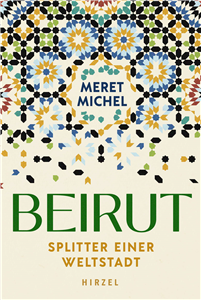
The tragic history of a cosmopolitan city: Beirut and the fate of LebanonOn August 4, 2020, the port of Beirut is shaken by a massive explosion that was to have an impact on the entire city: Hundreds of thousands of houses are destroyed, more than 200 people killed and thousands injured. This was not to be the first and last catastrophe for a country shaken by multiple crises. In this book, ten people tell their stories from their city - a city that has been the hub of the Middle East region for many decades. They live in the once glamorous district of Hamra or in the south of the city, which is controlled by Hezbollah. They are devout Muslims or atheists, come from the upper classes or have been struggling to survive for a long time.



