
Harvard Square Editions
An Independent US publisher cooperating with publishers all over the world to bring books of multicultural, environmental, and social value to light in new markets.
View Rights Portal
An Independent US publisher cooperating with publishers all over the world to bring books of multicultural, environmental, and social value to light in new markets.
View Rights Portal
For nearly two centuries, Houghton Mifflin Harcourt has published some of the world's most renowned works. Its distinguished author list includes ten Nobel Prize winners, forty-eight Pulitzer Prize winners, fifteen National Book Award winners, and more than one hundred Caldecott, Newbery, Printz, and Sibert Medal and Honor recipients. Current and recent authors include Tim O'Brien, Natasha Trethewey, Tim Ferriss, Paul Theroux, Ursula K. Le Guin, and a celebrated roster of children's authors and illustrators including Kwame Alexander, Lois Lowry, and Chris Van Allsburg. HMH is also home to The Best American series® The Whole30®, Weber Grill, How to Cook Everything®, and other leading lifestyle properties; books by J.R.R. Tolkien; and many iconic children's books and characters, including Curious George®, The Little Prince, and The Polar Express.
View Rights Portal
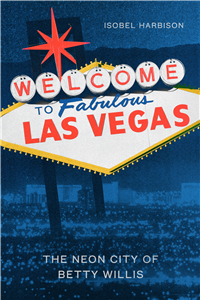
The untold story of the world's most famous neon sign and the extraordinary woman who created it. Las Vegas in the 1950s and 1960s was a city coming out of wartime and into the public eye. All it needed was the right person to light it up - and against all the odds, that person was Betty Willis. With the Cold War heating up and A-bomb tests going off just outside of town, Willis led a diverse team of glassblowers, metalworkers and electricians in a bold project to illuminate the desert sky. Her iconic neon creations would attract gamblers, filmmakers and artists from across the world. But working in an industry dominated by men, in a town run by the mob, presented its share of challenges. Welcome to fabulous Las Vegas charts the career of one of the twentieth century's most brilliant designers. It is an epic tale of a city and the people who built it, from famous showgirls and entertainers with their names in lights to the women and men working behind the scenes.
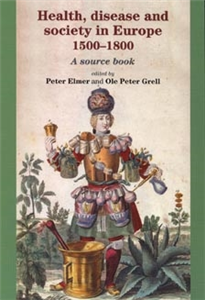
Considers how the body was viewed by the medical profession from the Renaissance to the Enlightenment, and challenges established ideas in the field of medical history. Examines the provision of medical care in context and how it was shaped by the social, religious, political and cultural concerns of the age. Arranged thematically and with brief but scholarly introductions, the selection of documents includes contemporary sources, recent research in the field and classical writings. Written in an accessible style by an Open University lecturer. Companion volume to The Healing Arts: Health, Disease and Society in Europe 1500-1800. ;
 Trusted Partner
Trusted Partner
Trusted Partner
Trusted Partner
Trusted Partner
Trusted Partner
Trusted Partner
Trusted Partner
Trusted Partner
Trusted Partner
Trusted Partner
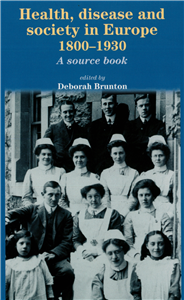
During the nineteenth century, the provision of medical care underwent a radical transformation. In 1800, the body was still understood in terms of humours and fluids, and treatment was provided by a wide range of individuals, some of whom had little or no formal training. Institutions were marginal to the medical enterprise, and governments took almost no part in providing medical services. By 1930, however, a recognisably modern medicine had begun to emerge across Europe. New understandings of human physiology had resulted in the new science of surgical therapy; hospitals had become centres for care, research and training; and the newly organised medical professions increasingly sought to regulate medical practice. In most countries, the state had accepted responsibility for public health and the provision of basic welfare services. This volume provides readers with unrivalled access to a comprehensive range of sources on these major themes. Extracts from contemporary writings vividly illustrate key aspects of medical thought and practice, while a selection of classic historical research and up-to-date work in the field helps further our understanding of medical history. Thematically arranged, these sources are assembled to complement the essays in the companion volume, Medicine Transformed: Health, Disease and Society in Europe, 1800-1930. In addition, brief scholarly introductions make the sources accessible to both the specialist and the general reader. ;
Trusted Partner

Harriet Martineau responds to the strong revival of interest in her life and writing, exploring Martineau's controversial views through her innovative use of popular cultural forms-journalism, travel writing, didactic fiction, novels, translation, autobiography and history. This is the first collection of essays to revisit and reassess Martineau's leading place in Victorian culture and in the development of nineteenth-century liberalism. Distinguished contributors-including Isobel Armstrong, Lauren Goodlad, Catherine Hall, Deborah Logan and Linda Peterson-offer critical analyses of her trailblazing career as a professional 'woman of letters'. The essays collected here move from personal to global concerns in Martineau's oeuvre. The opening essays centre on her bold self-fashioning as a writer, while the second section focuses on the domestic complexities of laissez-faire liberalism in her economic and social vision. Finally, the volume analyses her provocative writings on race, Empire and history - from Atlantic slavery to the Indian Mutiny - demonstrating the international breadth and impact of a remarkable career. ;
Trusted Partner

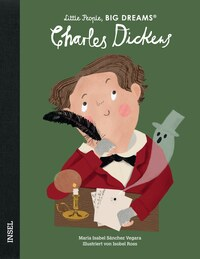
Der kleine Charles war eine Leseratte, Bücher verschlang er wie andere ein Stück Brot. Aber seine Familie war bettelarm, und so musste er mit zwölf die Schule verlassen und in der Fabrik arbeiten. Nun erfand er selbst Geschichten, sie handelten von Menschen, die das Beste aus ihrem Leben machten. So wie er, der – inzwischen Angestellter in einer Kanzlei – Fortsetzungsgeschichten für Zeitungen schrieb, die man ihm aus den Händen riss. Noch heute werden seine Geschichten landauf, landab gelesen. Allen voran die Weihnachtsgeschichte, aber auch die Geschichte von Oliver Twist, einem Waisenjungen, der auf der Straße lebte. War es ein bisschen auch seine eigene Geschichte? Little People, Big Dreams erzählt von den beeindruckenden Lebensgeschichten großer Menschen: Jede dieser Persönlichkeiten, ob Philosophin, Forscherin oder Sportler, hat Unvorstellbares erreicht. Dabei begann alles, als sie noch klein waren: mit großen Träumen.



