
Bentang Pustaka
We are a publisher of quality books for Indonesia. Very passionate about educating the nation.
View Rights Portal
We are a publisher of quality books for Indonesia. Very passionate about educating the nation.
View Rights Portal


Child, nation, race and empire is an innovative, inter-disciplinary, cross cultural study that contributes to understandings of both contemporary child welfare practices and the complex dynamics of empire. It analyses the construction and transmission of nineteenth-century British child rescue ideology. Locating the origins of contemporary practice in the publications of the prominent English Child rescuers, Dr Barnardo, Thomas Bowman Stephenson, Benjamin Waugh, Edward de Montjoie Rudolf and their colonial disciples and literature written for children, it shows how the vulnerable body of the child at risk came to be reconstituted as central to the survival of nation, race and empire. Yet, as the shocking testimony before the many official enquiries into the past treatment of children in out-of-home 'care' held in Britain, Ireland, Australia and Canada make clear, there was no guarantee that the rescued child would be protected from further harm.
 Trusted Partner
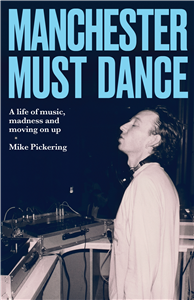
From Manchester's backstreets to global dancefloors - the untold story of a musical pioneer. Beginning on the night in November 1963 when his mum took him to see the Beatles live at Manchester's ABC Cinema, Mike Pickering takes the reader through sixty years of clubs, clothes, gigs, record labels, football matches and politics. Pickering has lived through decades of rapid change in popular music. As an influential DJ he introduced house music into the legendary Haçienda. He signed Happy Mondays and James to Factory Records before working with Kasabian, Gossip and Calvin Harris at Sony. His Mercury Prize-winning, multi-million-selling group M People transformed the music industry's attitude to dance music. As he tells his remarkable story he introduces an array of friends and collaborators, many of whom would become important - and sometimes notorious - figures in music history. Manchester must dance is a revelatory insider's account that moves from the cramped back streets of 1950s north Manchester on a journey deep into music, the city and the wider world. It features forewords from some of those Pickering inspired: Martin Fry, Johnny Marr, Noel Gallagher and Calvin Harris.
Trusted Partner
The John Rylands Library houses one of the finest collections of rare books, manuscripts and archives in the world. The collections span five millennia, have a global reach and cover a wide range of subjects, including art and archaeology; economic, social, political, religious and military history; literature, drama and music; science and medicine; theology and philosophy; travel and exploration. For over a century, the Bulletin of the John Rylands Library has published research that complements the Library's special collections. An electronic edition of this issue is freely available under a Creative Commons (CC BY-NC-ND) licence.
Trusted Partner

This book examines the ways in which ideas about children, childhood and Ireland changed together in Irish Protestant writing of the seventeenth and eighteenth centuries. It focuses on different varieties of the child found in the work of a range of Irish Protestant writers, theologians, philosophers, educationalists, politicians and parents from the early seventeenth century up to the outbreak of the 1798 Rebellion. The book is structured around a detailed examination of six 'versions' of the child: the evil child, the vulnerable/innocent child, the political child, the believing child, the enlightened child, and the freakish child. It traces these versions across a wide range of genres (fiction, sermons, political pamphlets, letters, educational treatises, histories, catechisms and children's bibles), showing how concepts of childhood related to debates about Irish nationality, politics and history across these two centuries.
Trusted Partner

*** Normalsein ist die neue Superkraft! *** Murph hat ein großes Problem. Er ist ganz normal! Leider hat seine Mutter ihn aus Versehen an einer Schule für Superhelden angemeldet. Oder so was in der Art. Seine Mitschüler haben die schrottigsten Superkräfte, die man sich vorstellen kann: Nellie kann das Wetter kontrollieren, Billy sämtliche Körperteile aufpusten und Hilda beschwört Pferdchen herauf … Noch während Murph glaubt, NORMALSEIN wäre sein größtes Problem, wird es wirklich schlimm: Bösewicht Nektar, halb Mensch, halb Wespe, bringt alle Kinder der Schule unter seine Kontrolle - und plötzlich ist es an Kid Normal, zum größten Helden aller Zeiten zu werden. *** „So lustig, das ist schon beinahe kriminell!" The Independent *** *** Der internationale Erfolg aus England - zum Weglachen gut! ***
Trusted Partner
Murphs Leben als Normalo-Superheld ist aufregend - und voller Fragen: Bekommt er jetzt ein Heldenkostüm? Einen Gürtel mit coolen Waffen? Oder zumindest einen Butler, der Ratschläge erteilt, wenn ihm das Heldendasein mal über den Kopf wächst? Inzwischen kennen Murph und die Supernullen die Antworten auf all diese Fragen. Sie lauten - in beliebiger Reihenfolge - nein, nein und nein. Als sich tief unter dem Gefängnis für abtrünnige Superhelden etwas Unheilvolles zusammenbraut, müssen die Supernullen ihre mehr oder weniger brauchbaren Kräfte vereinen. Denn die Elster, der größte Schurke, den die Welt je gesehen hat, verlangt nur eines: „Bringt mir Kid Normal!"
Trusted Partner
The John Rylands Library houses one of the finest collections of rare books, manuscripts and archives in the world. The collections span five millennia, have a global reach and cover a wide range of subjects, including art and archaeology; economic, social, political, religious and military history; literature, drama and music; science and medicine; theology and philosophy; travel and exploration. For over a century, the Bulletin of the John Rylands Library has published research that complements the Library's special collections. An electronic edition of this issue is freely available under a Creative Commons (CC BY-NC-ND) licence.
Trusted Partner
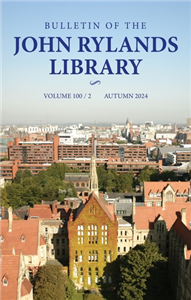
The John Rylands Library houses one of the finest collections of rare books, manuscripts and archives in the world. The collections span five millennia, have a global reach and cover a wide range of subjects, including art and archaeology; economic, social, political, religious and military history; literature, drama and music; science and medicine; theology and philosophy; travel and exploration. For over a century, the Bulletin of the John Rylands Library has published research that complements the Library's special collections.
Trusted Partner
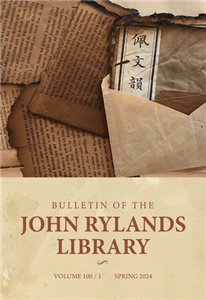
The John Rylands Library houses one of the finest collections of rare books, manuscripts and archives in the world. The collections span five millennia, have a global reach and cover a wide range of subjects, including art and archaeology; economic, social, political, religious and military history; literature, drama and music; science and medicine; theology and philosophy; travel and exploration. For over a century, the Bulletin of the John Rylands Library has published research that complements the Library's special collections.
Trusted Partner
„So lustig, das ist schon beinahe kriminell!“ The Independent Was haben Kid Normal und die Supernullen mit Hackpastete gemein? Ganz klar: Wenn Murph und seine Freunde die Welt retten, fühlen sie sich danach wie durch den Fleischwolf gedreht. Gerade jetzt wird ihre Heldenkraft gebraucht wie nie zuvor - doch all ihre Missionen scheitern (natürlich) kläglich! Währenddessen verfolgt der Bösewicht und Erzrivale der Supernullen, Elster, einen tödlichen Plan. Er will Murph und die Supernullen ein für alle Mal ausschalten. Und wieder einmal ist es an Murph, dem Jungen ohne Superkraft, die Welt zu retten: Denn Normalsein ist die neue Superkraft! Herrlich schräg und voller Action: Der kuriose Lesespaß für alle Mädchen und Jungen ab 9, die Superhelden-Geschichten, Turbulenzen und rasante Abenteuer von Helden und Bösewichten lieben. Zum Losprusten komisch und mit Lautlach-Witzen am laufenden Band wird dieser Heidenspaß von einem Buch genial illustriert von Raimund Frey. In der Reihe „Kid Normal“ sind bisher erschienen: Kid Normal. So sehen Helden aus! (Band 1) Kid Normal. Die Schurken sind los! (Band 2)
Trusted Partner
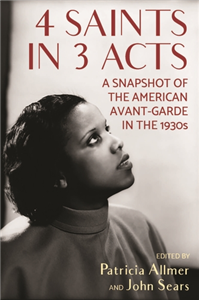
Four Saints in Three Acts by Gertrude Stein and Virgil Thomson was a major avant-garde phenomenon of the 1930s, an experimental opera that nonetheless achieved remarkable popular success. Photography was a key element of that success, but its complex roles in the construction, representation and dissemination of the opera have hitherto received little critical attention. The photographic recording of the all-African American cast in particular affords a unique insight into the complexities of Four Saints in relation to the Harlem Renaissance and the New York avant-gardes of the time. This book, published in collaboration with The Photographers' Gallery, London, presents a wide selection of photographs of the cast, performances, and other material - many images reproduced for the first time - alongside essays by an international range of scholars exploring different aspects of the opera, including dance, fashion, music, and avant-garde writing, as well as photography.
Trusted Partner
Trusted Partner
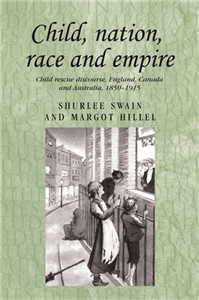
Child, nation, race and empire is an innovative, inter-disciplinary, cross cultural study that contributes to understandings of both contemporary child welfare practices and the complex dynamics of empire. It analyses the construction and transmission of nineteenth-century British child rescue ideology. Locating the origins of contemporary practice in the publications of the prominent English Child rescuers, Dr Barnardo, Thomas Bowman Stephenson, Benjamin Waugh, Edward de Montjoie Rudolf and their colonial disciples and literature written for children, it shows how the vulnerable body of the child at risk came to be reconstituted as central to the survival of nation, race and empire. Yet, as the shocking testimony before the many official enquiries into the past treatment of children in out-of-home 'care' held in Britain, Ireland, Australia and Canada make clear, there was no guarantee that the rescued child would be protected from further harm. ;
Trusted Partner
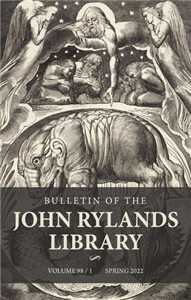
This special issue of the Bulletin of the John Rylands Library is devoted to William Blake. It explores the British and European reception of Blake's work from the late nineteenth century to the present day, with a particular focus on the counterculture. Opening with two articles by the late Michael Horovitz, an important figure in the 'Blake Renaissance' of the 1960s, the issue goes on to investigate the ideological struggle over Blake in the early part of the twentieth century, with particular reference to W. B. Yeats. This is followed by articles on the artistic avant-garde and underground of the 1960s and on Blake's significance for science fiction authors of the 1970s. The issue closes with an article on the contemporary Belgian art collective maelstrÖm reEvolution.
Trusted Partner
This book offers the first extended study of Queen Henrietta's Men, one of Caroline London's most important professional playing companies. The drama that the company performed at the Cockpit between 1626 and 1636 includes many underexplored and neglected plays from the period alongside more celebrated works by dramatists including James Shirley and John Ford, and a number of Elizabethan and Jacobean revivals. Queen Henrietta's Men and the Cockpit Repertory explores the material and cultural conditions under which the company operated, and offers an account of the dynamics that held between new drama written for the company and the revivals staged alongside that fare. In doing so, this account illuminates the ways in which an appreciation of the work of Queen Henrietta's Men can offer new perspectives on theatre history and the categories of company and repertory that have shaped it.
Trusted Partner
Trusted Partner

This study of the British colonial administrator James Tod (1782-1835), who spent five years in north-western India (1818-22) collecting every conceivable type of material of historical or cultural interest on the Rajputs and the Gujaratis, gives special attention to his role as a mediator of knowledge about this little-known region of the British Empire in the early nineteenth century to British and European audiences. The book aims to illustrate that British officers did not spend all their time oppressing and inferiorising the indigenous peoples under their colonial authority, but also contributed to propagating cultural and scientific information about them, and that they did not react only negatively to the various types of human difference they encountered in the field.
Trusted Partner

 Trusted Partner


This book, the world's first biography of Paul Watzlawick, written by his great-niece, describes the life of this philosopher, therapist, and best-selling author. Paul Watzlawick had a talent for languages and he led an adventurous life, from his childhood in Villach to studying in Venice after the war, to analyst training under C. G. Jung in Zurich, an attempt at establishing himself in India and then in El Salvador as a therapist, and finally to the Mental Research Institute (MRI) in the United States, headed by Don D. Jackson, a venerable scientist. This marked the beginning of the second half of his life, his amazing career as a communication researcher, a pioneer of systemic therapy, a radical constructivist, and a great thinker regarding the divisions between East and West. With many letters, lectures, interviews, and statements from contemporary witnesses and family members, this book makes Paul Watzlawick accessible as a human being and as a spiritually inspired, leading 20th century thinker. It includes a variety of unpublished material from Watzlawick, and introduces a comprehensive and exciting picture of the scientist and cosmopolitan person, Paul Watzlawick. Target Group: For people interest in Paul Watzlawick, communication sciences, systemic therapy, and constructivism.



