
Thornapple Press
Publisher of bestselling and award-winning books including Polysecure, More Than Two and Love’s Not Color Blind.
View Rights Portal
Publisher of bestselling and award-winning books including Polysecure, More Than Two and Love’s Not Color Blind.
View Rights Portal
Manshurat Al Jamal was founded in 1983 by Khalid Al Maaly in Cologne ,in 2008 based in Beirut and a further branch in Bagdad .The program focus on :- Classic ,Modern Arab literature- Fiction short stories poems - Philosophy- Sociology Manshurat Al-Jamal is the publisher of a lot of authors: G.Grass O. Pamuk J. Habermas Robert Musil H.Qureishi G. Sinoue P. Celan W. Gombrowicz J. Derrida M. Horkheimer T. Adorno A. Kristof
View Rights Portal
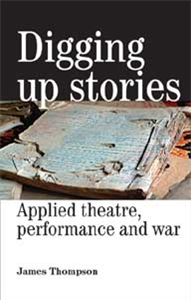
In 'Digging up stories', James Thompson explores the problems of theatre practice in communities affected by war and exclusion. Each chapter or 'story' is written in a lively and accessible style and draws on a range of contemporary performance theories. The chapters discuss: - participatory theatre in refugee camps - theatre workshop and stories of a massacre - traditional dance-dramas in an insurgent controlled village - 'Forum' theatre with the Mahabharata - ethical issues - the struggle to teach the author to dance 'Digging up stories' documents a range of theatre practice and includes project reports, ethnographic accounts, performance analysis and diary-style reflection. Taken from Thompson's research and practice in Sri Lanka, these diverse examples question the link between applied theatre, traditional performance and performances in everyday life. The book blurs lines between research and travel writing to create rich and provocative accounts of applying theatre in a troubled setting. ;
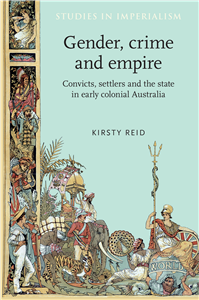
Between 1803 and 1853, some 80,000 convicts were transported to Van Diemen's Land. Revising established models of the colonies, which tend to depict convict women as a peculiarly oppressed group, Gender, crime and empire argues that convict men and women in fact shared much in common. Placing men and women, ideas about masculinity, femininity, sexuality and the body, in comparative perspective, this book argues that historians must take fuller account of class to understand the relationships between gender and power. The book explores the ways in which ideas about fatherhood and household order initially informed the state's model of order, and the reasons why this foundered. It considers the shifting nature of state policies towards courtship, relationships and attempts at family formation which subsequently became matters of class conflict. It goes on to explore the ways in which ideas about gender and family informed liberal and humanitarian critiques of the colonies from the 1830s and 1840s and colonial demands for abolition and self-government. ;
 Trusted Partner

Between 1803 and 1853, some 80,000 convicts were transported to Van Diemen's Land. Revising established models of the colonies, which tend to depict convict women as a peculiarly oppressed group, Gender, crime and empire argues that convict men and women in fact shared much in common. Placing men and women, ideas about masculinity, femininity, sexuality and the body, in comparative perspective, this book argues that historians must take fuller account of class to understand the relationships between gender and power. The book explores the ways in which ideas about fatherhood and household order initially informed the state's model of order, and the reasons why this foundered. It considers the shifting nature of state policies towards courtship, relationships and attempts at family formation which subsequently became matters of class conflict. It goes on to explore the ways in which ideas about gender and family informed liberal and humanitarian critiques of the colonies from the 1830s and 1840s and colonial demands for abolition and self-government.
Trusted Partner
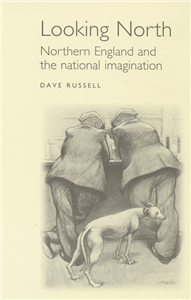
Investigating areas as diverse as travel literature, fiction, dialect, the stage, radio, and television, feature film, music and sport, this fascinating book assesses the attitudes and portrayal of the North of England within the national culture and how this has impacted upon attitudes to the region and its place within notions of 'Englishness'. ;
Trusted Partner


»Die Antigone des Sophokles ist nicht ›irgendein‹ Text. Sie ist eines der bleibenden und kanonischen Dokumente in der Geschichte unseres philosophischen, literarischen und politischen Bewußtseins. Was in diesem Buch begonnen wird und in seinem Mittelpunkt steht, ist der Versuch einer Antwort auf die Frage, woher es wohl kommt, daß eine Handvoll altgriechischer Mythen noch immer unser Bewußtsein von uns selbst und von der Welt beherrscht und ihm lebendige Gestalt verleiht. Warum sind die ›Antigonen‹ wahrhaft éternelles, warum berühren sie die Gegenwart unmittelbar?« George Steiners Untersuchung einer mehr als zweitausendjährigen Geschichte des offenbar unvergänglichen Antigone-Stoffes, seiner inneren Konflikte und Adaptionen, führt von seinen Ursprüngen in der Antike über Hölderlins Neuschöpfung und seine fundamentale Bedeutung für die Philosophie Hegels und Kierkegaards bis zu den dichterischen Bearbeitungen und Deutungen in der Gegenwart.
Trusted Partner


Die 24 Geschichten, die sich die Teilnehmer einer Pilgergruppe während einer Wallfahrt vom Londoner Gasthaus »Heroldsrock« zum Heiligenschrein des Thomas á Becket erzählen, vermitteln einen anschaulichen Eindruck von der Buntheit und Vielfalt des mittelalterlichen Lebens.
Trusted Partner
 Trusted Partner

This volume presents a modernised edition of Christopher Marlowe's critical engagement with one of the bloodiest and traumatic episodes of the French Wars of Religion, the wholesale massacre of French Huguenots in Paris in August, 1572. Sensorily shocking and intellectually gripping, the play's dramatic action spans a tumultuous two decades in French history to unfold for its audience the tragic consequences of religious fanaticism, power politics, and dynastic rivalry. Comprehensively introduced and containing full commentary notes, this edition opens up this frequently neglected but historically significant and dramatically powerful play to student and scholar alike. The introduction examines such topics as the history of the massacre, the play's treatment of its sources, the play's dramatisation of trauma, and the play's exploration of notions of religious toleration.
Trusted Partner
 Trusted Partner
 Trusted Partner
Trusted Partner
Trusted Partner
Trusted Partner
Trusted Partner
Trusted Partner
Trusted Partner
Trusted Partner
Trusted Partner
Trusted Partner
Trusted Partner
 Trusted Partner
Trusted Partner
Trusted Partner
Trusted Partner
Trusted Partner
Trusted Partner
Trusted Partner






