
Marshall Cavendish
Topical, authentic and high quality books under the Marshall Cavendish Editions imprint provide general interest content that informs, entertains and engages readers.
View Rights Portal
Topical, authentic and high quality books under the Marshall Cavendish Editions imprint provide general interest content that informs, entertains and engages readers.
View Rights Portal
Linwood Messina Literary Agency is a boutique agency based in Paris representing rights on behalf of French and English language publishers, agencies and authors. Our list is quite diverse covering mostly every genre except for SF and children's books.
View Rights Portal

"I am Jugoslovenka" argues that queer-feminist artistic and political resistance were paradoxically enabled by socialist Yugoslavia's unique history of patriarchy and women's emancipation. Spanning performance and conceptual art, video works, film and pop music, lesbian activism and press photos of female snipers in the Yugoslav wars, the book analyses feminist resistance in a range of performative actions that manifest the radical embodiment of Yugoslavia's anti-fascist, transnational and feminist legacies. It covers celebrated and lesser-known artists from the 1970s to today, including Marina Abramovic, Sanja Ivekovic, Vlasta Delimar, Tanja Ostojic, Selma Selman and Helena Janecic, along with music legends Lepa Brena and Esma Redzepova. "I am Jugoslovenka" tells a unique story of women's resistance through the intersection of feminism, socialism and nationalism in East European visual culture.
 Trusted Partner
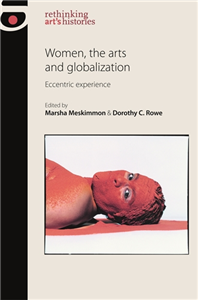
Women, the arts and globalization: Eccentric experience is the first anthology to bring transnational feminist theory and criticism together with women's art practices to discuss the connections between aesthetics, gender and identity in a global world. The essays in Women, the Arts and Globalization demonstrate that women in the arts are rarely positioned at the centre of the art market, and the movement of women globally (as travelers or migrants, empowered artists/scholars or exiled practitioners), rarely corresponds with the dominant models of global exchange. Rather, contemporary women's art practices provide a fascinating instance of women's eccentric experiences of the myriad effects of globalization. Bringing scholarly essays on gender, art and globalization together with interviews and autobiographical accounts of personal experiences, the diversity of the book is relevant to artists, art historians, feminist theorists and humanities scholars interested in the impact of globalization on culture in the broadest sense. ;
Trusted Partner
Trusted Partner
Trusted Partner
Trusted Partner
Trusted Partner
Trusted Partner

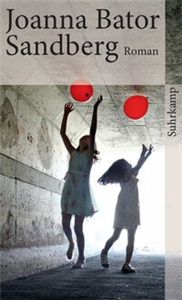
Auf dem Sandberg, einer Siedlung am Rande einer polnischen Kleinstadt regieren die Frauen. Sie träumen von einem Schwiegersohn aus Castrop-Rauxel, denn wenn sie selbst schon nicht das große Los gezogen haben, sollen wenigstens ihre Töchter glücklich werden. Aber die haben eigene Vorstellungen von Glück … Joanna Bator erzählt von den Träumen, Ängsten und Hoffnungen einer von Krieg und Flucht traumatisierten Generation und von der Rebellion und Freiheitssehnsucht ihrer Kinder.
Trusted Partner

In einem letzten Versuch, ihre erkaltende Liebe zu retten, fliegt ein Paar nach Kreta. Als sie anderntags in der Morgensonne erwacht, ist er bereits schwimmen gegangen. Als sie ihn gegen Mittag anruft, klingelt sein Handy in der Ferienunterkunft. Und als sie am Strand steht, weiß sie sofort: Hier ist er nicht. Aus Stunden des Suchens werden Tage, Wochen, Monate – nichts in diesen Geschichten ist, was es ist. Ob etwa die todkranke Frau, der im Wald immer wieder zwei geisterhafte Kinder begegnen, noch in der Realität oder schon in einer Zwischenwelt lebt, bleibt in der Schwebe. Und das seit Jahrzehnten leerstehende Hotel Sudeten, in dem eine seltsame Gesellschaft haust – ist es ein Nachtasyl oder vielleicht doch eine psychiatrische Klinik? Alles, was Joanna Bator in klarem, hartem Duktus erzählt, ist in ein Zwielicht getaucht. Sechzehn romanhaft verschränkte unheimliche Erzählungen, die uns dieselben Protagonisten in ständig neuer Perspektive zeigen. Während wir sie lesend immer besser kennenlernen, verirren wir uns immer tiefer in einem Spiegellabyrinth.
Trusted Partner
Trusted Partner
 Trusted Partner
Trusted Partner
Trusted Partner
Trusted Partner
Trusted Partner
Trusted Partner
Trusted Partner
Trusted Partner
Trusted Partner

Art, museums and touch examines conceptions and uses of touch within arts museums and art history. Candlin deftly weaves archival material and contemporary museology together with government policy and art practice to question the foundations of modern art history, museums as sites of visual learning, and the association of touch with female identity and sexuality. This remarkable study presents a challenging riposte to museology and art history that privileges visual experience. Candlin demonstrates that touch was, and still is, crucially important to museums and art history. At the same time she contests the recent characterisation of touch as an accessible and inclusive way of engaging with museum collections, and argues against prevalent ideas of touch as an unmediated and uncomplicated mode of learning. An original and wide-ranging enquiry, this book is essential reading for scholars and students of museum studies, art history, visual culture, disability, and for anyone interested in the cultural construction of the senses. ;
Trusted Partner
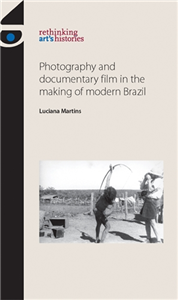
Photography and documentary film in the making of modern Brazil provides a major contribution to the field of visual culture through a study of still and moving images of Brazil in the first four decades of the twentieth century, when the camera played a key role in making Brazilian peoples and places visible to a variety of audiences. The book explores what is distinctive about the visual representation of Brazil in an era of modernisation, also attending to the significance of the different technical properties of film and photography for the writing of new histories of visual technologies. It offers new insights into the work of key writers, photographers, anthropologists and filmmakers, including Claude Lévi-Strauss, Mário de Andrade, Silvino Santos and Aloha Baker. Unearthing a wealth of materials from archives in the USA, Britain, and Brazil, the book seeks to contribute to the postcolonial theoretical project of pinpointing locally distinctive histories of visual technologies and practices. ;
Trusted Partner
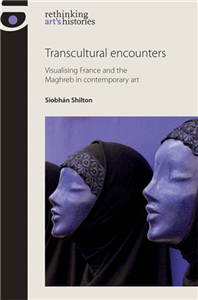
Art since the 1980s reveals a striking proliferation of works exploring the complex cross-cultural identities that have resulted from a long history of exchange between France and the Maghreb. This adventurous study examines distinctively visual means of presenting 'Franco-Maghrebi' identities in performance, video, photography and installation art. Transcultural encounters investigates the ways in which such art spurs a re-thinking of both postcolonial and feminist issues and critical terms in an uneven globalised frame. It demonstrates how this corpus develops art historical debates concerning gender and representation, while also considering emerging visions of the Maghreb. Analysing a wide range of works presented in galleries, online or in the street, this study shows how they test the boundaries of established art genres, calling for the invention of new modalities of 'reading' transnational visual culture. The first book to explore postcolonial and feminist approaches to contemporary art from a 'Francophone' space, Transcultural encounters incorporates much material that has previously received little critical attention. The book will be of interest to researchers in French studies, postcolonial studies, visual studies and gender studies, as well as curators and artists working across cultures and media. ;
Trusted Partner
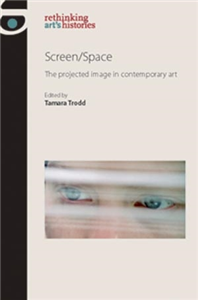
Projected-image art occupies an increasingly important place in the contemporary art-world. But does the projected image have its own specificity, beyond the histories of experimental film and video on the one hand, and installation art on the other? What is a projected image, and what is the history of projected-image art? These questions and others are explored in this thoughtful collection of nine essays by leading international scholars of film and projected-image art. Clearly structured in three sections - 'Histories', 'Screen', 'Space' - the book argues for recognition of the projected image as a distinctive category in contemporary art, which demands new critical and theoretical approaches. The contributors explore a range of interpretive perspectives, offering new insights into the work of artists including Michael Snow, Carolee Schneemann, Pipilotti Rist, Stan Douglas, Gillian Wearing, Tacita Dean, Jane and Louise Wilson, amongst others. The Introduction supplies a concise summary of the history of projected-image art and its interpretation, and there is a focus throughout the book on detailed analysis of individual artworks. ;




