Schmit Jongbloed Advies
‘Ärzt*in als Ganzes‘ ist ein inspirierendes Buch für Mediziner aller Altersklassen und Spezialisierungen, die den Sinn in ihrer Arbeit (wieder)finden oder verstärken wollen.
View Rights Portal
‘Ärzt*in als Ganzes‘ ist ein inspirierendes Buch für Mediziner aller Altersklassen und Spezialisierungen, die den Sinn in ihrer Arbeit (wieder)finden oder verstärken wollen.
View Rights Portal Trusted Partner
Trusted Partner
Trusted Partner


This timely and controversial book shows how crime, and the authorities' response to crime, became central to the peace process in Northern Ireland. At times, paramilitary activity threatened to destabilise the peace in Northern Ireland after 1998, but crime was central to maintaining capacity should the groups return to war. Over time, the reduction of crime was central to these groups' own attempts to reform and official judgements as to whether they were genuinely demobilising. The state's response to crime added controversy. Police reform produced the Police Service of Northern Ireland (PSNI) and the new Organised Crime Task Force signalled the importance of crime control, but the Assets Recovery Agency, supposedly the 'magic bullet' for organised crime, misfired. Law enforcement was also deeply affected by the British state's response to paramilitary crime. By 2007, peace was apparently secure and paramilitaries were 'de-criminalising', but this often chaotic process was marked with questions about the British state's adherence to the rule of law. Incorporating first-hand research in the PSNI, the book will be of interest to general readers and scholars of Irish Studies, criminology, and British and comparative politics. ;
Trusted Partner


Jon Fosse: Der NameDer Vater redet am liebsten gar nicht, die Mutter spricht vorzugsweise von sich, also über ihre Krankheit, die hochschwangere Tochter besucht nach langer Zeit die Eltern und möchte sich gerne aussprechen, hat sich aber mit ihrem Freund einen großen Schweiger ausgesucht - bleibt ihr Jugendfreund Barne. Mit ihm scheint die Familie zum Leben zu erwachen.Else Lasker-Schüler: Arthur Aronymus und seine VäterDas Stück spielt um 1840 in Westfalen und zeigt, wie eine jüdische Familie, der Gutsbesitzer Moritz Schüler mit seinen dreiundzwanzig Kindern, mit der wachsenden Pogromstimmung in der christlichen Umgebung konfrontiert wird.Dea Loher: Klaras Verhältnisse Klara sucht eine echte Lebensaufgabe, einen Platz im Leben. Bei ihrer Reise durch die bundesrepublikanische Wirklichkeit begegnen ihr die unterschiedlichsten Begierden und Sehnsüchte - eine tragikomische Gratwanderung zwischen hochfliegenden Wünschen und banalen Abgründen.Roland Schimmelpfennig: Die arabische NachtSiebter Stock, Wohnung 32: Wie von einer unbestimmten Sehnsucht getrieben, treffen sich hier in dieser »arabischen Nacht« Franziska, Fatima, ihr Freund Kalil, der Hausmeister Lomeier und Karpati, der Voyeur.
Trusted Partner
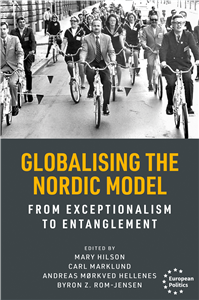
The five Nordic countries - Denmark, Finland, Iceland, Norway and Sweden - frequently attract attention as examples of a 'Nordic model'. The meanings of the term vary, but especially since the global financial crisis of 2008-9 the Nordic countries have often been portrayed positively, as examples of economic dynamism, innovation and social equality. Studies of these images of the Nordic countries and Nordic region and their international circulations are now a well-established field of research. This volume explores how the Nordic model has been shaped by global entanglements, in exchange not only with Western Europe and North America, but also with the Global South. Drawing on selected case studies, the volume offers new perspectives on the meanings of the Nordic model and Nordic exceptionalism in a global context during the half century since c. 1970.
Trusted Partner

This volume investigates the reception of a small historical fact with wide-ranging social, cultural and imaginative consequences. Inspired by Leif Eiriksson's visit to Vinland in about the year 1000, novels, poetry, history, politics, arts and crafts, comics, films and video games have all come to reflect rising interest in the medieval Norse and their North American presence. Uniquely in reception studies, From Iceland to the Americas approaches this dynamic between Nordic history and its reception by bringing together international authorities on mythology, language, film and cultural studies, as well as on the literature that has dominated critical reception. Collectively, the chapters not only explore the connections among medieval Iceland and the modern Americas, but also probe why medieval contact has become a modern cultural touchstone.
Trusted Partner
Trusted Partner

The Chronicon of Thietmar of Merseburg has long been recognised as one of the most important sources for the history of the tenth and early eleventh centuries, especially for the history of the Ottonian Empire. Thietmar's testimony also has special value because of his geographical location, in eastern Saxony, on the boundary between German and Slavic cultures. He is arguably the single most important witness to the early history of Poland, and his detailed descriptions of Slavic folklore are the earliest on record. This is a very important source in the medieval period, translated here in its entirety for the first time. It relates to an area of medieval studies generally dominated by German scholars, in which Anglo-phone scholars are beginning to make a substantial contribution.
Trusted Partner
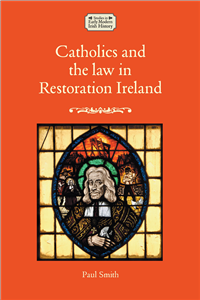
In 1660 Charles II was restored to the thrones of England, Scotland and Ireland, but his hold on power was precarious. In particular, Ireland was fundamentally unstable - Catholics formed the majority of the population in a country where Protestantism was the established religion, a state of affairs unique in Europe. It was through the law that the restored Stuart monarchy governed its subjects and its colonial dependencies, and this book examines how Catholics engaged with and experienced English common law primarily through the eyes of Catholic clerics and Gaelic poets. It also examines how Catholics engaged with the Courts and the particular challenges they faced as lawyers. The book draws on an extensive body of primary source materials, including Irish-language poetry and little-used archival material relating to elite Catholic families.
Trusted Partner

Available at last in paperback, Radical democracy brings together original contributions from established and emerging scholars. The contributors discuss the theoretical and practical implications of the two dominant approaches to radical democracy: theories of abundance inspired by Gilles Deleuze and theories of lack inspired by Jacques Lacan. They examine the idea of radical democracy from a wide variety of perspectives: identity/difference, the public sphere, social movements, nature, popular culture, right wing populism and political economy. In addition, the volume relates the work of contemporary thinkers such as Deleuze, Lacan, Derrida and Foucault to classical thinkers such as Spinoza, Hegel, Marx and Nietzsche. William Connolly and Ernesto Laclau conclude the volume with two afterwords on the future of radical democracy. With its original contributions, Radical democracy is essential reading for advanced students and scholars who have an interest in the political and theoretical problems of radical democracy. ;
Trusted Partner


Saying goodbye to a loved one is always hard. Jon, the little hero of this story, serves as an example of how children can deal with the pain of loss. When Jon’s grandfather dies, he becomes a star. Jon decides to look for his grandfather’s star to say goodbye, and begins a journey through space and through his own grief. He soon realises that this is no easy search. His feelings alternates between disappointment, euphoria, anger, and sadness. Fortunately, the man on the moon explains to the little astronaut the special nature and uniqueness of the stars for the relatives on earth. Only there do the stars twinkle and shine for grandchildren, children, and everyone else who misses the deceased. Jon finally understands that his grandfather is dead, but is not simply gone, because in his memory, in his thoughts, and in the starry sky his grandfather is still there and makes his star shine for everyone who thinks of him. For: • children (ages 6–12) who suffer from the fear of losing a close family member or who have lost a family member• parents, relatives• therapists
Trusted Partner

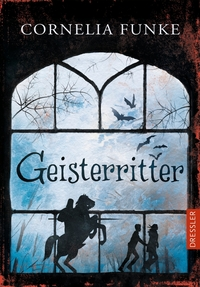
In "Geisterritter" von Cornelia Funke wird der junge Jon Whitcroft unfreiwillig zum Protagonisten einer übernatürlichen Geschichte, als er gegen seinen Willen auf ein Internat in Salisbury geschickt wird. Sein Leben nimmt eine dramatische Wendung, als ihm eines Nachts drei rachsüchtige Geister erscheinen, die es auf sein Leben abgesehen haben. Diese Geister, angeführt von Lord Stourton, einem historischen Feind seiner Familie, schwören Rache für ein jahrhundertealtes Unrecht. In seiner Verzweiflung findet Jon Hilfe in Ella Littlejohn und ihrer Großmutter Zelda, die über Wissen und Weisheit im Umgang mit Geistern verfügen. Gemeinsam rufen sie den Geisterritter Sir William Longspee herbei, der Jon beisteht und gleichzeitig seine eigene Erlösung in dieser ungewöhnlichen Freundschaft findet. Die Geschichte verwebt geschickt historische Elemente mit der modernen Herausforderung, sich in einer neuen und feindseligen Umgebung zurechtzufinden, und bietet eine fesselnde Mischung aus Spannung, Abenteuer und der Bedeutung von Mut und Freundschaft. "Geisterritter" ist mehr als nur eine Geistergeschichte; es ist eine tiefgründige Erzählung über Wachstum, Mut und die Überwindung von Ängsten. Jon, ursprünglich verzweifelt und isoliert, entdeckt durch seine übernatürlichen Begegnungen und die Bindung zu seinen ungewöhnlichen Verbündeten seine innere Stärke. Die Charakterentwicklung, gepaart mit der atmosphärischen Beschreibung Salisburys, macht das Buch zu einem eindrucksvollen Leseerlebnis. Funkes meisterhafte Erzählung führt Leser durch eine Palette von Emotionen, von der Angst vor den unbekannten Geistern bis hin zur Freude über die entstehende Freundschaft zwischen Jon und seinen unerwarteten Helfern. Die Geschichte ist ein Beweis für die Macht der Vergebung und der unerwarteten Freundschaften, die über Zeit und Raum hinweg bestehen. Fesselnde Geistergeschichte mit historischem Hintergrund: Die Verbindung von Jons modernen Problemen mit der alten Legende von Sir William Longspee und Lord Stourton fügt der Geschichte eine faszinierende Tiefe hinzu. Stark ausgearbeitete Charaktere: Jon, Ella und der Geisterritter Sir William Longspee sind charismatische Figuren, deren Entwicklung und Freundschaft das Herz der Geschichte bilden. Spannung und Abenteuer: Von der ersten Begegnung mit den Geistern bis zum dramatischen Finale hält die Geschichte Leser*innen ab 10 Jahren in Atem. Themen von Mut und Freundschaft: Die Geschichte zeigt, wie wichtig Mut, Vertrauen und Freundschaft sind, um scheinbar unüberwindbare Herausforderungen zu meistern. Bildgewaltige Beschreibungen: Die atmosphärischen Schilderungen Salisburys und der historischen Orte verleihen dem Buch eine besondere Stimmung. Für alle Altersgruppen: Obwohl als Kinder- und Jugendbuch konzipiert, spricht "Geisterritter" auch erwachsene Leser an, die sich für Geistergeschichten und historische Romane interessieren. Lehrreich: Durch die Einbindung historischer Fakten und Orte bietet das Buch auch einen lehrreichen Wert.
Trusted Partner


Um seine sich ständig zankenden Enkelkinder Fanndis und Jon zu bändigen, erzählt Opa Valdis eine Geschichte: die Geschichte zweier Islandpferde-Fohlen, Kappi und Skoppa. Die beiden Fohlen könnten unterschiedlicher nicht sein und bewältigen trotzdem als beste Freunde spannende und lustige Abenteuer. Und siehe da: Auf einmal hört auch das Streiten zwischen Fanndis und Jon auf.
Trusted Partner

Pure Abenteuermagie: Cornelia Funkes "Geisterritter", gelesen von Zauberzunge Rainer Strecker Seitdem Jon im Internat in Salisbury ist, erscheinen ihm nachts furchterregende Geister. Nur seine Mitschülerin Ella glaubt ihm. Als die beiden entdecken, dass Jon von Lord Stourton heimgesucht wird, der vor fast 500 Jahren gehängt wurde, holen sie sich den Beistand des Ritters Longspee, der in der Kathedrale begraben liegt. Denn Stourton scheint auch heute noch sein grausames Unwesen zu treiben. Als Dank sollen die beiden Longspees Herz finden. Da verschwindet plötzlich Ella … Ein hinreißendes Ritterspektakel: tempo- und actionreich, märchenhaft magisch, wild und abenteuerlich! Aufwendige Produktion mit Musik.
Trusted Partner

Seitdem Jon im Internat in Salisbury ist, erscheinen ihm nachts furchterregende Geister. Nur seine Mitschülerin Ella glaubt ihm. Als die beiden entdecken, dass Jon von Lord Stourton heimgesucht wird, der vor fast 500 Jahren gehängt wurde, holen sie sich den Beistand des Ritters Longspee, der in der Kathedrale begraben liegt. Denn Stourton scheint auch heute noch sein grausames Unwesen zu treiben. Als Dank sollen die beiden Longspees Herz finden. Da verschwindet plötzlich Ella. Hörspiel von Frank Gustavus mit Musik von Jan-Peter Pflug, produziert von Kay Poppe Mit Martin Baltscheit, Rainer Strecker, Leon Alexander Rathje, Carla Sachse, Hedi Kriegeskotte, Michael Prelle u.v.a.
Trusted Partner
The relationship between Germany and Russia is Europe's most important link with the largest country on the continent. But despite Germany's unparalleled knowledge and historical experience, its policymakers struggle to accept that Moscow's efforts to rebalance Europe at the cost of the cohesion of the EU and NATO are an attack on Germany's core interests. This book explains the scale of the challenge facing Germany in managing relations with a changing Russia. It analyses how successive German governments from 1991 to 2014 misread Russian intentions, until Angela Merkel sharply recalibrated German and EU policy towards Moscow. The book also examines what lies behind efforts to revise Merkel's bold policy shift, including attitudes inherited from the GDR and the role of Russian influence channels in Germany.
Trusted Partner


In "Doppel-Galoppel 2. Zwei und das Wassergespenst" von Chantal Schreiber finden die jungen Geschwister Fanndis und Jon durch die Erzählungen ihres Großvaters über die Abenteuer der Islandponys Kappi und Skoppa wieder zueinander. Das Buch dreht sich um die spannende Geschichte, wie Kappi und Skoppa ein Lämmchen vor einem isländischen Wassergespenst retten und dabei ihre Freundschaft und ihren Mut unter Beweis stellen. Diese Erzählung hilft Fanndis und Jon, ihren Streit beizulegen und zeigt auf unterhaltsame Weise, wie wichtig Zusammenhalt und Mut sind. Ideal für junge Pferdefans, bietet das Buch humorvolle und lehrreiche Unterhaltung. Ideal für junge Pferdefans: Gezielt für Kinder ab 4 Jahren entwickelt, die Pferde lieben. Fördert wichtige Werte: Stärkt das Verständnis für Freundschaft und Mut durch die Erlebnisse der Ponys. Spannende Handlung: Packende Geschichte mit einem Hauch von nordischer Mythologie. Humorvoll und lehrreich: Bietet eine lustige und spannende Lektüre, die zum Nachdenken anregt. Erfahrene Autorin: Geschrieben von Chantal Schreiber, bekannt für ihre fesselnden Pferdegeschichten. Leseförderung und -spaß: Perfekt zum Vorlesen und als Einstieg für junge Leserinnen und Leser.
Trusted Partner
 Trusted Partner

This book is an in-depth examination of the relations between Ireland and the former East Germany between the end of the Second World War and the fall of the Berlin Wall. It explores political, diplomatic, economic, media and cultural issues. The long and tortuous process of establishing diplomatic relations is unique in the annals of diplomatic history. Central in this study are the activities of the Stasi. They show how and where East German intelligence obtained information on Ireland and Northern Ireland and also what kind of information was gathered. A particularly interesting aspect of the book is the monitoring of the activities of the Irish Republican Army and the Irish National Liberation Army and their campaigns against the British army in West Germany. The Stasi had infiltrated West German security services and knew about Irish suspects and their contacts with West German terrorist groups. East German Intelligence and Ireland, 1949-90 makes an original contribution to diplomatic, intelligence, terrorist and Cold War studies. ;