
Andrew Nurnberg Associates Ltd.
International literary agency with a distinguished list of fiction, non-fiction and children's authors, specializing in foreign rights.
View Rights Portal
International literary agency with a distinguished list of fiction, non-fiction and children's authors, specializing in foreign rights.
View Rights Portal
The University of the Philippines Press (or the U.P. Press) is the official publishing house for all constituent units of the U.P. system, and is the first university press in the country. It is mandated to encourage, publish, and disseminate scholarly, creative, and scientific works that represent distinct contributions to knowledge in various academic disciplines, which commercial publishers would not ordinarily undertake to publish.
View Rights Portal

The Arctic region has been the subject of much popular writing. This book considers nineteenth-century representations of the Arctic, and draws upon an extensive range of evidence that will allow the 'widest connections' to emerge from a 'cross-disciplinary analysis' using different methodologies and subject matter. It positions the Arctic alongside more thoroughly investigated theatres of Victorian enterprise. In the nineteenth century, most images were in the form of paintings, travel narratives, lectures given by the explorers themselves and photographs. The book explores key themes in Arctic images which impacted on subsequent representations through text, painting and photography. For much of the nineteenth century, national and regional geographical societies promoted exploration, and rewarded heroic endeavor. The book discusses images of the Arctic which originated in the activities of the geographical societies. The Times provided very low-key reporting of Arctic expeditions, as evidenced by its coverage of the missions of Sir John Franklin and James Clark Ross. However, the illustrated weekly became one of the main sources of popular representations of the Arctic. The book looks at the exhibitions of Arctic peoples, Arctic exploration and Arctic fauna in Britain. Late nineteenth-century exhibitions which featured the Arctic were essentially nostalgic in tone. The Golliwogg's Polar Adventures, published in 1900, drew on adult representations of the Arctic and will have confirmed and reinforced children's perceptions of the region. Text books, board games and novels helped to keep the subject alive among the young.
 Trusted Partner
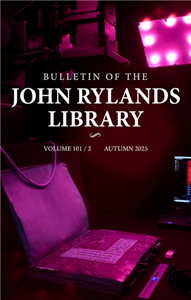
The John Rylands Library houses one of the finest collections of rare books, manuscripts and archives in the world. The collections span five millennia, have a global reach and cover a wide range of subjects, including art and archaeology; economic, social, political, religious and military history; literature, drama and music; science and medicine; theology and philosophy; travel and exploration. For over a century, the Bulletin of the John Rylands Library has published research that complements the Library's special collections. An electronic edition of this issue is freely available under a Creative Commons (CC BY-NC-ND) licence.
Trusted Partner

Child, nation, race and empire is an innovative, inter-disciplinary, cross cultural study that contributes to understandings of both contemporary child welfare practices and the complex dynamics of empire. It analyses the construction and transmission of nineteenth-century British child rescue ideology. Locating the origins of contemporary practice in the publications of the prominent English Child rescuers, Dr Barnardo, Thomas Bowman Stephenson, Benjamin Waugh, Edward de Montjoie Rudolf and their colonial disciples and literature written for children, it shows how the vulnerable body of the child at risk came to be reconstituted as central to the survival of nation, race and empire. Yet, as the shocking testimony before the many official enquiries into the past treatment of children in out-of-home 'care' held in Britain, Ireland, Australia and Canada make clear, there was no guarantee that the rescued child would be protected from further harm.
Trusted Partner
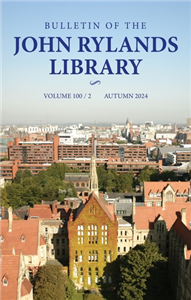
The John Rylands Library houses one of the finest collections of rare books, manuscripts and archives in the world. The collections span five millennia, have a global reach and cover a wide range of subjects, including art and archaeology; economic, social, political, religious and military history; literature, drama and music; science and medicine; theology and philosophy; travel and exploration. For over a century, the Bulletin of the John Rylands Library has published research that complements the Library's special collections.
Trusted Partner

This study of the British colonial administrator James Tod (1782-1835), who spent five years in north-western India (1818-22) collecting every conceivable type of material of historical or cultural interest on the Rajputs and the Gujaratis, gives special attention to his role as a mediator of knowledge about this little-known region of the British Empire in the early nineteenth century to British and European audiences. The book aims to illustrate that British officers did not spend all their time oppressing and inferiorising the indigenous peoples under their colonial authority, but also contributed to propagating cultural and scientific information about them, and that they did not react only negatively to the various types of human difference they encountered in the field.
Trusted Partner

Carol Reed is one of the truly outstanding directors of British cinema, and one whose work is long overdue for reconsideration. This major study ranges over Reed's entire career, combining observation of general trends and patterns with detailed analysis of twenty films, both acknowledged masterpieces and lesser-known works. Evans avoids a simplistic auteurist approach, placing the films in their autobiographical, socio-political and cultural contexts and relating these to the analysis of Reed's art. The critical approach combines psychoanalysis, gender theory, and the analysis of form. Archival research is also relied on to clarify Reed's relations with his creative team, financial backers and others. Films examined include Bank Holiday, A Girl Must Live, Odd Man Out, The Fallen Idol, The Third Man, Night Train to Munich, The Way Ahead, Outcast of the Islands, Trapeze and Oliver!.
Trusted Partner
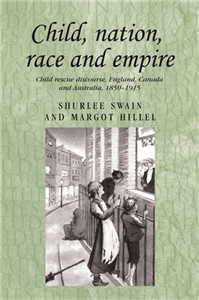
Child, nation, race and empire is an innovative, inter-disciplinary, cross cultural study that contributes to understandings of both contemporary child welfare practices and the complex dynamics of empire. It analyses the construction and transmission of nineteenth-century British child rescue ideology. Locating the origins of contemporary practice in the publications of the prominent English Child rescuers, Dr Barnardo, Thomas Bowman Stephenson, Benjamin Waugh, Edward de Montjoie Rudolf and their colonial disciples and literature written for children, it shows how the vulnerable body of the child at risk came to be reconstituted as central to the survival of nation, race and empire. Yet, as the shocking testimony before the many official enquiries into the past treatment of children in out-of-home 'care' held in Britain, Ireland, Australia and Canada make clear, there was no guarantee that the rescued child would be protected from further harm. ;
Trusted Partner
For nearly half a century Anne Lake Prescott has been a force and an inspiration in Renaissance studies. A force, because of her unique blend of learning and wit and an inspiration through her tireless encouragement of younger scholars and students. Her passion has always been the invisible bridge across the Channel: the complex of relations, literary and political, between Britain and France. The essays in this long-awaited collection range from Edmund Spenser to John Donne, from Clément Marot to Pierre de Ronsard. Prescott has a particular fondness for King David, who appears several times; and the reader will encounter chessmen, bishops, male lesbian voices and Roman whores. Always Prescott's immense erudition is accompanied by a sly and gentle wit that invites readers to share her amusement. Reading her is a joyful education.
Trusted Partner
For nearly half a century Anne Lake Prescott has been a force and an inspiration in Renaissance studies. A force, because of her unique blend of learning and wit and an inspiration through her tireless encouragement of younger scholars and students. Her passion has always been the invisible bridge across the Channel: the complex of relations, literary and political, between Britain and France. The essays in this long-awaited collection range from Edmund Spenser to John Donne, from Clément Marot to Pierre de Ronsard. Prescott has a particular fondness for King David, who appears several times; and the reader will encounter chessmen, bishops, male lesbian voices and Roman whores. Always Prescott's immense erudition is accompanied by a sly and gentle wit that invites readers to share her amusement. Reading her is a joyful education.
Trusted Partner
The John Rylands Library houses one of the finest collections of rare books, manuscripts and archives in the world. The collections span five millennia, have a global reach and cover a wide range of subjects, including art and archaeology; economic, social, political, religious and military history; literature, drama and music; science and medicine; theology and philosophy; travel and exploration. For over a century, the Bulletin of the John Rylands Library has published research that complements the Library's special collections. An electronic edition of this issue is freely available under a Creative Commons (CC BY-NC-ND) licence.
Trusted Partner
 Trusted Partner
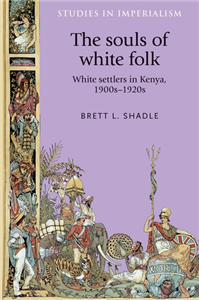
Kenya's white settlers have been alternately celebrated and condemned, painted as romantic pioneers or hedonistic bed-hoppers or crude racists. The souls of white folk examines settlers not as caricatures, but as people inhabiting a unique historical moment. It takes seriously - though not uncritically - what settlers said, how they viewed themselves and their world. It argues that the settler soul was composed of a series of interlaced ideas: settlers equated civilisation with a (hard to define) whiteness; they were emotionally enriched through claims to paternalism and trusteeship over Africans; they felt themselves constantly threatened by Africans, by the state, and by the moral failures of other settlers; and they daily enacted their claims to supremacy through rituals of prestige, deference, humiliation and violence. The souls of white folk will appeal to those interested in the histories of Africa, colonialism, and race, and can be appreciated by scholars and students alike.
Trusted Partner
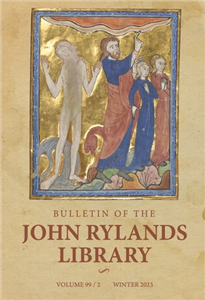
The John Rylands Library houses one of the finest collections of rare books, manuscripts and archives in the world. The collections span five millennia and cover a wide range of subjects, including art and archaeology; economic, social, political, religious and military history; literature, drama and music; science and medicine; theology and philosophy; travel and exploration. For over a century, the Bulletin of the John Rylands Library has published research that complements the Library's special collections. The editors invite the submission of articles in these fields and welcome discussion of in-progress projects.
Trusted Partner
Trusted Partner
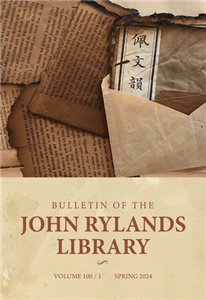
The John Rylands Library houses one of the finest collections of rare books, manuscripts and archives in the world. The collections span five millennia, have a global reach and cover a wide range of subjects, including art and archaeology; economic, social, political, religious and military history; literature, drama and music; science and medicine; theology and philosophy; travel and exploration. For over a century, the Bulletin of the John Rylands Library has published research that complements the Library's special collections.
Trusted Partner

David Livingstone, the 'missionary-explorer', has attracted more commentary than nearly any other Victorian hero. Beginning in the years following his death, he soon became the subject of a major biographical tradition. Yet out of this extensive discourse, no unified image of Livingstone emerges. Rather, he has been represented in diverse ways and in a variety of socio-political contexts. Until now, no one has explored Livingstone's posthumous reputation in full. This book meets the challenge. In approaching Livingstone's complex legacy, it adopts a metabiographical perspective: in other words, this book is a biography of biographies. Rather than trying to uncover the true nature of the subject, metabiography is concerned with the malleability of biographical representation. It does not aim to uncover Livingstone's 'real' identity, but instead asks: what has he been made to mean? Crossing disciplinary boundaries, Livingstone's 'lives' will interest scholars of imperial history, postcolonialism, life-writing, travel-writing and Victorian studies.
Trusted Partner
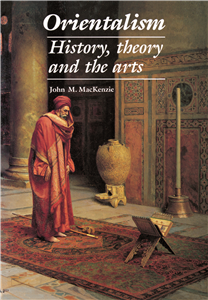
The Orientalism debate, inspired by the work of Edward Said, has been a major source of cross-disciplinary controversy in recent years. John MacKenzie offers a comprehensive re-evaluation of this vast literature of Orientalism and brings to the subject highly original historical perspectives. The study provides the first major discussion of Orientalism by a historian of imperialism. Setting the analysis within the context of conflicting scholarly interpretations, John MacKenzie then carries the discussion into wholly new areas, testing the notion that the western arts received genuine inspiration from the East by examining the visual arts, architecture, design, music and theatre. John MacKenzie concludes that western approaches to the Orient have been much more ambiguous and genuinely interactive then Said allowed. The artistic construction of the East by the West has invariably been achieved through a greater spirit of respect and in search of a truly syncretic culture. The Orient has indeed proved an inspiration to the European arts, even when caught in the web of imperial power relations.
Trusted Partner
Colonial frontiers explores the formation, structure and maintenance of boundaries and frontiers in settler colonies. Drawing on the work of anthropologists, historians, archaeologists and post-colonial theorists, the authors in this fascinating collection explore the importance of cross-cultural interactions in the settler colonies of Australia, New Zealand, South Africa and America. Taking key historical moments to illuminate the formation of new boundaries and the interaction between the settler societies and the indigenous groups, this book raises many important questions about how the empire worked 'on the ground'. Importantly, the collection attempts to theorise the indigenous experience. As we move towards globalisation, borders and boundaries have begun to fall away. This book reminds us that not long ago the frontiers and boundaries were the key sites for cross-cultural interaction. This collection, which includes chapters by John K. Noyes, Nigel Penn, Kay Schaffer and Ian McNiven, is broad in scope and presents an exciting new approach to the issues surrounding group interaction in colonial settings. Students and academics, from backgrounds such as imperial history, anthropology and post-colonial studies, will find this collection extremely valuable.
Trusted Partner

The irresistible story of a one-man cultural phenomenon. Minister for the Counterculture, Mancunian mainstay and alternative national treasure John Robb has lived a life in music. In this book he charts his adventures on the cultural frontline, chronicling the making of a DIY icon. Robb's quest began in his hometown of Blackpool - where punk was a battle against the odds - and went international when he toured the world with his band. The first person to interview Nirvana, he also discovered The Stone Roses for weekly newspaper Sounds and did early interviews with The Jesus and Mary Chain and The Manics, before moving on to legends such as Mark E. Smith, Nick Cave and Patti Smith. Along the way, he became an on-screen commentator and author of bestselling books. Robb's memoir tells of deep friendships with figures from Poly Styrene to Chris Packham. Packed with riotous stories, it provides an alternative account of British musical and cultural history and a triumphant blueprint for a punk rock life.

