GCE - Gabriele Capelli Editore
The Gabriele Capelli Editore (GCE) is a small Swiss publishing house, primarily focused on fiction but occasionally expanding into essays and poetry.
View Rights Portal
The Gabriele Capelli Editore (GCE) is a small Swiss publishing house, primarily focused on fiction but occasionally expanding into essays and poetry.
View Rights Portal

 Trusted Partner
Trusted Partner
Trusted Partner
Trusted Partner
Trusted Partner
Trusted Partner
Trusted Partner
Trusted Partner
Trusted Partner
Trusted Partner
Trusted Partner
 Trusted Partner

Franz Werfel wurde 1890 als Sohn eines jüdischen Kaufmanns in Prag geboren. Bereits während der Schulzeit veröffentlichte er seine ersten Gedichte. 1912 ging er nach Leipzig, wo er als Lektor beim Kurt Wolff Verlag tätig war. Im Ersten Weltkrieg wurde er zum Kriegsdienst eingezogen und 1917 in das Wiener Kriegspressequartier versetzt. 1938 emigrierte er nach Frankreich und zwei Jahre später über die Iberische Halbinsel in die USA. Dort starb Franz Werfel 1945 in Beverly Hills.
Trusted Partner

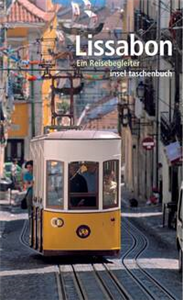
Stadt des Lichts, Weiße Stadt, Stadt aus Marmor und Granit – Lissabon war und ist die literarische Hauptstadt Portugals. Besucher schwärmen von geheimen Fado-Lokalen, farbenprächtigen Azulejos und dem Charme der historischen Altstadt. Gaby Wurster führt den Leser durch die Straßen der Tejo-Metropole und durch die Jahrhunderte und entdeckt den Zauber dieser traditionsreichen Stadt auf den Spuren von Thomas Mann, Alfred Döblin, Cees Nooteboom, Heinrich Mann, Fernando Pessoa, Eça de Queiroz, José Saramago u. v. a.
Trusted Partner


A poetic picture book that makes it easy to forget arguments and anger: the little elephant is in a bad mood and kicks a stone. The stone inadvertently hits the flamingo – and the complaining and annoyance just keeps spreading. By the river, in the bush, on the savannah: just like that! Until a little meerkat has had enough and just hugs the snarling leopard. The leopard’s heart becomes light and gradually all the animals notice how good it is when we’re nice to one another. Just like that!
Trusted Partner

 Trusted Partner

 Trusted Partner
Trusted Partner
Trusted Partner

 Trusted Partner

 Trusted Partner
Trusted Partner
Trusted Partner
Trusted Partner
Trusted Partner
Trusted Partner
Trusted Partner

This highly original book constitutes one of the first attempts to examine the problem of distributive justice in the European Union in a systematic manner. João Labareda argues that the set of shared political institutions at EU level, including the European Parliament and the Court of Justice of the EU, generate democratic duties of redistribution among EU citizens. Furthermore, the economic structure of the EU, comprising a common market, a common currency and a free-movement area, triggers duties of reciprocity among member states. The responsibilities to fulfil these duties, Labareda argues, should be shared by the local, national and supranational levels of government. Not only should the EU act as a safety net to the national welfare systems, applying the principle of subsidiarity, but common market and Eurozone regulations should balance their efficiency targets with fair cooperation terms. The concrete policy proposals presented in this book include a threshold of basic goods for all EU citizens, an EU labour code, a minimum EU corporate tax rate and an EU fund for competitiveness. Labarada argues that his proposals match the political culture of the member states, are economically feasible, can be translated into functioning institutions and policies and are consistent with the limited degree of social solidarity in Europe. This book is a major contribution to the understanding of what a just Europe would look like and what it might take to get us there. This book is relevant to United Nations Sustainable Development Goal 10, Reduced inequalities