
Kallisti Publishing Inc.
Kallisti Publishingproducepersonal development and business books that expand the mind, generate ideas, and grow profits. They believe when you read, you succeed.
View Rights Portal
Kallisti Publishingproducepersonal development and business books that expand the mind, generate ideas, and grow profits. They believe when you read, you succeed.
View Rights Portal
Kalima Publishing and Distribution is a publishing company based in Tunisia ,whose main aim is to provide the readers with books that cater to their cognitive and cultural needs.Kalima’s book publications range from a wide variety of cultural fields like ( Literature, History , novels, poetry, philosophy, linguistics...). Through its cultural project Kalima Publishing and Distribution ,seeks to present to the readers the best quality of books that will help them develop critical thinking and guarantee their mental growth, without any form of restrictions on the freedom to write and create.Kalima Publishing and Distribution is a powerhouse whose publications are an added valueto the cultural content in the Arab world. Hence, Kalima’s dedication to listeningto its readers and granting special attention to their opinions andinterests.Kalima Publishing and Distribution was designed to discover talents and ideas with multiple expressions: it is a project of a cultural message, which does not take away the right to be different, but aspires to go beyond limited perspectives, when dealing with reality. For us, reality is not condemned to remain as it is, nor to bebound to any region or group.Intellectual property rightsWithin the framework of its relations with various authors, "Kalima" Publishing and Distribution strives to respect the intellectual property rights believing that they are one of the most important factors that support the promotion of the publishing industry in that it represents respect for the rights of the publisher and the author. Therefore, this protection willhave positive results that will be reflected on the quality of the performance of the publishing house in this field.
View Rights Portal Trusted Partner
Trusted Partner
Trusted Partner
Trusted Partner
Trusted Partner


Iraqi women in Denmark is an ethnographic study of ritual performance and place-making among Shi'a Muslim Iraqi women in Copenhagen. The book explores how Iraqi women construct a sense of belonging to Danish society through ritual performances, and investigates how this process is interrelated with their experiences of inclusion and exclusion in Denmark. The findings refute the all too simplistic assumptions of general debates on Islam and immigration in Europe that tend to frame religious practice as an obstacle to integration in the host society. In sharp contrast to the fact that the Iraqi women's religious activities in many ways contribute to categorising them as outsiders to Danish society, their participation in religious events also localises them in the city. Written in an accessible, narrative style, this book addresses both an academic audience and the general reader interested in Islam in Europe and immigration to Scandinavia. ;
Trusted Partner

Why are constitutionalist ideals so prominent in science fiction? Does Independence Day depict self-defence as a legal concept with absolute limits? Is international law lost in space? This innovative interdisciplinary volume represents the first exploration of the relationship between international law and cinema. From Star Wars to Werner Herzog, The Godfather to The West Wing, this book uncovers a diverse range of representations of international law and its norms in film and television. Examining the wider links between international law, cinema, and ideology, the contributions not only examine visual representations of international law, but they offer an essential insight into the functions fulfilled by these cinematic representations. Providing an extraordinary introduction to a variety of perspectives on core international legal questions, Cinematic perspectives on international law extends a valuable methodology by which international lawyers can critique the depiction of international law in film.
Trusted Partner

Child, nation, race and empire is an innovative, inter-disciplinary, cross cultural study that contributes to understandings of both contemporary child welfare practices and the complex dynamics of empire. It analyses the construction and transmission of nineteenth-century British child rescue ideology. Locating the origins of contemporary practice in the publications of the prominent English Child rescuers, Dr Barnardo, Thomas Bowman Stephenson, Benjamin Waugh, Edward de Montjoie Rudolf and their colonial disciples and literature written for children, it shows how the vulnerable body of the child at risk came to be reconstituted as central to the survival of nation, race and empire. Yet, as the shocking testimony before the many official enquiries into the past treatment of children in out-of-home 'care' held in Britain, Ireland, Australia and Canada make clear, there was no guarantee that the rescued child would be protected from further harm.
Trusted Partner
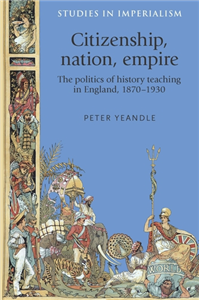
Citizenship, nation, empire investigates the extent to which popular imperialism influenced the teaching of history between 1870 and 1930. It is the first book-length study to trace the substantial impact of educational psychology on the teaching of history, probing its impact on textbooks, literacy primers and teacher-training manuals. Educationists identified 'enlightened patriotism' to be the core objective of historical education. This was neither tub-thumping jingoism, nor state-prescribed national-identity teaching, but rather a carefully crafted curriculum for all children which fused civic as well as imperial ambitions. The book will be of interest to those studying or researching aspects of English domestic imperial culture, especially those concerned with questions of childhood and schooling, citizenship, educational publishing and anglo-British relations. Given that vitriolic debates about the politics of history teaching have endured into the twenty-first century, Citizenship, nation, empire is a timely study of the formative influences that shaped the history curriculum in English schools
Trusted Partner
Windows for the world explores the display and reception of nineteenth-century British stained glass in a secular exhibition context. International in scope, the book focuses on the global development of stained glass in this period as showcased at, and influenced by, these exhibitions. It recognises those who made and exhibited stained glass and demonstrates the long-lasting impact of the classification and modes of display at these events. A number of exhibits are illustrated in colour and are analysed in relation to stylistic developments, techniques and material innovations, as well as the broader iconographies of nation and empire in the nineteenth century.
Trusted Partner

Emigration of scale challenges states at the European periphery at their core. The book documents these struggles along their effects for politics and policy within their economic and welfare dimensions. The politics of emigration describe changing voter attitudes and behaviour pointing towards more support for nationalist and right-wing parties. The policies of emigration show state and local level efforts for the return of emigrant citizens. The welfare and economic dimensions explore the context for emigration and its effects for growth models and systems of health and care within the European single market. The book observes two types of state transformations: the re-emergent nation-state that re-discovers its core resource, the citizenry, as well as states that functionally and socially adapt to population loss.
Trusted Partner
 Trusted Partner
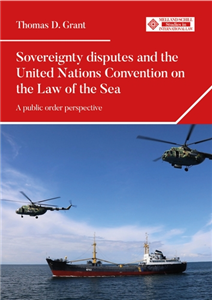
Because maritime questions are often admixed with territorial sovereignty questions, parties sometimes seek to settle them together. Jurisdiction under the United Nations Convention on the Law of the Sea-UNCLOS-according to the received view does not encompass disputes concerning territorial sovereignty. In this book, international law scholar and practitioner Thomas D. Grant argues that the received view overstates the exclusion of sovereignty disputes. In Coastal State Rights, UNCLOS Annex VII arbitrators overstated the scope of the term 'sovereignty dispute' as well, an error of definition compounded when they ignored evidence probative as to whether a sovereignty dispute exists. Examining UNCLOS, its drafting history, and decades of decided cases, Sovereignty Disputes and the United Nations Convention on the Law of the Sea relates an important problem of international dispute settlement to the public order of which UNCLOS forms part.
Trusted Partner
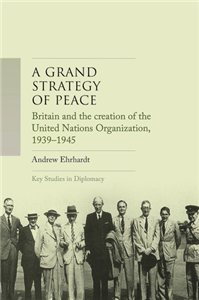
A grand strategy of peace is the first detailed account of Britain's role in the creation of the United Nations Organization during the Second World War. As a work of traditional diplomatic history that brings in elements of intellectual history, the book describes how British officials, diplomats, politicians, and writers - previously seen to be secondary actors to the United States in this period - thought about, planned for, and helped to establish a future international order. While in the present day, many scholars and analysts have returned to the origins of the post- 1945 international system, this book offers an exhaustive account of how the statesmen and more importantly, the officials working below the statesmen, actually conceived of and worked to establish a post-war world order.
Trusted Partner
In Straight Nation, Pavan Mano reveals the logic of straightness that sits at the heart of postcolonial nationalism in Singapore. Mano rejects the romantic notion of the nation as a haven of belonging, showing it to be a relentless force that is allied with heteronormativity to create a host of minoritized and xenologized figures. Through meticulous exploration and close reading of a swathe of texts, Mano unveils the instrumental role of sexuality in structuring the national imaginary. The book adroitly demonstrates how queerness is rendered foreign in postcolonial Singapore and functions alongside technologies of "race", gender, and class. A provocative critique of narrow contemporary identity politics and its concomitant stymying of a more ambitious political critique, Straight Nation sets out an argument that moves beyond the negativity of traditional critique into a space of (re)thinking, (re)building and (re)imagining.
Trusted Partner
Migration and social policy in a changing world bridges the generally separate fields of social policy and migration studies. This book traces social policy responses to migration from the Industrial Revolution to today's era of globalisation and large-scale migration. Through case studies from across the globe, the book explores key themes including rural-urban migration, social citizenship, welfare internationalism and diasporic care systems. It examines how migrants are included in or excluded from social citizenship in host societies, and how they become providers of welfare services such as health and social care. Moving beyond a methodological nationalist focus, the book investigates migrant incorporation into welfare states through family networks, faith communities, and other informal welfare structures. It combines migrants' experiences with host societies' immigration politics, institutional perspectives and policies to present a comprehensive analysis of the migration-welfare relationship. This volume fills a gap in academic literature and offers policymakers, practitioners and scholars a framework for understanding the interplay between migration and social policy in our changing world.
Trusted Partner

This book focuses on current policy discourse in Higher Education, with special reference to Europe. It discusses globalisation, Lifelong Learning, the EU's Higher Education discourse, this discourse's regional ramifications and alternative practices in Higher Education from both the minority and majority worlds with their different learning traditions and epistemologies. It argues that these alternative practices could well provide the germs for the shape of a public good oriented Higher Education for the future. It theoretically expounds on important elements to consider when engaging Higher Education and communities, discussing the nature of the term 'community' itself. Special reference is accorded to the difference that lies at the core of these ever-changing communities. It then provides an analysis of an 'on the ground project' in University community engagement, before suggesting signposts for further action at the level of policy and provision. This book is relevant to United Nations Sustainable Development Goal 4, Quality education
Trusted Partner

This topical and innovative study is the first book on Algerian cinema to be published in English since the 1970s. At a time when North African and Islamic cultures are of increasing political significance, Algerian National Cinema presents a dynamic, detailed and up to date analysis of how film has represented this often misunderstood nation. Algerian National Cinema explores key films from The Battle of Algiers (1966) to Mascarades (2007). Introductions to Algerian history and to the national film industry are followed by chapters on the essential genres and themes of filmmaking in Algeria, including films of anti-colonial struggle, representations of gender, Berber cinema, and filming the 'black decade' of the 1990s. This thoughtful and timely book will appeal to all interested in world cinemas, in North African and Islamic cultures, and in the role of cinema as a vehicle for the expression of contested identities. By the author of the critically-acclaimed Contemporary French Cinema.
Trusted Partner

This topical and innovative study is the first book on Algerian cinema to be published in English since the 1970s. At a time when North African and Islamic cultures are of increasing political significance, Algerian National Cinema presents a dynamic, detailed and up to date analysis of how film has represented this often misunderstood nation. Algerian National Cinema explores key films from The Battle of Algiers (1966) to Mascarades (2007). Introductions to Algerian history and to the national film industry are followed by chapters on the essential genres and themes of filmmaking in Algeria, including films of anti-colonial struggle, representations of gender, Berber cinema, and filming the 'black decade' of the 1990s. This thoughtful and timely book will appeal to all interested in world cinemas, in North African and Islamic cultures, and in the role of cinema as a vehicle for the expression of contested identities. By the author of the critically-acclaimed Contemporary French Cinema.
Trusted Partner
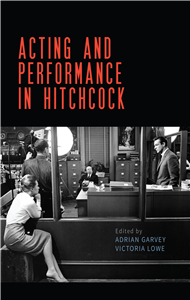
Hitchcock's professed disdain for actors is belied by the extraordinary range and depth of performances featured in his films. It might even be argued that many stars gave their richest and most complex performances in his work. Hitchcock's films are also imbued with the theme of performance, as when his fugitive men and errant women assume fragile new identities and move between roles. Actors and other performers also often feature as characters. However, the exhaustive academic literature on Hitchcock has to date produced surprisingly little work about acting and performance in his films. The collection includes contributions from a range of leading scholars on Hitchcock, performance, stardom, and British Cinema, including Charles Barr, David Greven, Mark Glancy, Lucy Bolton, Lawrence Napper and Michael Williams, and an interview with leading composers/accompanists Neil Brand and Stephen Horne on scoring performance in Silent Hitchcock.
Trusted Partner


The WHO’s International Classification of Functioning, Disability and Health (ICF) is the accepted common framework for understanding and documenting functioning and disability. The ICF Core Sets selected for this book have now been developed to facilitate the standardized use of the ICF in real-life clinical practice and thus improve quality of care. By using this collection of clear checklists, definitions, and forms, clinicians will quickly and easily be able to assess clients with a range of typical health conditions at different stages and in a variety of health care contexts. This manual describes how and why the ICF Core Sets have been developed and shows, step-by-step, how to apply the ICF Core Sets in clinical practice. Target Group: For practitioners working in various health care contexts but also for students and teachers.



