Your Search Results
-

-

Al Karma Publishers
A publisher of bestselling and award-winning contemporary and classic fiction and non-fiction. Winner of the Best Young Egyptian Publisher Award in 2020.
View Rights Portal
-
Promoted Content

 September 2021
Tolerating Democracy!
About arguing in a society of indignation
by Karoline M. Preisler
Are we all still only moving around in our bubbles, unwilling and unprepared to engage in the positions of "the others"? Will only someone be heard who polarises and defames loudly enough, who ignores facts, denies them, twists them, who even calls for violence? The debate over the corona measures has given a new urgency as we address the question of how democracy can be lived and protected in times of an erosion of the centre and social cohesion. Karoline M. Preisler asks herself these questions and, as a passionate democrat, advocates creating new tools and meeting places for the necessary dialogue on controversial topics such as the limits of freedom, religion, climate crisis, immigration and the family.
-
Promoted Content

 August 2008
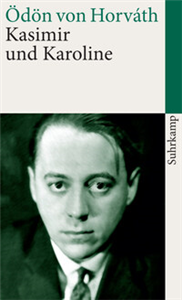
Kasimir und Karoline
Volksstück
by Ödön Horváth, Traugott Krischke, Susanna Foral-Krischke
Als einen »Abend auf dem Oktoberfest« kündigte die Ernst-Josef-Aufricht-Produktion am 18.11.1932 in Leipzig die Uraufführung von ödön von Horváths Volksstück Kasimir und Karoline an, dessen ursprünglicher Untertitel »Siebzehn Szenen von der Liebe, Not und Leid, und unserer schlechten Zeit« lautete. Die »Ballade vom arbeitslosen Chauffeur Kasimir und seiner Braut (...), eine Ballade voll stiller Trauer gemildert durch Humor, das heißt durch die alltägliche Erkenntnis : ›Sterben müssen wir alle‹.« (ödön von Horváth) Alfred Polgar schrieb: »Dieser Dichter hat eine besondere Kunst, an seinen Gestalten das, was uns alle bindet: das Gemeine, sichtbar, beziehungsweise das, wmit dieses All-Bindende zugedeckt ist, transparent zu machen.«
-
 Trusted Partner
 2019
2019Good Evening, Good Night
The cultural history of sleep
by Karoline Walter
What we associate with sleep is shaped by the culture we live in. Whereas the God of the Bible never sleeps, the sinful human falls asleep every night and is thus marked as an inferior being. In the Age of Enlightenment, (too much) sleep was considered a waste of strength, which could otherwise be used to change the world. These days, sleep seems to be subject to the same tenets of usefulness as everything else and is seen to assist with the optimization of one’s self. However, culture and technology also influence how we sleep: for example, the constant availability of light, the modern conditions of work and all sorts of distractions have meant that we no longer follow our natural rhythm – a first sleep before midnight and a second sleep after a longer period of wakefulness, during which we may be active. In “Good Evening, Good Night”, Karoline Walter uses numerous examples from history, literature and research to illustrate how sleep and sleeping have changed across cultures and eras – an entertaining read, certainly nothing to put you to sleep.
-
Trusted Partner

 Humanities & Social SciencesJuly 2025
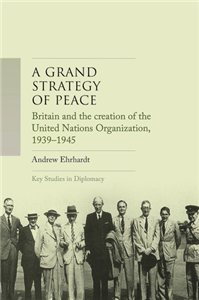
A grand strategy of peace
Britain and the creation of the United Nations Organization, 1939-1945
by Andrew Ehrhardt
A grand strategy of peace is the first detailed account of Britain's role in the creation of the United Nations Organization during the Second World War. As a work of traditional diplomatic history that brings in elements of intellectual history, the book describes how British officials, diplomats, politicians, and writers - previously seen to be secondary actors to the United States in this period - thought about, planned for, and helped to establish a future international order. While in the present day, many scholars and analysts have returned to the origins of the post- 1945 international system, this book offers an exhaustive account of how the statesmen and more importantly, the officials working below the statesmen, actually conceived of and worked to establish a post-war world order.
-
Trusted Partner
-
Trusted Partner
-
Trusted Partner
 Humanities & Social SciencesApril 2025
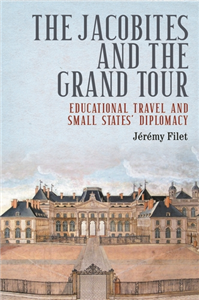
The Jacobites and the Grand Tour
Educational travel and small-states' diplomacy
by Jérémy Filet
In the first monograph to fully examine the intersecting networks of Jacobites and travellers to the continent, Filet considers how small states used official diplomacy and deployed soft power - embodied by educational academies - to achieve foreign policy goals. This work uses little-known archival materials to explain how and why certain small states secretly supported the Jacobite cause during the crucial years surrounding the 1715 rising, while others stayed out of Jacobite affairs.At the same time, the book demonstrates how early modern small states sought to cultivate good relations with Britain by attracting travellers as part of a wider trend of ensuring connections with future diplomats or politicians in case a Stuart restoration never came.This publication therefore brings together a study of Britain, small states, Jacobitism, and educational travel, in its nexus at continental academies.
-
Trusted Partner
-
Trusted Partner
 Humanities & Social SciencesFebruary 2017
Scottishness and Irishness in New Zealand since 1840
by Angela McCarthy, Andrew Thompson, John M. MacKenzie
This book examines the distinctive aspects that insiders and outsiders perceived as characteristic of Irish and Scottish ethnic identities in New Zealand. When, how, and why did Irish and Scots identify themselves and others in ethnic terms? What characteristics did the Irish and the Scots attribute to themselves and what traits did others assign to them? Did these traits change over time and if so how? Contemporary interest surrounding issues of ethnic identities is vibrant. In countries such as New Zealand, descendants of European settlers are seeking their ethnic origins, spurred on in part by factors such as an ongoing interest in indigenous genealogies, the burgeoning appeal of family history societies, and the booming financial benefits of marketing ethnicities abroad. This fascinating book will appeal to scholars and students of the history of empire and the construction of identity in settler communities, as well as those interested in the history of New Zealand.
-
Trusted Partner
 Humanities & Social SciencesApril 2022
Russian grand strategy in the era of global power competition
by Andrew Monaghan, Richard Connolly
-
Trusted Partner

 January 1990
Das hoffnungslose Leben der Anna M.
Bericht über eine Schizophrenie. (Persönliche Erfahrungen mit Krisen)
by Schulz, Bernd J
-
Trusted Partner
-
Trusted Partner
-
Trusted Partner
 The ArtsDecember 2007
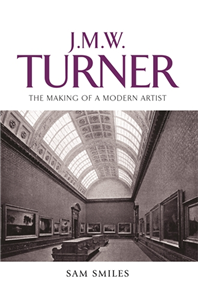
J. M. W. Turner
The making of a modern artist
by Sam Smiles, Alan Rutter
Alone of his contemporaries, J.M.W. Turner is commonly held to have prefigured modern painting, as signalled in the existence of The Turner Prize for contemporary art. Our celebration of his achievement is very different to what Victorian critics made of his art. This book shows how Turner was reinvented to become the artist we recognise today. On Turner's death in 1851 he was already known as an adventurous, even baffling, painter. But when the Court of Chancery decreed that the contents of his studio should be given to the nation, another side of his art was revealed that effected a wholescale change in his reputation. This book acts as a guide to the reactions of art writers and curators from the 1850s to the 1960s as they attempted to come to terms with his work. It documents how Turner was interpreted and how his work was displayed in Britain, in Europe and in North America, concentrating on the ways in which his artistic identity was manipulated by art writers, by curators at the Tate and by designers of exhibitions for the British Council and other bodies. ;
-
Trusted Partner
-
Trusted Partner
 Humanities & Social SciencesJanuary 2026
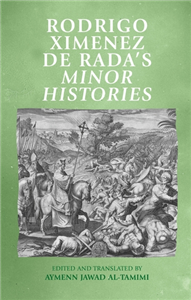
Rodrigo Ximenez de Rada’s Minor Histories
by Aymenn Al-Tamimi
This work provides the first complete English translation of works by Toledan archbishop Rodrigo Ximénez de Rada (1170-1247 CE), whose 'Minor Histories' are sequels to his larger 'Gothic History' and thus round off his grand history of Spain project that he began at the request of King Ferdinand III. The 'Minor Histories' include Rodrigo's 'History of the Arabs' that can be considered the first surviving Western monograph focused on Arab and Islamic history and thus occupies a unique position in the medieval Latin corpus of writings. In addition to the translation, this book provides a thorough and accessible introduction to the life and works of Rodrigo, making sense of the context in which he wrote and his historical method. The translations are thoroughly annotated including cross-references to other Latin and Arabic sources for comparison.
-
Trusted Partner

 January 2014
Die Erde ist mir Heimat nicht geworden
Das Leben der Karoline von Günderrode
by Dagmar von Gersdorff
Karoline von Günderrode (1780–1806) war eine begabte, intelligente und hoffnungsvolle Dichterin der Romantik – und eine leidenschaftliche und radikale junge Frau, die für ein unabhängiges Leben kämpfte. Dagmar von Gersdorff erzählt das einzigartige und aufwühlende Schicksal der Dichterin. Karoline von Günderrode sah Bildung und Dichten als ihre einzige Möglichkeit, sich selbst zu verwirklichen und die engen Grenzen ihres weiblichen Lebens zu sprengen. Damit entfachte sie Empörung und Ablehnung. Als selbst ihre große Liebe, der verheiratete Friedrich Creuzer, sich von ihr abwandte, sah sie nur einen Ausweg: Mit nur 26 Jahren tötete sie sich mit ihrem Dolch, den sie als Zeichen der Freiheit und Selbstbestimmung stets bei sich trug.
-
Trusted Partner
-
Trusted Partner
-
Trusted Partner