
Your Search Results


-
Promoted Content

 April 2011
CNC-Handbuch 2011/2012
CNC, DNC, CAD, CAM, FFS, SPS, RPD, LAN, CNC-Maschinen, CNC-Roboter, Antriebe, Simulation, Fachwortverzeichnis
by Kief, Hans B.; Roschiwal, Helmut A.
-
Promoted Content
 March 2013
CNC-Handbuch 2013/2014
CNC, DNC, CAD, CAM, FFS, SPS, RPD, LAN, CNC-Maschinen, CNC-Roboter, Antriebe, Simulation, Fachwortverzeichnis
by Kief, Hans B.; Roschiwal, Helmut A.
-
 Trusted Partner
-
Trusted Partner
-
Trusted Partner
 October 2012
CNC-Handbook 2011/2012
CNC, DNC, CAD, CAM, FFS, SPS, RPD, LAN, CNC-Machines, CNC-Robots, Drives, Simulation, Glossary
by Kief, Hans B.
-
Trusted Partner
-
Trusted Partner

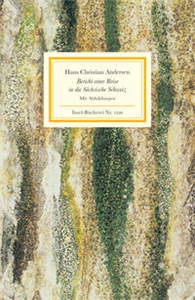 March 2001
Bericht einer Reise in die Sächsische Schweiz
by Hans Christian Andersen, Ulrich Sonnenberg, Ludwig Richter, C. A. Richter
Hans Christian Andersen (1805 - 1875) war ein reisefreudiger Mann. Im Frühjahr 1831 fuhr er durch Deutschland und hielt seine Eindrücke in einem Reisebuch fest. Es sind die Schönheiten der Gegend um Dresden, die ihn besonders entzückten, es war die freundliche Aufnahme »vortrefflicher Menschen«, die ihm guttat, und es war die geheimnisvolle Melancholie, die über der Sächsischen Schweiz liegt, die seiner Herzensstimmung entgegenkam. Der Reisebericht, der in der ersten deutschen Gesamtausgabe von 1847 erschien, war um zahlreiche politische, religiöse und persönliche Passagen gekürzt worden, Kürzungen, die spätere Ausgaben beibehielten. Hier liegt Andersens Reisebericht erstmals mit dem ungekürzten Text vor: in der vollständigen Fassung in Deutschland ein bislang fast unbekanntes Werk.
-
Trusted Partner

 November 2021
The Forest of the Future – A New Reality
Understanding the ecosystem
by Hans Jürgen Böhmer
What happened with forest dieback? The predictions of the 1980s that forests would be in decline across Europe have not come true. Currently, attention again focuses on the doom scenarios of the loss of entire forests and cultural landscapes in an emotional and sometimes hysterical debate. Biogeographer Hans Jürgen Böhmer refers to updated case studies and his 30 years of research experience on global ecosystems to demonstrate extremely complex interrelations of the natural world that various actors monitor in contrasting ways and characterized by different times and ideologies. Böhmer advocates to embed the sustainability debate more strongly in the living environment, rather than relying exclusively on model calculations.
-
Trusted Partner

 Literature & Literary StudiesSeptember 2014
A concordance to the rhymes of The Faerie Queene
by Richard Brown, J. B. Lethbridge, J. B. Lethbridge
This book is the first ever concordance to the rhymes of Spenser's epic. It gives the reader unparalleled access to the formal nuts and bolts of this massive poem: the rhymes which he used to structure its intricate stanzas. As well as the main concordance to the rhymes, the volume features a wealth of ancillary materials, which will be of value to both professional Spenserians and students, including distribution lists and an alphabetical listing of all the words in The Faerie Queene. The volume breaks new ground by including two studies by Richard Danson Brown and J. B. Lethbridge, so that the reader is given provocative analyses alongside the raw data about Spenser as a rhymer. Brown considers the reception of rhyme, theoretical models and how Spenser's rhymes may be reading for meaning. Lethbridge in contrast discusses the formulaic and rhetorical character of the rhymes. ;
-
Trusted Partner
 Literature & Literary StudiesJanuary 2021
A concordance to the rhymes of The Faerie Queene
by Richard Danson Brown, J. B. Lethbridge, J. B. Lethbridge
This book is the first ever concordance to the rhymes of Spenser's epic. It gives the reader unparalleled access to the formal nuts and bolts of this massive poem: the rhymes which he used to structure its intricate stanzas. As well as the main concordance to the rhymes, the volume features a wealth of ancillary materials, which will be of value to both professional Spenserians and students, including distribution lists and an alphabetical listing of all the words in The Faerie Queene. The volume breaks new ground by including two studies by Richard Danson Brown and J. B. Lethbridge, so that the reader is given provocative analyses alongside the raw data about Spenser as a rhymer. Brown considers the reception of rhyme, theoretical models and how Spenser's rhymes may be reading for meaning. Lethbridge in contrast discusses the formulaic and rhetorical character of the rhymes.
-
Trusted Partner

 January 1985
Zeugen des Jahrhunderts / Porträts aus Literatur, Psychologie und Philosophie: Jean Améry /Viktor E. Frankl /Hans Jonas /Herbert Marcuse
Nach einer Sendereihe des ZDF
by Herausgegeben von Schnelting, Karl B
-
Trusted Partner

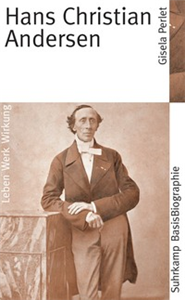 March 2005
Hans Christian Andersen
by Gisela Perlet
Der Werdegang Hans Christian Andersens vom armen Schustersohn zum erfolgreichen Schriftsteller mutet wie ein Märchen an. Allerdings bemühte er sich auch nach Kräften, diesen Mythos zu pflegen. Andersens Figuren traten schon zu seinen Lebzeiten ihren Siegeszug durch die Welt an und sind bis heute unvergessen.
-
Trusted Partner
 March 2024
Today Is a Good Day to Abolish the Patriarchy
by Bettina Schulte (ed.)
Do we still need feminism in Europe? Equality or difference feminism? A new generation of feminists has now broken away from the feminism of the 1960s. The old white Cis man has been discredited, by the "#MeToo" movement at the latest. Sexualised violence against women has been outlawed, perpetrators taken to court. So everything’s good? No, of course not. Men still dominate public discourse; men are unchallenged in leadership positions in politics, society and business; male power still prevails in the domestic environment as well. The extent to which men fight back when they feel threatened by feminism is also evident in the revival of authoritarian nationalist politicians in Europe and around the world. The seven authors shed light on feminist struggles in different areas of life, and illustrate the range of feminism today.
-
Trusted Partner
 Literature & Literary StudiesJune 2015
A Supplement of the Faery Queene
By Ralph Knevet
by J. B. Lethbridge
Ralph Knevet's Supplement of the Faery Queene (1635) is a narrative and allegorical work, which weaves together a complex collection of tales and episodes, featuring knights, ladies, sorcerers, monsters, vertiginous fortresses and deadly battles - a chivalric romp in Spenser's cod medieval style. The poem shadows recent English history, and the major military and political events of the Thirty Years War. But the Supplement is also an ambitiously intertextual poem, weaving together materials from mythic, literary, historical, scientific, theological, and many other kinds of written sources. Its encyclopaedic ambitions combine with Knevet's historical focus to produce an allegorical epic poem of considerable interest and power. This new edition of Knevet's Supplement, the first scholarly text of the poem ever published, situates it in its literary, historical, biographical, and intellectual contexts. An extensive introduction and copious critical commentary, positioned at the back of the book, will enable students and scholars alike to access Knevet's complicated and enigmatic meanings, structures, and allusions. ;
-
Trusted Partner
 Humanities & Social SciencesJanuary 2026
A queer scrapbook
Britain and Ireland since 1945
by Justin Bengry, Matt Cook, Rebecca Jennings, E-J Scott
A beautifully illustrated compendium of LGBTIQ+ life. A queer scrapbook offers a treasure trove of LGBTIQ+ histories from across Britain and Ireland. Packed with materials, from interviews and newspaper articles to photographs and flyers, the book explores urban, rural and regional queer life since 1945. Commentaries and short essays introduce a changing queer landscape, spotlighting four broad themes: home and family, sex and socialising, arts and culture and politics and activism. The book delves into the meaning and experiences of domesticity and parenting and explores the sometimes unexpected places LGBTIQ+ people met to have fun. It examines the importance of creative work in forming community and identity and shows how people fought injustice and advocated for equal rights. Collecting has been a way for the marginalised to explore and assert identity and community. A queer scrapbook vividly illustrates the diversity of queer and trans lives across the British and Irish isles since the Second World War.
-
Trusted Partner
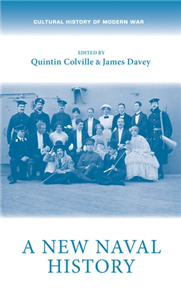 Humanities & Social SciencesApril 2022
A new naval history
by Quintin Colville, James Davey, Katherine Parker, Elaine Chalus, Evan Wilson, Barbara Korte, Cicely Robinson, Cindy McCreery, Ellie Miles, Mary A. Conley, Jonathan Rayner, Daniel Spence, Emma Hanna, Ulrike Zimmerman, Max Jones, Jan Rüger
A New Naval History brings together the most significant and interdisciplinary approaches to contemporary naval history. The last few decades have witnessed a transformation in how this field is researched and understood and this volume captures the state of a field that continues to develop apace. It examines - through the prism of naval affairs - issues of nationhood and imperialism; the legacy of Nelson; the socio-cultural realities of life in ships and naval bases; and the processes of commemoration, journalism and stage-managed pageantry that plotted the interrelationship of ship and shore. This bold and original publication will be essential for undergraduate and postgraduate students of naval and maritime history. Beyond that, though, it marks an important intervention into wider historiographies that will be read by scholars from across the spectrum of social history, cultural studies and the analysis of national identity.
-
Trusted Partner
 Literature & Literary StudiesJanuary 2021
A Supplement of the Faery Queene
By Ralph Knevet
by Christopher Burlinson, J. B. Lethbridge, Andrew Zurcher
Ralph Knevet's Supplement of the Faery Queene (1635) is a narrative and allegorical work, which weaves together a complex collection of tales and episodes, featuring knights, ladies, sorcerers, monsters, vertiginous fortresses and deadly battles - a chivalric romp in Spenser's cod medieval style. The poem shadows recent English history, and the major military and political events of the Thirty Years War. But the Supplement is also an ambitiously intertextual poem, weaving together materials from mythic, literary, historical, scientific, theological, and many other kinds of written sources. Its encyclopaedic ambitions combine with Knevet's historical focus to produce an allegorical epic poem of considerable interest and power. This new edition of Knevet's Supplement, the first scholarly text of the poem ever published, situates it in its literary, historical, biographical, and intellectual contexts. An extensive introduction and copious critical commentary, positioned at the back of the book, will enable students and scholars alike to access Knevet's complicated and enigmatic meanings, structures, and allusions.
-
Trusted Partner
-
Trusted Partner
 January 1989
In Memoriam S. Fischer
24. Dezember 1859-1959
by Herausgegeben von B. Fischer, Brigitte; Herausgegeben von Bermann Fischer, Gottfried
-
Trusted Partner
 July 1967
Werke in vier Bänden
2: Essays I
by T. S. Eliot, Helmut Viebrock, Gerhard Hensel
Beiträge zum Begriff der Kultur. Die antike Klassik und der Literat. Die Funktion der Kritik. Die gesellschaftliche Funktion der (Deutsch von Gerhard Hensel). Gedanken nach Lambeth. (Deutsch von Helmut Viebrock). Religion und Literatur. (Deutsch von Ursula Clemen). Katholizismus und die Ordnung unter den Völkern. (Deutsch von Karl Klein). Vergil und die christliche Welt. (Deutsch von Nora Wydenbruck). Der Humanismus Irving Babbitts. (Deutsch von Ursula Clemen). Nachgedanken zum Humanismus. (Deutsch von Günter H. Lenz). Moderne Erziehung und humanistische Bildung. (Deutsch von Nora Wydenbruck). (Deutsch von Günter H. Lenz). Was ist ein Klassiker?. (Deutsch von W.E. Süskind). Die Ziele der Erziehung. (Deutsch von Helmut Viebrock). Tradition und individuelle Begabung. (Deutsch von Hans Hennecke). Der vollkommene Kritiker. (Deutsch von Mechthild und Armin Paul Frank). (Deutsch von H.H. Schaeder). Der Nutzen der Dichtung und der Nutzen der Kritik. (Deutsch von Ulrich Keller). Was ist geringere Dichtung?. (Deutsch von Mechthild und Armin Paul Frank). Dichtung. (Deutsch von Nikolaus Hortmann). Die Literatur der Politik. (Deutsch von Wilhelm Hortmann). Die Grenzen der Literaturkritik. (Deutsch von Ursula Clemen). Der Kritiker kritisch betrachtet. (Deutsch von Mechthild und Armin Paul Frank).



