Your Search Results

      • Literature Translation Institute of Korea

        LTI Korea is a government-affiliated organization that aims to disseminate Korean culture and literature throughout the world in line with the government’s efforts to shape Korean literature in the world culture.  website: https://www.ltikorea.or.kr/en/main.do  Korean Literature Now(literary magazine): https://www.ltikorea.or.kr/en/board/kln_en/boardList.do

        View Rights Portal
      • KoRos Nord GmbH

        KoRos Nord ist ihr Verlag im Nordwesten Deutschland für Belletristik, Drehbücher, Buchtrailer, & PR Texte.Bei uns unter Vertrag ist ebenfalls der moderne Geschichtenerzähler und Drehbuchautor Jens Koch.Unter seinem Pseudonym "Jando", veröffentlichte er mittlerweile vier Bestseller. Sein Buch: "Sternenreiter - Kleine Sterne leuchten ewig" ist mit einer Veröffentlichung neben D/A/CH auch in Südkorea, England und USA erschienen und auch international erfolgreich. Für weitere Fragen und gewünschte Informationen kontaktieren Sie uns gerne über unsere Agentur oder direkt.

        View Rights Portal
      • Trusted Partner
        2020

        Anthroposophic Medicine

        Medicinal therapy for 350 disease pictures

        by Edited by Dr. Matthias Girke,Dr. Michaela Glöckler and Georg Soldner

        100 years after it was founded in Switzerland, anthroposophic medicine is nowadays an approach to treatment that is used worldwide. In this jubilee edition, 39 general practitioners and specialists experienced in anthroposophic therapy describe 350 disease pictures and their medicinal treatment – including Covid-19 – in understandable therapeutic concepts.

      • Trusted Partner
        2021

        Self-medication

        Guidelines for providing pharmaceutical advice

        by Dr. Kirsten Lennecke and Kirsten Hagel

        Minor illness or a serious disease ? Through systematic questioning, pharmacists or pharmaceutical technicians can establish the possibilities and limits of self-medication. Each monograph on the over 100 indications for self-medication includes: - A flow chart: basis for the structured consultation - A brief description: additional information about the symptoms - Recommended medications/groups of medications: the treatment options - Additional advice: individual supportive and alternative treatment options - Specific knowledge for advising particular patient groups: e.g. pregnant women, children and senior citizens New for the 7th edition: Monographs that explore the possibilities of supportive self-medication for indications such as hypertension and diabetes. Information about what to do in the case of poisoning, scabies or inflammation of the nail bed (paronychia) is also provided! The details about active substances, products and additional tips have been updated. The pocket guide has long been the standard for providing advice on self-medication – a “must-have”!

      • Trusted Partner
      • Trusted Partner
        2021

        aporello - Drugs in Palliative Medicine

        by Christian Redmann

        In the last stage of life, it is all about giving care in a professional manner and providing efficient relief of suffering. In addition to all the important key points about in-label use, this book consisting of drug monographs, includes: - Information about off-label indications with dosages, - Lists of the different dosage forms available, - Instructions about use in renal failure. A clear structure and icons enable rapid orientation in everyday practice. Focussed knowledge at your fingertips? That’s aporello!

      • Trusted Partner
        2021

        Self-medication in Pregnancy and Breast-feeding

        Counselling handbook

        by Dr. Annette Abhau

        Cough, hay fever or herpes are at least as troublesome during pregnancy and breast-feeding as under normal “conditions” - and yet everything is different. Physiological changes to the body in pregnancy and lactation, together with the vulnerability of the unborn baby or infant, set particular requirements when selecting the correct, safe medication. Especially in the area of self-medication, the needs of pregnant and breast-feeding women for information are great and call for competent advice! This comprehensive handbook is the key: General information about pharmacotherapy, supplementary measures, vaccinations, questions about diet and infections in pregnancy and lactation creates a broad knowledge base. The core feature of the book are the traffic light tables, with precise recommendations for medicinal products for all types of treatment. All the important indications for selfmedication in pregnancy and lactation are listed and the tables are supported by detailed explanations of the individual assessments. The sections “Advice from medical specialists” are particularly useful, with additional tips from gynaecologists and “Footnotes” with relevant information on the use of prescription- only medicines – and as the ultimate practical tool: the enclosed sales counter leaflets with all traffic light tables to enable quick reference for first-class advice!

      • Trusted Partner
      • Trusted Partner
      • Trusted Partner
        Humanities & Social Sciences
        March 2017

        Materials and medicine

        by Pratik Chakrabarti

      • Trusted Partner
        Humanities & Social Sciences
        March 2017

        Imperial medicine and indigenous societies

        by David Arnold

      • Trusted Partner
        Business, Economics & Law
        July 2025

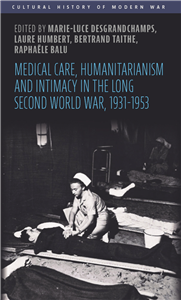
        Medical care, humanitarianism and intimacy in the long Second World War, 1931-1953

        by Marie-Luce Desgrandchamps, Laure Humbert, Bertrand Taithe, Raphaële Balu

        This book offers a micro-global history of humanitarianism and medical care during the 'long' Second World War, which challenges the traditional and Eurocentric chronological boundaries of 1939/1945. It takes as its starting point the Japanese invasion of Manchuria in 1931, which led to the progressive dislocation of the League of Nations, with the Japanese, German and Soviet departures in the 1930s. It ends with the termination of the Korean War in 1953, and the subsequent dismantlement of the first United Coalition and UN Peace enforcement operation. It considers the slow, messy and ambivalent transformation of humanitarian actors' relations to the suffering of distant others through a study of humanitarian encounters, practices, spaces and affects. Paying close attention to a variety of actors, such as French colonial doctors, Swiss ICRC delegates, Egyptian relief workers, Chinese-style physicians, Peruvian and Ecuadorian nurses or American member of the Unitarian Service Committee, the book provides a more holistic story of humanitarianism.

      • Trusted Partner
        2020

        Anthroposophic Medicines

        Advisory recommendationsfor self-medication

        by Birgit Emde and Juliane Riedel

        The selection of remedies in anthroposophic medicine is based on a differentiated human image – every patient appreciates such individualised recommendations! In the new edition of their work, the two authors provide clearly structured, comprehensible information and recommendations. The new chapter “Pharmacy practice” provides, for each indication: ■ Explanations of the anthroposophic approach to treatment, ■ Questions to the customer about their medical history and differential diagnosis, ■ Anthroposophic supplements to treatment for patients, who come to the dispensary with prescriptions or wishes for conventional medicines.

      • Trusted Partner
        2022

        Medication Management in the Hospital

        A workbook for ward pharmacists

        by Dr. Insa Gross, MSc Andreas Fischer and Dr. Holger Knoth

        The ward pharmacist in the hospital is like the airbag in a car. As part of a fail-safe system, they monitor and optimise the patient’s drug therapy. Ward pharmacists work hand in hand with medical and nursing staff. That situation is also reflected in this workbook. All the cases presented were patients who had been cared for, evaluated and documented by a physician-pharmacist duo or similar team with combined medical and pharmaceutical expertise. The editorial team considered it important to illustrate all critical indications typically encountered in a hospital. In assessing and selecting the examples, they were able to draw upon the many years’ experience of their pioneering work as hospital and ward pharmacists. Practical tips, checklists, comments and advice for working in the ward environment round off the individual chapters. By learning from actual cases, this book offers the unique chance to develop an instinct for the pitfalls of drug safety. That applies to those who have successfully completed further training in the field of “Medication Management in the Hospital” and for all who wish to ensure the optimum treatment for their patients through competent work in clinical pharmacy.

      • Trusted Partner
        The Arts
        February 2026

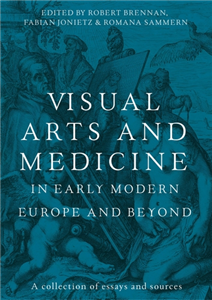
        Visual arts and medicine in early modern Europe and beyond

        A collection of essays and sources

        by Robert Brennan, Fabian Jonietz, Romana Sammern

        This book opens up new perspectives on the relationship between art, medicine, and science in late-medieval and early modern Europe. Looking beyond the traditional nexus of art, anatomy, and optics, the volume sheds light on a broader array of connections between artists and physicians: collaborations between painters and doctors on colour charts, handwork skills common to sculptors and surgeons, the transmission of art theory through medical texts long before the emergence of art writing itself as an independent genre, and the kinship of medical diagnosis with early modes of connoisseurship. Reconfiguring the histories of art, medicine, and science, the book also traverses conventional boundaries between physical and mental health, religious and medical modes of healing, menial and exalted forms of knowledge and labour, as well as vernacular and scientific understandings of human difference, including gender, race, and neurodiversity.

      • Trusted Partner
        Humanities & Social Sciences
        August 2014

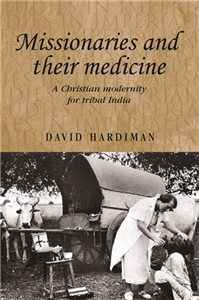
        Missionaries and their medicine

        A Christian modernity for tribal India

        by David Hardiman, Andrew Thompson, John Mackenzie

        Missionaries and their medicine is a lucid and enthralling study of the encounter between Christian missionaries and an Indian tribal community, the Bhils, in the period 1880 to 1964. The study is informed by a deep knowledge of the people amongst whom the missionaries worked, the author having lived for extensive periods in the tribal tracts of western India. He argues that the Bhils were never the passive objects of missionary attention and that they created for themselves their own form of 'Christian modernity.' The book provides a major intervention in the history of colonial medicine, as Hardiman argues that missionary medicine had a specific quality of its own - which he describes and analyses in detail - and that in most cases it was preferred to the medicine of colonial states. He also examines the period of transition to Indian independence, which was a highly fraught and uncertain process for the missionaries. ;

      • Trusted Partner
        2021

        Lexicon of Medicinal Plants

        by Prof. Dr. Dietrich Frohne (†), in collaboration with Prof. Dr. Birgit Classen

        Indian mulberry, St. John’s wort, Hawaiian baby woodrose – whether disputed wonder drug, traditional medicinal plant or unknown exotic plant – the Lexicon of Medicinal Plants can always be relied upon. The lexical and classic knowledge about the individual medicinal plants – such as family, origin, use, effect and constituents – garnered over decades and peppered with particular anecdotes on the herbal drugs, can be regarded as unique and largely timeless. At the repeated request of readers, this reference work has therefore been reissued in book form, with its contents largely unchanged but with misprints corrected and its layout modernised. A wealth of experience that even in the fast-moving digital world preserves traditional knowledge.

      • Trusted Partner
        Humanities & Social Sciences
        March 2017

        Missionaries and their medicine

        A Christian modernity for tribal India

        by David Hardiman, Andrew Thompson, John M. MacKenzie

        Missionaries and their medicine is a lucid and enthralling study of the encounter between Christian missionaries and an Indian tribal community, the Bhils, in the period 1880 to 1964. The study is informed by a deep knowledge of the people amongst whom the missionaries worked, the author having lived for extensive periods in the tribal tracts of western India. He argues that the Bhils were never the passive objects of missionary attention and that they created for themselves their own form of 'Christian modernity.' The book provides a major intervention in the history of colonial medicine, as Hardiman argues that missionary medicine had a specific quality of its own - which he describes and analyses in detail - and that in most cases it was preferred to the medicine of colonial states. He also examines the period of transition to Indian independence, which was a highly fraught and uncertain process for the missionaries.

      • Trusted Partner
        2021

        Pharmacology Workbook

        Practice, revise, consolidate

        by Annette Thomas and Nadine Sprecher

        Pharmacology imparts knowledge about the effects and use of drugs in humans. Knowledge of anatomy, physiology and the development of diseases are also part of the subject matter. However, the abundance of facts can quickly make the head spin. Approaching the subject like a game helps to make it easier to grasp and anchor what has been learnt permanently in the memory, so it can then be confidently used in the day-to-day pharmacy routine. This is where the Pharmacology Workbook comes into play! A whole arsenal of entertaining tasks awaits the reader: crosswords, word and picture puzzles, word search games, “fill in the blanks” quizzes, puzzle games and case examples from pharmacy practice. The section “Linked together, reliably memorised” helps to connect knowledge. “Now it gets tricky” encourages the reader to engage with the material more intensively, while under “Making revision fun” there are tips and suggestions for learning in a group. This work is based on the sequence of chapters in the textbook Pharmacology. But of course, whether pharmaceutical technician, returnee or even pharmacy intern, all can have fun practising, revising and deepening their pharmacological knowledge with the Pharmacology Workbook.

      • Trusted Partner
        2022

        Drugs and Medical Devices in Nursing

        Training for nurses and carers

        by Dr. Constanze Schäfer

        What applies when storing potatoes is also good for drugs and medical devices! But this is where the similarities end. If medicines are not stored correctly or used properly, they may not be effective. Pharmacists - the experts on medicines - explain to the nursing team: - How light, air and temperature can cause damage - Where the pitfalls lie in the use of tablets, drops etc. - What makes medical devices so different from drugs New in the 3rd edition: Improved overview of the types of use. Clearer comparison of drugs and medical devices. Video clips on the use of specific dosage forms can now be directly launched from the presentation. 36 editable PowerPoint slides, videos and a complete text of the presentation are available on CD-ROM and for download

      Subscribe to our

      newsletter