
Lantana Publishing
Lantana is an award-winning, UK-based children’s publisher with a mission to publish inclusive books by authors from under-represented groups.
View Rights Portal
Lantana is an award-winning, UK-based children’s publisher with a mission to publish inclusive books by authors from under-represented groups.
View Rights Portal

 Trusted Partner

 Trusted Partner
This collection brings together scholars from disciplines including Children's Literature, Classics, and History to develop fresh approaches to children's culture and the uses of the past. It charts the significance of historical episodes and characters during the long nineteenth-century (1750-1914), a critical period in children's culture. Boys and girls across social classes often experienced different pasts simultaneously, for purposes of amusement and instruction. The book highlights an active and shifting market in history for children, and reveals how children were actively involved in consuming and repackaging the past: from playing with historically themed toys and games to performing in plays and pageants. Each chapter reconstructs encounters across different media, uncovering the cultural work done by particular pasts and exposing the key role of playfulness in the British historical imagination.
Trusted Partner

This book offers a new approach to filmic point of view by combining close analyses informed by the tools of narratology and philosophy with concepts derived from communication studies. Each chapter stages a conversation between two masterpieces of classical Hollywood cinema and one critical concept that can enrich our understanding of them: Vertigo (Alfred Hitchcock, 1958) and Mr. Deeds Goes to Town (Frank Capra, 1936) are interpreted in relation to point of view; Anatomy of a Murder (Otto Preminger, 1959) and The Man Who Shot Liberty Valance (John Ford, 1962) are considered with reference to the concept of distance; and Letter from an Unknown Woman (Max Ophuls, 1948) and Only Angels Have Wings (Howard Hawks, 1939) are explored through the lens of communication. Each encounter reveals new, exciting and mutually illuminating ways of appreciating not only these case studies, but also the critical concepts at stake. ;
Trusted Partner

This book is our principal source for the history of the Kingdom of Sicily in the troubled years between the death of its founder, King Roger, in February 1154 and the spring of 1169. It covers the reign of Roger's son, King William I, known to later centuries as 'the Bad', and the minority of the latter's son, William II 'the Good'. The book illustrates the revival of classical learning during the twelfth-century renaissance. It presents a vivid and compelling picture of royal tyranny, rebellion and factional dispute at court. Sicily had historically been ruled by tyrants, and that the rule of the new Norman kings could be seen, for a variety of reasons, as a revival of that classical tyranny. A more balanced view of Sicilian history of the period 1153-1169 has been provided as an appendix to the translation in the section of the contemporary world chronicle ascribed to Archbishop Romuald II of Salerno, who died in April 1181. In particular the chronicle of Romuald enables us to see how the papal schism of 1159 and the simultaneous dispute between the German Emperor Frederick Barbarossa and the north Italian cities affected the destiny of the kingdom of Sicily. In contrast to the shadowy figure of Hugo Falcandus, the putative author of the principal narrative of mid-twelfth-century Sicilian history, Romuald II, Archbishop of Salerno 1153-1181, is well-documented.
Trusted Partner
 Trusted Partner
Trusted Partner
Trusted Partner
Trusted Partner
Trusted Partner
Trusted Partner
Trusted Partner

 Trusted Partner

 Trusted Partner
Trusted Partner
Trusted Partner
Trusted Partner
Trusted Partner
Trusted Partner
Trusted Partner
Trusted Partner
Trusted Partner

 Trusted Partner

The great public schools are central to any discussion of English secondary education. Founded as public endowments, they are the basis of private education. Set apart from the other grammar schools by the Clarendon Commission of 1861, their influence on the state system has been enormous. Severed from the national provision of public education, they have put prestige and ancient endowments at the service of wealth and patronage. This book, available in paperback for the first time, shows how this came to pass. How the schools' attempts at reform, reliance on fees, the defence of the Classics, public criticism of Eton, European ideas and foreign economic competition led to the Carendon Commission. How Lord Clarendon himself, in conflict with Palmerston over foreign policy, came to lead the Commission and attempt curricular reform. How the Public Schools Acts created a separate school system for the benefit of Eton and how the Lords sought to establish that system for the upper classes. How the fee-paying, class-based principles of the Commission influenced the other grammar schools and all later English education. How the Public schools Acts reduced the influence of local parents and how new governors were appointed nationally. How Shrewsbury School, an example of an endowed grammar school with strong local connections, came to be part of the public school system. It is not the conflict between state education and private schools that makes so much discussion of English education bitter and controversial. It is the loss to state education of the public schools - the original political purpose of the Acts - and the impoverishment of national education by the class divisions of Victorian legislation. ;
Trusted Partner
 Trusted Partner
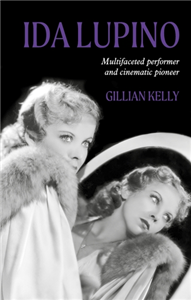
This book contributes to a welcome new wave focusing on the importance of female filmmakers, providing a reappraisal of Ida Lupino, a cinematic figure of significant importance. Given her ability to move between popular and independent cinemas and her status as both a Hollywood star and director/writer/producer of socially relevant films overlooked by the mainstream, Lupino is a particularly interesting case study. Employing a range of critical approaches, including feminist theory, auteur theory and critical theory, this book investigates key themes and motifs that developed across Lupino's unusual and unique career as one of the most significant female players in film history. Investigating her oeuvre as actress, director, writer and producer, it discusses Lupino as a complex and important filmmaker whose career, on both sides of the camera, requires substantially more critical attention than it has been awarded thus far.



